Top news

Oct 3, 2026, 11:00 AM UTC

← Latest news

01
ContinuingAI-generated
Ukraine repels heavy eastern assaults as frontline fighting intensifies

Ukraine repels heavy eastern assaults as frontline fighting intensifies

Heavy fighting continues across Ukraine's eastern front as forces counter Russian assaults near Pokrovsk and Lyman amid conflicting territorial claims.

Active engagements along Ukraine's eastern and southern fronts have sustained high intensity, with Ukrainian military officials reporting over 220 battles in a single day. Russian forces mounted frequent assaults near Pokrovsk, Lyman, and Kostiantynivka, attempting to breach Ukrainian defensive lines.

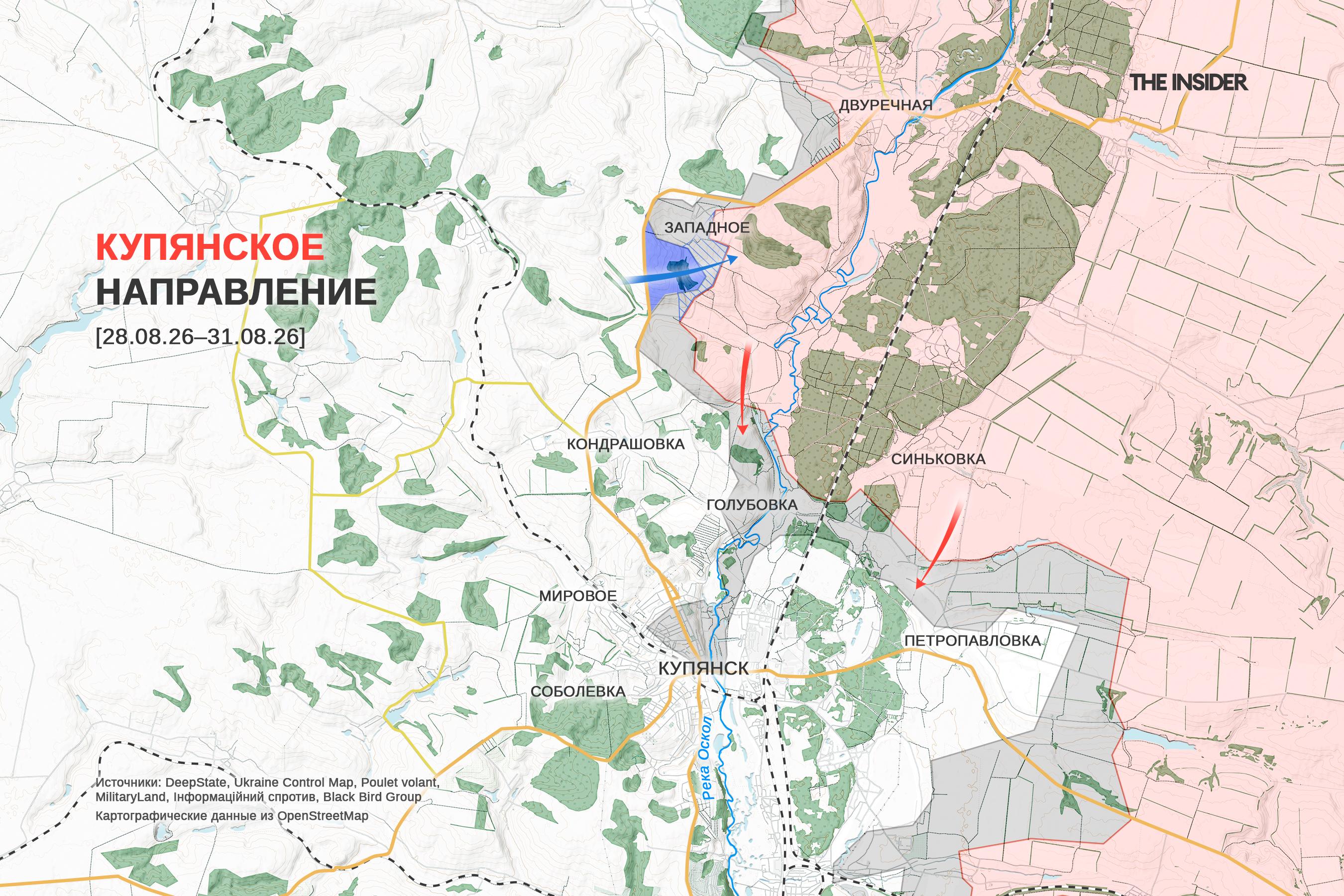
Concurrently, Ukrainian troops conducted localized infantry sweeps north of Kupyansk along the right bank of the Oskil River, utilizing electronic warfare to suppress Russian drone operations. Additional assessments indicate potential Ukrainian advances covering up to 200 square kilometers near Lyman.

However, conflicting claims persist regarding territorial control. Russia's Ministry of Defense claimed gains in the Sumy direction and denied Ukrainian progress in Zaporizhzhia. Meanwhile, long-range strikes hit ammunition facilities in the Kyiv region.

Sources: NV, Радіо Свобода, The Insider, Українська правда
Read more
02
ContinuingAI-generated
Ukrainian service members highlight systemic administrative and logistical issues in military

Ukrainian service members highlight systemic administrative and logistical issues in military

Ukrainian military personnel and commentators have raised concerns over troop rotations, supply shortages, and administrative inequalities within the armed forces.

Ukrainian military personnel and commentators have voiced concerns over systemic inequalities, logistical gaps, and administrative flaws within the armed forces.

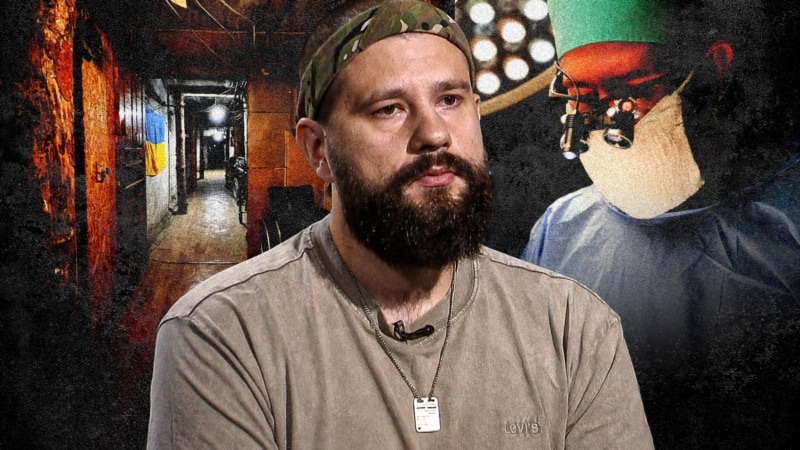
In statements to Ukrainian outlets, frontline service members highlighted severe operational strains. Medical officer Bohdan Zhuravel told Radio Svoboda that a lack of troop rotations leaves combatants feeling neglected by state policies. UAV commander Yurii Butusov reported to Radio NV that unit leaders continue to bear personal responsibility for procurement due to absent institutional supply mechanisms.

Administrative practices also drew scrutiny. An investigation by Ukrainska Pravda detailed how military decorations are predominantly funneled to headquarters staff rather than frontline fighters. Meanwhile, service member Pavlo Kazarin told Liga.net that addressing mobilization fairness requires immediate reforms to deferment policies and medical evaluation boards.

Sources: Liga net, NV, Радіо Свобода, Українська правда

Read more
03
ContinuingAI-generated
Polish analysts urge deep structural reforms to match record defense spending

Polish analysts urge deep structural reforms to match record defense spending

Polish think tanks warn that record military spending approaching 4.81 percent of GDP must be matched by procurement and structural reforms to ensure effective defense.

As Poland prepares to allocate 200.1 billion PLN—representing 4.81 percent of gross domestic product—to military spending by 2026, analysts and think tanks warn that financial investment alone cannot guarantee security. Reports from organizations like Rozwój Plus and the Defence Institute stress the necessity of restructuring command systems, refining recruitment strategies, and overhauling military procurement frameworks.

Commentators emphasize that rapid acquisitions of advanced hardware, such as F-35 fighter jets, HIMARS missile launchers, and Abrams tanks, must be paired with effective force structures capable of swift mobilization. Without addressing operational vulnerabilities and institutional bottlenecks, experts argue that record military budgets will fail to produce long-term combat readiness or create a sufficient deterrent against potential aggression from Russia.

Sources: Defence24, Portal obronny, Rzeczpospolita, TVP info.

Read more
04
ContinuingAI-generated
UN advances autonomous weapons framework as Germany refines military AI strategy

UN advances autonomous weapons framework as Germany refines military AI strategy

128 UN member states agreed on a definition for autonomous weapons in Geneva, as Germany announced plans for semi-autonomous military AI and an in-house data platform.

In Geneva, 128 United Nations member states reached a consensus on defining autonomous weapon systems, marking a foundational step toward international regulation. The agreement follows joint warnings from the UN and the International Committee of the Red Cross regarding moral concerns over machines independently targeting humans.

Concurrently, Germany’s Ministry of Defence confirmed updated guidelines allowing certain military hardware to act semi-autonomously under specific conditions, while stressing that final decisions regarding force remain under human control. To preserve technological independence, the German military also announced plans to develop a proprietary data analysis system rather than using software from US contractor Palantir. Defense analysts noted that maintaining sovereign AI infrastructure is increasingly critical for real-time operational decision-making.

Sources: Correctiv, Der Spiegel, Der Standard, Die Zeit, ESUT.

Read more
05
ContinuingAI-generated
Berlin election output reshaped by recount error and distinct voter trends

Berlin election output reshaped by recount error and distinct voter trends

A transmission error correction in Berlin handed a direct mandate to the AfD, while voter trends revealed contrasting demographic choices across the capital.

An administrative correction following Berlin's state election transferred a direct mandate in Spandau from the Christian Democratic Union to Alternative for Germany (AfD) candidate Tommy Tabor, reducing the Abgeordnetenhaus by five seats.

The election also underlined distinct demographic dynamics across the capital. Die Linke performed strongly among younger electors, leading pre-election polling with 22 percent. Conversely, voter turnout among citizens with migrant backgrounds remained noticeably low in districts like Neukölln. However, reporting indicates that a subset of young voters of Turkish descent backed the AfD, citing anxieties surrounding public order, migration policy, and financial stability.

Sources: Correctiv, Die Zeit, DW, FAZ, Tagesschau

Read more
Share