Top news

Oct 2, 2026, 09:30 AM UTC

← Latest news

01
ContinuingAI-generated
Slovenian football figures Čeh and Mlakar reflect on careers and club rivalry

Slovenian football figures Čeh and Mlakar reflect on careers and club rivalry

Former Slovenian international Aleš Čeh and striker Jan Mlakar have reflected on their football careers and the NK Maribor-Olimpija Ljubljana rivalry.

Former Slovenian national team captain Aleš Čeh and forward Jan Mlakar have offered insights into their careers and the traditional rivalry between NK Maribor and Olimpija Ljubljana.

Čeh, who captained the national side during its celebrated period under manager Srečko Katanec, expressed his affection for Olimpija and Austrian club GAK while maintaining respect for Maribor. Following his playing career, Čeh spent over a decade as Katanec's assistant coach, including seven years working in Asia.

Meanwhile, 27-year-old striker Mlakar discussed embarking on his third stint with Maribor. The Ljubljana-born player voiced strong trust in club leadership figures Zlatko Zahović and Darko Milanič, dismissing past speculation about joining Maribor's main rivals by stating he was "never close to Olimpija." Mlakar added that while Olimpija currently faces a difficult stretch, derby matches remain unpredictable.

Sources: Delo, Siol.net

Read more
02
ContinuingAI-generated
Global shifts in 1989 laid the groundwork for modern geopolitics

Global shifts in 1989 laid the groundwork for modern geopolitics

Historical perspectives underline 1989 as a multi-faceted global turning point that shaped modern geopolitical dynamics far beyond the fall of the Berlin Wall.

Historical analyses highlight 1989 as a critical global turning point whose effects extend well beyond European borders. While Western narratives primarily focus on the fall of the Berlin Wall and the collapse of communist regimes across Eastern Europe, parallel developments in Asia reshaped the international order in distinct ways.

In China, the government's crackdown on pro-democracy protests in Tiananmen Square preserved authoritarian political dominance while enabling extensive global economic integration. Meanwhile, the Soviet Union's withdrawal from Afghanistan generated security vacuums that transformed regional stability across South and Central Asia. Together, these simultaneous developments fragmented global power dynamics, establishing the complex geopolitical landscape that continues to define 21st-century international relations.

Sources: Die Presse

Read more
03
ContinuingAI-generated
UN reaches definition on autonomous weapons as Germany develops sovereign military AI

UN reaches definition on autonomous weapons as Germany develops sovereign military AI

128 UN states agreed on defining autonomous weapons as Germany develops its own military AI framework, balancing strategic autonomy with human oversight.

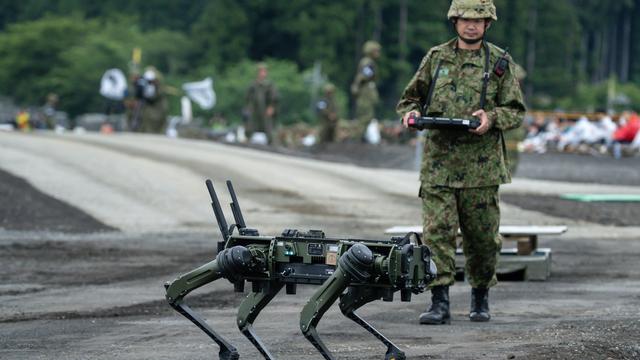
UN member states in Geneva have agreed on a formal definition for autonomous weapons, marking an initial step toward international regulation. The consensus comes amid joint warnings from the United Nations and the International Committee of the Red Cross, which cautioned that allowing machines to target humans risks crossing a moral red line.

Concurrently, Germany is advancing its domestic military artificial intelligence capabilities. Defense concept documents revealed that weapon systems may execute certain operational tasks without continuous step-by-step human involvement, though officials insisted that "the decision on the use of military force remains with humans." To maintain independence, the Bundeswehr is building its own data analysis platform rather than using US provider Palantir, a move defense analysts describe as essential for national strategic sovereignty.

Sources: Correctiv, Der Spiegel, Der Standard, Die Zeit, ESUT.

Read more
04
ContinuingAI-generated
Nordic reports highlight Ukrainian strikes, Kremlin hybrid threats, and diplomatic friction

Nordic reports highlight Ukrainian strikes, Kremlin hybrid threats, and diplomatic friction

Nordic media reports highlight Ukrainian deep strikes in Russia, alleged Kremlin hybrid operations in Denmark and Germany, and rising diplomatic friction between Moscow and Norway.

Ukrainian forces have targeted strategic assets deep inside Russian territory, hitting military airbases and damaging combat aircraft to disrupt Moscow's offensive operations and economic stability. Simultaneously, European security authorities have linked Russia to an escalation in hybrid warfare, including alleged sabotage efforts in Germany and Denmark. Security experts advise European governments to maintain composure while addressing these covert threats.

In Scandinavia, diplomatic tensions have intensified after Kremlin officials condemned Norway, accusing Oslo of endangering Russian security through NATO maneuvers and vessel seizures. Amid these developments, regional analysts evaluate Moscow's strategic posture, observing that while Russia retains resources to sustain prolonged combat, its strategic options continue to narrow. Other commentary emphasizes that fulfilling European security objectives regarding Ukraine will ultimately necessitate a Russian defeat.

Sources: Aftenposten, Berlingske, Dagens Næringsliv (DN), Finansavisen, TV 2 Nyheter

Read more
05
ContinuingAI-generated
Bulgarian prime minister promises timely 2027 budget amid judicial reforms

Bulgarian prime minister promises timely 2027 budget amid judicial reforms

Bulgarian Prime Minister Rumen Radev pledged to pass the 2027 budget on schedule as Progressive Bulgaria faces scrutiny over internal party dynamics and legal appointments.

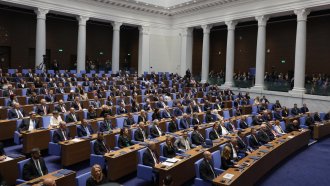
Bulgarian Prime Minister Rumen Radev announced at a cabinet meeting that the country's 2027 budget will be passed on schedule, marking a return to political stability after years of turmoil. Radev called on lawmakers to focus on key reforms, including administrative optimization and judicial restructuring.

Alongside budget preparations, Radev's ruling party, Progressive Bulgaria, submitted its parliamentary quota nominations for the Supreme Judicial Council. The party emphasized that its nominees possess high academic qualifications and extensive practical experience in the legal system.

Meanwhile, media coverage highlighted internal dynamics within Progressive Bulgaria four months after its electoral victory. While a small core of experienced representatives handles public communications, the majority of the party's 131 lawmakers remain obscure to the public, drawing criticism over parliamentary independence and reliance on Radev's leadership.

Sources: Investor.bg, Mediapool, Nova TV.

Read more
Share