Top news

Sep 30, 2026, 02:00 PM UTC

← Latest news

01
ContinuingAI-generated
US launches military strikes against Iranian coastal targets

US launches military strikes against Iranian coastal targets

The US launched military strikes on Iranian coastal targets near Bandar Abbas, prompting warnings from Washington and pledges of a decisive response from Tehran.

The United States has conducted military strikes against coastal installations in southern Iran, causing explosions near the strategic port cities of Bandar Abbas and Sirik. The attack marks the first direct military confrontation between the two countries in a month.

Following the operation, US President Donald Trump issued a warning against Iranian retaliation, claiming that leadership in Tehran is "begging" for a diplomatic solution. Iranian President Masoud Pezeshkian stated that while Iran does not seek a broader military confrontation, the nation will "respond decisively to aggressors." Meanwhile, Iranian naval officials maintained that their maritime forces remain operational despite the bombardments.

Sources: CDM (Cafe del Montenegro).

Read more
02
ContinuingAI-generated
Iran awaits final US stance on Strait of Hormuz proposal as military tensions rise

Iran awaits final US stance on Strait of Hormuz proposal as military tensions rise

Iran insists the Strait of Hormuz will stay closed until the US meets its demands, despite Donald Trump rejecting a seven-day reopening proposal amid rising military clashes.

Iran maintains that the Strait of Hormuz will remain closed until the United States meets its key demands, which include lifting petroleum sanctions, unfreezing assets, ending port blockades, and halting military operations. Tehran's proposal to reopen the waterway within seven days, submitted through international mediators, was rejected by US President Donald Trump. Nevertheless, Iranian officials stated they are still awaiting a definitive position from Washington.

At the same time, military confrontations along the strategic corridor are escalating. Following a US attack on Iran's Larak Island and nighttime naval escorts for commercial oil tankers, Iranian forces responded by deploying rocket-launched naval mines, increasing concerns over further military escalation in the region.

Sources: Expresso, Expresso das Ilhas, Jornal Económico, RTP (Rádio e Televisão de Portugal)

Read more
03
ContinuingAI-generated
Israel rejects Trump's Gaza peace plan demanding Hamas disarm first

Israel rejects Trump's Gaza peace plan demanding Hamas disarm first

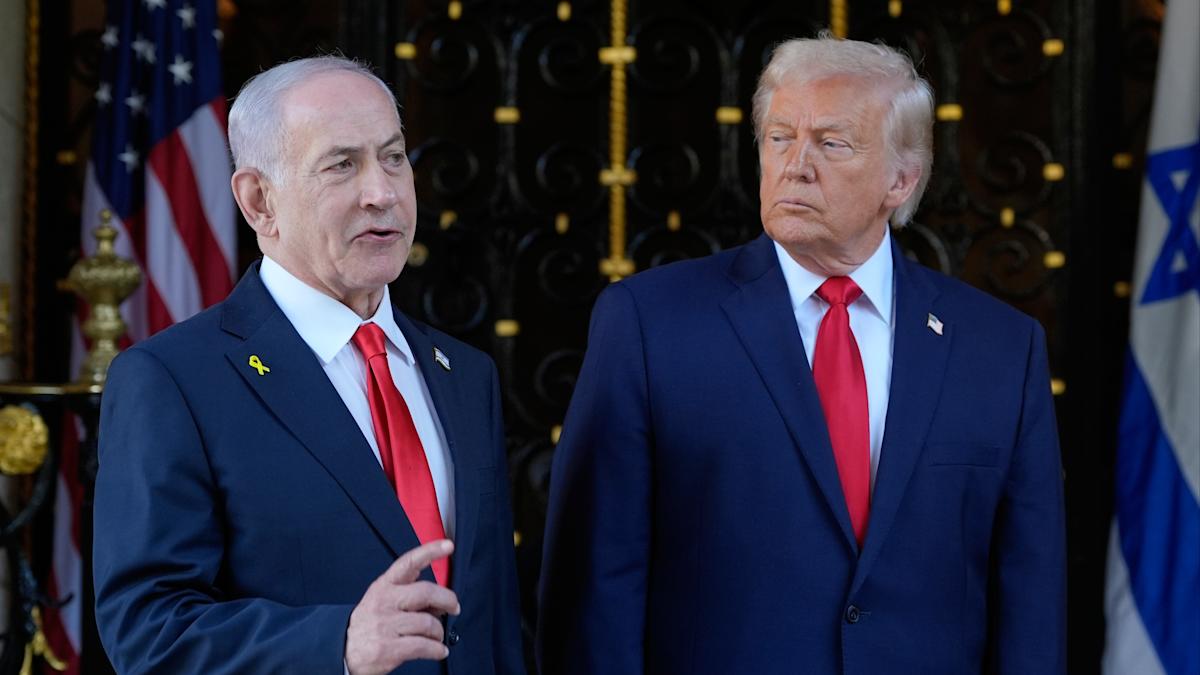
Israeli Prime Minister Benjamin Netanyahu has rejected a US-backed 15-point peace plan for Gaza, insisting forces will not withdraw until Hamas disarms.

Israeli Prime Minister Benjamin Netanyahu has formally rejected a 15-point Gaza peace proposal supported by US President Donald Trump. Speaking in televised remarks to his cabinet, Netanyahu stated that Israeli forces "will not carry out any withdrawal until Hamas is genuinely disarmed" and officially turned down the document accepted by Hamas in late July.

The decision underscores mounting diplomatic friction between Jerusalem and Washington, as well as internal political pressure on Netanyahu ahead of Israel's election scheduled for October 27. Despite the rejection, Israeli military operations in the territory have slowed significantly following sustained pressure from the White House.

Sources: Cyprus Mail, France24, STV News, The Guardian, The Herald.

Read more
04
ContinuingAI-generated
UN states define autonomous weapons while Germany expands military AI

UN states define autonomous weapons while Germany expands military AI

A consensus among 128 UN states defined autonomous weapons as Germany moves toward partially autonomous military systems and proprietary AI platforms.

A landmark agreement among 128 United Nations member states in Geneva established a formal definition for autonomous weapons systems following joint warnings from the UN and the International Committee of the Red Cross regarding automated targeting risks. Concurrently, Germany’s Ministry of Defense confirmed updated doctrine allowing weapon systems to operate with partial autonomy without direct human intervention at every operational step. Ministry officials maintained that "the decision on the use of military force remains with humans."

To safeguard technological sovereignty, the German Bundeswehr rejected software from American vendor Palantir, opting instead to build a proprietary artificial intelligence platform for complex data integration and real-time operational analysis.

Sources: Correctiv, Der Spiegel, Der Standard, Die Zeit, ESUT

Read more
05
ContinuingAI-generated
Nordic media highlight growing strategic pressure and hybrid threats from Russia

Nordic media highlight growing strategic pressure and hybrid threats from Russia

Nordic media reports detail mounting operational pressure on Russia, escalating hybrid security threats, and rising tensions between Moscow and Norway.

Nordic media reports highlight mounting operational challenges for Moscow alongside escalating hybrid security threats across Northern Europe. Ukrainian long-range strikes targeting Russian airbases have reportedly damaged strategic bombers, compromising Kremlin combat capacity even as Russia maintains its capability to sustain prolonged fighting. Meanwhile, tensions between Moscow and Oslo have intensified, with Russian officials sharply criticizing Norway over NATO military exercises and maritime enforcement actions. Concurrently, European intelligence services have linked recent drone incidents and sabotage plots in Germany and Denmark to Russian hybrid activities, prompting security experts to urge calm. Strategic assessments among regional analysts remain divided, weighing Europe's political objective of securing a Russian defeat against Moscow's persistent operational resilience despite narrowing options.

Sources: Aftenposten, Berlingske, Dagens Næringsliv (DN), Finansavisen, TV 2 Nyheter

Read more
Share