Top news

Sep 30, 2026, 02:00 AM UTC

← Latest news

01
ContinuingAI-generated
UN reaches milestone definition on autonomous weapons as Germany updates military AI strategy

UN reaches milestone definition on autonomous weapons as Germany updates military AI strategy

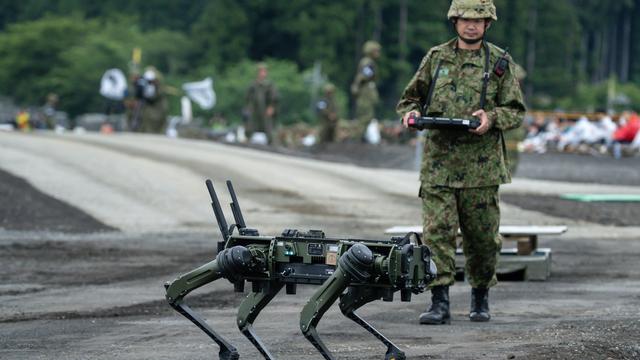
128 UN member states agreed on a definition for autonomous weapons, while Germany outlined guidelines for AI military use and rejected US vendor Palantir.

Global efforts to regulate autonomous military technologies advanced as 128 UN member states in Geneva agreed on a unified definition for autonomous weapons systems. The consensus follows warnings from the United Nations and the International Committee of the Red Cross regarding the ethical risks of machine-controlled targeting.

Concurrently, Germany's Ministry of Defense confirmed that updated Bundeswehr operational guidelines permit weapon systems to execute specific actions autonomously under select conditions. Defense officials noted that "the decision on the use of military force remains with humans."

In a related move to preserve technological independence, the German military decided against utilizing software from US provider Palantir, choosing instead to create a proprietary AI platform for complex data integration and analysis.

Sources: Correctiv, Der Spiegel, Der Standard, Die Zeit, ESUT

Read more
02
ContinuingAI-generated
German authorities trace drone plot and sabotage cases to Russian intelligence

German authorities trace drone plot and sabotage cases to Russian intelligence

German authorities are investigating over 100 cases of suspected state-sponsored hybrid interference, linking an August airport drone plot directly to Russian intelligence.

German law enforcement and intelligence services are investigating more than 100 incidents of suspected state-sponsored hybrid interference across the country, according to local media reports. Investigations into an August incident at Leipzig/Halle Airport indicate that an operative from Russia's GRU military intelligence organized logistics for an attempted explosive drone attack against Ukrainian transport aircraft.

Beyond the foiled airport operation, domestic intelligence officials suspect foreign actors of hiding weapons caches in Germany for future sabotage. Tracked incidents include unauthorized drone flights over military installations, railway disruption, damaged undersea cables, and digital disinformation campaigns. Security officials assess that these multi-faceted tactics aim to destabilize democratic institutions and provoke domestic division.

Sources: Correctiv, Der Standard, FAZ, ORF, Tagesschau

Read more
03
ContinuingAI-generated
European police investigate adolescent contract killers and violent crimes

European police investigate adolescent contract killers and violent crimes

European authorities are investigating a wave of violent crime, including teenage hitmen in Germany and Sweden alongside severe violent incidents in Spain and France.

European law enforcement authorities are confronting a rise in juvenile gang violence and domestic homicides across several nations.

In Germany, police intercepted a 13-year-old Dutch minor armed with a firearm who had traveled across the border. Investigators suspect a rival gang linked to Hamburg's motorcycle groups recruited the teenager. Concurrently, Swedish officials reported an influx of adolescent contract killers recruited via online platforms, utilizing electric scooters to escape crime scenes.

In Spain, Madrid police are investigating the shooting of a well-known burglar who sustained five gunshot wounds in Puente de Vallecas before being dropped off at a local hospital. Spanish authorities are also examining two separate homicides of women occurring hours apart in Arganzuela and Leganés. Furthermore, French prosecutors launched a murder-suicide investigation after a father shot his wife and two young children before killing himself in northeastern France.

Sources: Canarias7, El Día, El Mundo, La Vanguardia, Marca.

Read more
04
ContinuingAI-generated
US strikes Iran again as regional violence flares across Middle East

US strikes Iran again as regional violence flares across Middle East

The US launched a second round of airstrikes on Iran amid rising Strait of Hormuz tensions, as violence flares in Yemen and civil defiance continues in Tehran.

Tensions across the Middle East continue to escalate following a second round of United States airstrikes against Iranian positions within 48 hours, prompted by confrontations in the Strait of Hormuz and attacks on American bases. In response, Tehran appointed a hardliner to lead its Supreme National Security Council.

Domestically, Iranian women continue to openly defy compulsory hijab rules four years after Mahsa Amini’s death, with reports noting that "authorities have lost control" over dress code enforcement.

Elsewhere in the region, Yemen faces renewed fighting as Houthi strikes on the port of Moca killed 18 people over two days, triggering retaliatory shelling by government forces in Marib. Meanwhile, Afghanistan experiences internal security under Taliban rule, though citizens endure extreme poverty, hunger, and strict bans on public entertainment.

Sources: Canarias7, El Día, El Mundo, La Provincia, La Vanguardia

Read more
05
ContinuingAI-generated
Swedish report analyzes long-range weapon dynamics in Ukraine war

Swedish report analyzes long-range weapon dynamics in Ukraine war

A technical report details the distinct operational challenges posed by ballistic missiles, cruise missiles, and drones in the war between Russia and Ukraine.

A technical analysis published by Swedish newspaper Dagens Nyheter has outlined the operational characteristics of long-range weaponry deployed in the war between Russia and Ukraine. The report highlights how different weapon classes present distinct challenges for modern air defense networks.

Ballistic missiles travel along high-altitude parabolic trajectories at extreme speeds, making interception difficult during their rapid descent phase. In contrast, cruise missiles fly at low altitudes to evade radar detection while actively maneuvering around defensive installations. Meanwhile, uncrewed aerial vehicles are frequently deployed in saturation attacks designed to overwhelm enemy radar systems and exhaust stocks of costly interceptor missiles. Military experts cited in the overview emphasize that defending against these varied threats requires multi-layered air defense architectures capable of targeting incoming threats across diverse speeds, altitudes, and radar profiles.

Sources: Dagens Nyheter.

Read more
Share