Top news

Sep 20, 2026, 07:30 AM UTC

← Latest news

01
ContinuingAI-generated
Demographic impact of 1974 Cyprus displacement continues to shape island's division

Demographic impact of 1974 Cyprus displacement continues to shape island's division

Five decades after the 1974 Turkish invasion of Cyprus, mass population displacements and subsequent diplomatic agreements continue to define the island's ongoing political division.

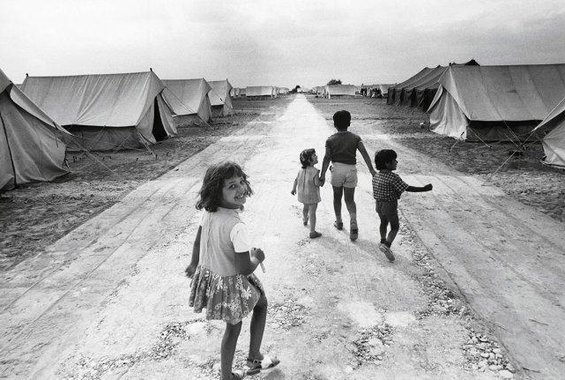
The displacement of residents in Cyprus following the Turkish military operations of July and August 1974 remains one of the largest proportional demographic shifts in the island's modern history. Thousands were forced from their homes during the two-stage invasion, profoundly altering community dynamics across the country.

In the aftermath, diplomatic initiatives such as the Third Vienna Accord attempted to address urgent humanitarian conditions for enclaved populations. However, historical analyses indicate that the practical execution of these agreements led to structured population transfers between the north and south. This outcome effectively consolidated the territorial bizonality that characterizes the island's ongoing political division today. Five decades later, the structural demographic shifts continue to influence intercommunal dialogue and broader peace negotiations.

Sources: Phileleftheros (philenews)

Read more
02
ContinuingAI-generated
Global uncertainty persists six months after strikes on Iran

Global uncertainty persists six months after strikes on Iran

Six months after US and Israeli airstrikes on Iran, analysts assess maritime disruptions, economic endurance, and the broader global fallout.

Six months after joint United States and Israeli airstrikes against Iran, analysts caution that the conflict's ultimate trajectory remains uncertain despite severe damage to Tehran's military infrastructure. Iran continues to exert influence over critical maritime routes, particularly the Strait of Hormuz, sustaining ongoing pressure on global energy markets. According to experts consulted by Radio Free Europe, the next phase will be determined by Iran's economic resilience, the efficacy of Western sanctions, proxy activities, and whether diplomatic channels can be reopened.

Concurrently, former diplomat Zef Mazi noted that localized Balkan issues, such as controversies surrounding the Ibër River, directly reflect this wider systemic friction between major world powers.

Sources: BalkanWeb, Gazeta Tema, Koha

Read more
03
ContinuingAI-generated
European schools and experts tighten rules around artificial intelligence

European schools and experts tighten rules around artificial intelligence

European governments and educators are introducing stricter exam rules and analog teaching methods to combat AI-assisted cheating and psychological risks among youth.

European educators and policymakers are implementing new strategies to counter academic and psychological risks associated with generative artificial intelligence.

In Denmark, the government introduced rules requiring upper secondary students to orally defend written assignments and face increased exam surveillance to prevent AI-generated cheating. Meanwhile, some teachers in Germany are reintroducing analog instruction, removing digital devices from classrooms to ensure students build core critical thinking skills without relying on software.

Beyond academic integrity, child safety experts express concern over the emotional impact of conversational tools. Advisors warn that friendly chatbots can lead to unhealthy attachments among young users. Experts also criticized tech firms for attempting to solve youth protection issues with automated AI solutions rather than structural safety controls.

Sources: Correctiv, Der Spiegel, Der Standard, FAZ, Tagesschau

Read more
04
ContinuingAI-generated
Czech authorities monitor Russian hybrid threats as diplomatic ties with Ukraine continue

Czech authorities monitor Russian hybrid threats as diplomatic ties with Ukraine continue

Czech authorities monitor Russian hybrid threats while parliamentary leaders maintain Kyiv visits and police address labor agency fraud.

Czech Prime Minister Andrej Babiš confirmed that domestic security agencies are monitoring potential Russian hybrid threats targeting Western allies, echoing recent warnings from Polish Prime Minister Donald Tusk.

In diplomatic developments, parliamentary Deputy Speaker Barbora Urbanová visited Kyiv to confer with her Ukrainian counterpart, Olena Kondratiuk, following an earlier procedural rejection by the Czech parliamentary steering committee. Meanwhile, Chief of General Staff Miroslav Hlaváč awaits pending approval from the Ministry of Defence to attend an upcoming summit with European military commanders in Ukraine.

Domestically, Czech police launched the "Kobra 26" task force to target fraudulent employment agency networks involving Ukrainian workers, which officials estimate could cost the state billions of korunas in unpaid taxes. Separately, updated European Union regulations extended temporary protection for displaced Ukrainians through March 2028, while conditioning status renewals on fulfilling military service obligations.

Sources: Deník N, Ekonomický deník, iROZHLAS, Respect, Seznam Zprávy

Read more
05
ContinuingAI-generated
Czech child welfare system faces scrutiny amid rising abuse cases and new EU rules

Czech child welfare system faces scrutiny amid rising abuse cases and new EU rules

Czech authorities report record child abuse cases amid institutional gaps, while new EU digital safety rules and expanding early care facilities take shape.

Czech authorities recorded over 10,000 cases of child abuse, neglect, and exploitation over the past year, marking a multi-year high. Social services removed 3,616 children from their homes, an increase of 300 from the previous year. Experts remain divided on whether the surge stems from growing social instability or heightened public sensitivity, warning that official statistics capture only a fraction of the underlying issue. Child welfare advocates and ombudsman evaluations pointed to a shortage of specialized preventive services and clear legal guidelines.

Concurrently, the Ministry of Labour and Social Affairs is finalizing over 300 early childcare facilities funded by seven billion korunas from the EU National Recovery Plan, though observers warn quality regulations remain unaddressed. Meanwhile, the European Commission introduced the EU KIDS Act to prohibit social media access for children under 13 and restrict independent accounts until age 15.

Sources: Deník N, Hospodářské noviny, iROZHLAS, Respect, Seznam Zprávy.

Read more
Share