Top news

Sep 19, 2026, 02:00 PM UTC

← Latest news

01
ContinuingAI-generated
Legacy of 1974 displacement and Vienna Accord continues to shape Cyprus division

Legacy of 1974 displacement and Vienna Accord continues to shape Cyprus division

An analysis of the 1974 Turkish invasion of Cyprus details how population displacement and the Third Vienna Accord entrenched the island's bizonality.

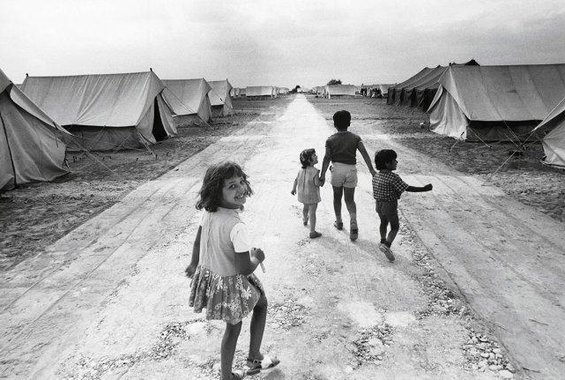
The demographic and political consequences of the 1974 Turkish military invasion of Cyprus continue to influence the island's geopolitical landscape. Following military operations in July and August 1974, Cyprus experienced widespread population displacement, fundamentally altering its demographic distribution.

Subsequent diplomatic negotiations produced the Third Vienna Accord, intended to address immediate humanitarian concerns for enclaved residents. However, historical reviews indicate the agreement inadvertently entrenched territorial bizonality by establishing a framework for population moves. That structural division remains central to contemporary diplomatic negotiations and intercommunal relations.

Sources: Phileleftheros (philenews)

Read more
02
ContinuingAI-generated
US, Denmark, and Greenland reach defense accord for Arctic security

US, Denmark, and Greenland reach defense accord for Arctic security

US President Donald Trump announced a security agreement with Denmark and Greenland granting Washington defense authority and barring foreign military bases in the territory.

United States President Donald Trump has announced a security agreement with Denmark and Greenland aimed at enhancing Arctic defense. According to social media statements by Trump, the pact grants Washington permanent defense authority in the region and prohibits foreign adversaries from building military installations on Greenlandic territory. Danish and Greenlandic authorities confirmed the deal, which is expected to be formally signed during the upcoming United Nations General Assembly. The Danish government emphasized that the agreement respects the sovereignty of the realm while bolstering security for NATO and Europe.

Sources: Aftenposten, Dagens Industri, Morgunblaðið, NRK, Vísir.

Read more
03
ContinuingAI-generated
Czech authorities monitor hybrid threats as military and labor policies unfold

Czech authorities monitor hybrid threats as military and labor policies unfold

Czech authorities are monitoring Russian hybrid threats while dealing with diplomatic visits to Kyiv, military trip approvals, agency labor fraud, and updated EU protection rules for Ukrainians.

Czech Prime Minister Andrej Babiš confirmed that domestic security agencies are monitoring potential Russian hybrid attacks targeting Western allies supporting Ukraine, echoing recent warnings from Polish Prime Minister Donald Tusk.

In diplomatic developments, parliamentary Deputy Speaker Barbora Urbanová visited Kyiv to confer with her Ukrainian counterpart, Olena Kondratiuk, following an earlier procedural rejection by the Czech parliamentary steering committee. Meanwhile, Chief of General Staff Miroslav Hlaváč awaits pending approval from the Ministry of Defence to attend an upcoming summit with European military commanders in Ukraine.

Domestically, Czech police launched the "Kobra 26" task force to crack down on fraudulent employment agency networks involving Ukrainian workers, which officials estimate could cost the state billions of korunas in unpaid taxes. Separately, new European Union regulations have extended temporary protection for displaced Ukrainians through March 2028, while conditioning status renewal on fulfilling home-country military service obligations.

Sources: Deník N, Ekonomický deník, iROZHLAS, Respect, Seznam Zprávy

Read more
04
ContinuingAI-generated
European schools and experts tighten rules around artificial intelligence

European schools and experts tighten rules around artificial intelligence

Denmark introduces oral exam defenses while German educators adopt analog methods to limit student AI reliance and protect youth mental health.

European educational institutions and child protection experts are increasing scrutiny over generative artificial intelligence to safeguard academic integrity and youth well-being.

In Denmark, the government introduced stricter regulations for upper secondary schools, requiring oral defenses of written assignments and enhanced exam monitoring to prevent AI-assisted cheating. Meanwhile, some educators in Germany are increasingly returning to analog instruction methods, temporarily removing digital devices from classrooms to ensure students preserve core learning and critical thinking skills.

Beyond academic performance, youth safety advisors warn of the psychological risks posed by empathetic chatbots, noting that children could develop strong emotional attachments to conversational software. Experts have also criticized tech industry proposals to handle youth protection through automated AI tools rather than fundamental safety controls.

Sources: Correctiv, Der Spiegel, Der Standard, FAZ, Tagesschau

Read more
05
ContinuingAI-generated
Czech child welfare reports show surge in abuse cases amid EU digital safety proposal

Czech child welfare reports show surge in abuse cases amid EU digital safety proposal

Child abuse cases in the Czech Republic hit a 20-year high, while the EU considers social media restrictions under the proposed EU KIDS Act.

The Czech Republic recorded a significant increase in child abuse, neglect, and exploitation cases over the past year, reaching a two-decade high with over 10,000 cases identified by social services. Reports indicate that 3,616 children were removed from their families. Experts and the ombudsman noted that systemic shortcomings, including a lack of clear assessment guidelines and specialized support services, contribute to the issue.

Simultaneously, the Czech Ministry of Labour is completing a seven-billion-koruna expansion funded by the EU National Recovery Plan to open over 300 childcare facilities by September, though critics caution that quality standards remain unaddressed.

On a broader level, the European Commission introduced the proposed EU KIDS Act, which seeks to ban social media access for children under 13 and restrict independent account creation until age 15 to enhance online safety across member states.

Sources: Deník N, Hospodářské noviny, iROZHLAS, Respect, Seznam Zprávy.

Read more
Share