Top news

Sep 18, 2026, 10:00 AM UTC

← Latest news

01
ContinuingAI-generated
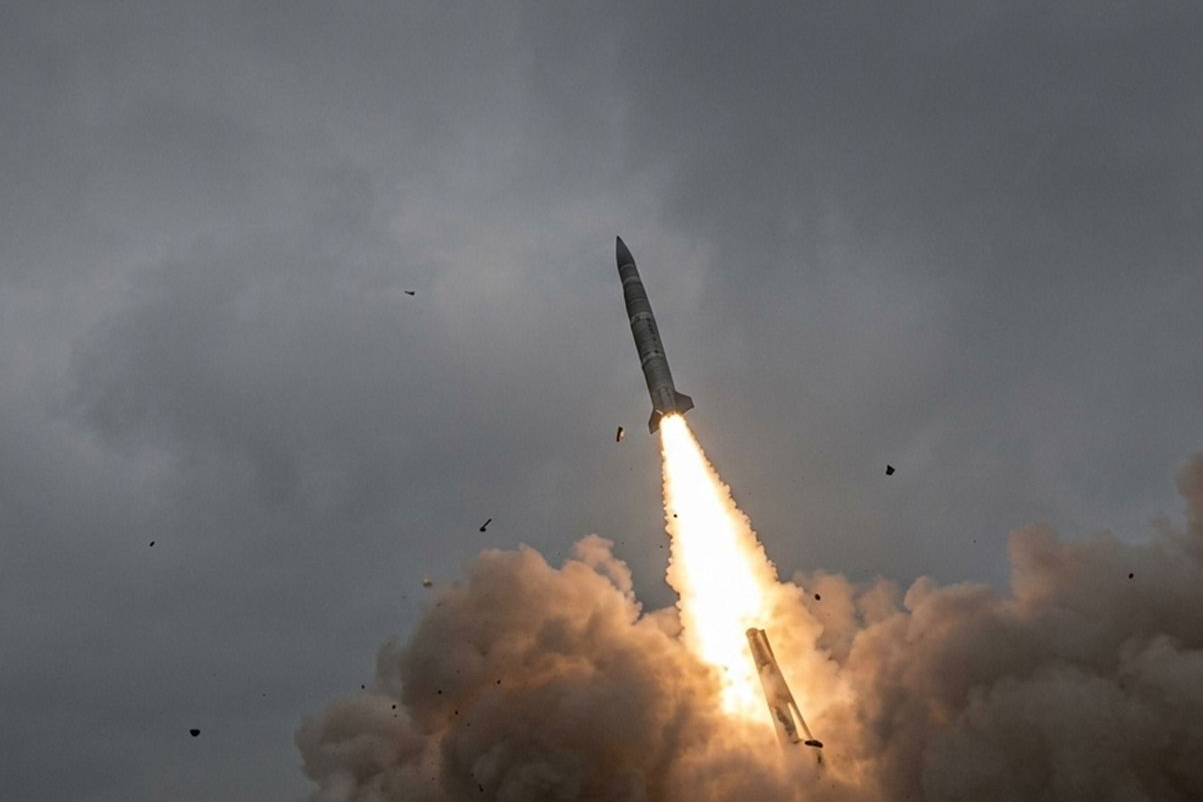
Ukraine moves to develop domestic missiles and glide bombs amid air defense shortages

Ukraine moves to develop domestic missiles and glide bombs amid air defense shortages

Ukraine is pursuing domestic missile development and precision glide bomb kits to counter Russian attacks as Western air defense production faces years of delays.

Amid intensified Russian ballistic missile strikes, Ukraine is accelerating efforts to strengthen its domestic defense industry while facing long delays for Western systems. Ukrainian President Volodymyr Zelenskyy acknowledged that setting up domestic production of U.S.-designed Patriot systems under American licensing could take up to several years due to bureaucratic hurdles.

To mitigate severe shortages of air defense interceptors and reduce dependency on foreign military aid, Ukrainian companies are developing native ballistic missiles, though technical challenges currently impede mass manufacturing. Simultaneously, Ukrainian forces are adopting the "Equalizer" precision glide bomb kit developed by DG Industry and the Brave1 incubator. The system converts standard unguided aviation bombs into standoff precision munitions compatible with both Soviet-era aircraft and Western fighters.

Sources: NEXTA, NV, Point, The Insider, Українська правда

Read more
02
ContinuingAI-generated
Finnish president questions timelines for potential Russian attack on NATO

Finnish president questions timelines for potential Russian attack on NATO

Finnish President Alexander Stubb questioned forecasts of a Russian attack on NATO by 2029, even as experts warn of rising gray-zone activity in the Baltic region.

Finnish President Alexander Stubb has dismissed German predictions that Russia could attack NATO territory by 2029, stating he sees "neither evidence nor facts" to support such forecasts. Speaking to German media, Stubb expressed skepticism that Moscow would directly challenge the alliance, though he emphasized that member states must maintain high readiness for any scenario.

While direct military conflict is considered unlikely by leadership, regional security officials highlight persistent non-conventional pressure. Military analyst Col. Maciej Korowaj cautioned that Russian forces are actively mapping NATO defensive responses in the Baltic Sea region to refine operational plans, warning that the risk of provocations could rise starting in September. Consequently, Poland, Finland, and the Baltic states are continuing to strengthen regional defense cooperation against hybrid and intelligence threats.

Sources: Defence24, Portal obronny, Rzeczpospolita, TVP info

Read more
03
ContinuingAI-generated
US midterm elections threaten to shift Washington's focus away from Ukraine, experts warn

US midterm elections threaten to shift Washington's focus away from Ukraine, experts warn

Upcoming US midterm elections risk shifting Washington's focus away from foreign policy priorities as political gridlock and electoral concerns mount.

As the United States prepares for congressional midterm elections, shifting political dynamics in Washington pose significant implications for foreign policy. Former Ukrainian Ambassador Valeriy Chaly warned that if Republicans lose control of both houses of Congress, American lawmakers may become absorbed in domestic political battles, diminishing focus on supporting Ukraine.

Concurrently, advisers to President Donald Trump are reportedly urging restraint against military escalation with Iran, seeking to avoid electoral backlash that could undermine the party's legislative standing. Although a visiting delegation of U.S. lawmakers in Kyiv recently reaffirmed bipartisan commitment to strengthening Ukraine's position, members conceded that partisan gridlock in Congress continues to delay critical legislation, including expanded sanctions against Russia. Observers note that maintaining pressure on Moscow remains vital for future diplomatic leverage.

Sources: NV, Liga net, Українська правда, Радіо Свобода

Read more
04
ContinuingAI-generated
EU defense autonomy plans face industry pushback and supply bottlenecks

EU defense autonomy plans face industry pushback and supply bottlenecks

EU efforts to cut reliance on US military tech face pushback from defense executives alongside supply delays and drone threats on the eastern flank.

The European Union's push to reduce reliance on American military technology is encountering resistance from defense industry leaders alongside critical supply bottlenecks. European defense representatives warn that rapidly replacing US systems could weaken cybersecurity and disrupt coordination within NATO. At the same time, regional forces contend with cost asymmetries on the eastern flank, where inexpensive drones regularly trigger expensive air defense interceptors. These operational concerns are compounded by anticipated delays in US arms exports as Washington prioritizes replenishing its own depleted Patriot missile stockpiles.

Sources: Belsat, NEXTA, Point, The Insider

Read more
05
ContinuingAI-generated
Studies reveal persistent gender inequality in Portugal as Atlantic migration drops

Studies reveal persistent gender inequality in Portugal as Atlantic migration drops

A study highlights gender gaps in Portuguese governance, alongside high domestic violence rates and a 78 percent drop in West African Atlantic migration to Spain.

A comprehensive study by the Francisco Manuel dos Santos Foundation has revealed that women represented only 15 percent of Portuguese cabinet ministers over the last 50 years. Researchers noted that female politicians face higher technical credential standards than men to attain executive positions. Simultaneously, domestic abuse remains a persistent concern in Portugal, with police logging more than 14,000 cases—averaging 82 complaints daily.

In humanitarian affairs, eight Afghan women marked one year of asylum in Portugal after fleeing severe Taliban restrictions on movement and speech. Separately, data from the International Organization for Migration showed a 78 percent decline in West African Atlantic route arrivals to Spain during the first four months of 2026 compared to 2025. The agency credited enhanced maritime border cooperation between Senegal and Mauritania for the reduction, though it warned that shifting routes remain hazardous.

Sources: Diário de Notícias (DN), Expresso, Expresso das Ilhas, RTP (Rádio e Televisão de Portugal)

Read more
Share