Top news

Sep 17, 2026, 10:00 AM UTC

← Latest news

01
ContinuingAI-generated
US escorts oil through Strait of Hormuz as Iran deploys mines and sets conditions

US escorts oil through Strait of Hormuz as Iran deploys mines and sets conditions

The US military conducted a major oil escort operation through the Strait of Hormuz, prompting Iran to launch mine-laying rockets and demand an end to sanctions.

The United States military executed its largest maritime operation since the conflict began six months ago, utilizing naval, aerial, and space assets to escort crude oil tankers through the Strait of Hormuz and targeting Iranian infrastructure on Larak Island. Iranian forces retaliated by launching mine-laying rockets into the channel. Tehran announced that the strategic waterway "will not be opened" until Washington meets several requirements, including ending port blockades, lifting oil sanctions, releasing frozen Iranian assets, and terminating military operations. Before the escalation six months ago, about 20 million barrels of crude oil passed through the strait daily.

Sources: Expresso, Expresso das Ilhas, RTP (Rádio e Televisão de Portugal)

Read more
02
ContinuingAI-generated
Reports detail political gender gaps, domestic violence, and changing migration routes

Reports detail political gender gaps, domestic violence, and changing migration routes

Recent Portuguese reports examine gender representation in politics, high domestic violence rates, and shifting West African migration trends.

Recent reports from Portuguese and regional media highlight ongoing issues regarding gender equality, domestic violence, and migration dynamics. A study by the Francisco Manuel dos Santos Foundation revealed that female politicians accounted for only 15 percent of Portuguese cabinet ministers over the last 50 years, with female leaders facing higher technical demands to reach executive posts.

Concurrently, domestic violence remains a critical challenge in Portugal, with police recording more than 14,000 cases, averaging 82 reported incidents daily. In human rights news, eight Afghan women marked their first year of sanctuary in Portugal after fleeing Taliban restrictions.

Separately, the International Organization for Migration reported a 78 percent drop in West African Atlantic arrivals to Spain between January and April 2026 compared to 2025, attributing the decline to increased border enforcement between Senegal and Mauritania.

Sources: Diário de Notícias (DN), Expresso, Expresso das Ilhas, RTP (Rádio e Televisão de Portugal)
Read more
03
ContinuingAI-generated
Ukrainian and Russian forces battle across eastern fronts as claims of local advances persist

Ukrainian and Russian forces battle across eastern fronts as claims of local advances persist

Clashes persist across eastern Ukraine as Ukrainian troops record over 200 daily battles while pursuing local tactical operations near Kupiansk and Lyman.

Fierce fighting continues along multiple sectors of the Ukrainian front line, with Ukrainian military reports recording more than 220 to 250 daily combat engagements. Russian troops have maintained heavy offensive pressure on the Pokrovsk, Kostiantynivka, and Lyman sectors, attempting to pierce Ukrainian defensive lines.

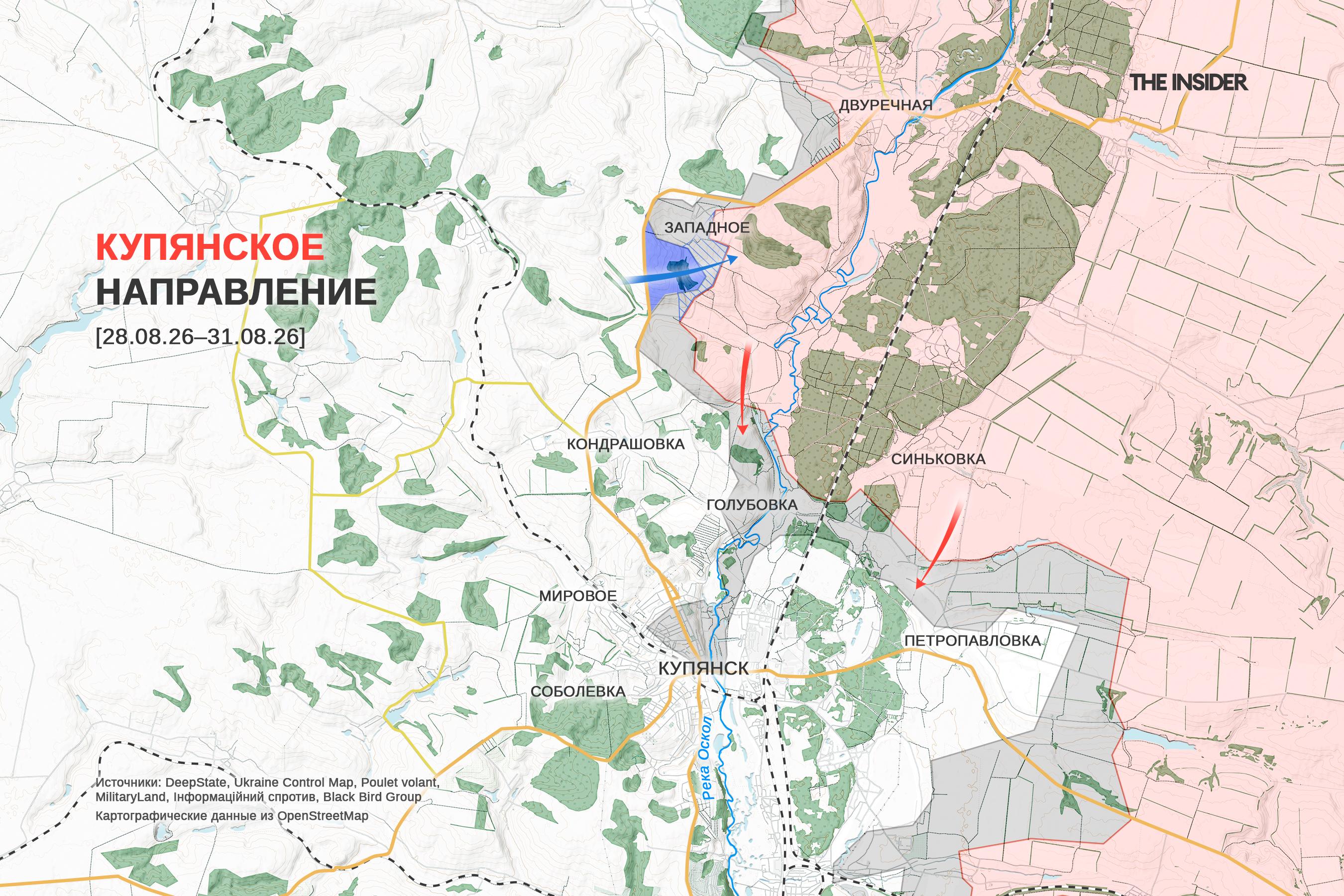
Simultaneously, Ukrainian forces have pursued counter-tactical operations. Near Kupiansk on the right bank of the Oskil River, Ukrainian infantry conducted clearing operations following electronic warfare measures to neutralize Russian drone capabilities. Reports also indicate potential Ukrainian territorial gains near Lyman covering up to 200 square kilometers.

Conflicting claims remain prominent in other areas. The Russian Defense Ministry reported capturing several settlements approaching Sumy, while Russian military leadership explicitly denied reports of Ukrainian advances in the Zaporizhzhia region.

Sources: NV, Radio Svoboda, The Insider, Ukrainska Pravda.

Read more
04
ContinuingAI-generated
Ukraine expands domestic weapons production amid air defense delays

Ukraine expands domestic weapons production amid air defense delays

Ukraine is expanding domestic arms manufacturing, developing native ballistic missiles and glide bombs to offset Patriot system production delays.

Ukraine is scaling up its domestic defense manufacturing to counter Russian ballistic missile attacks while facing delays in foreign air defense support. Ukrainian President Volodymyr Zelensky noted that bureaucratic processes and U.S. licensing requirements will postpone local production of Patriot defense systems by 12 months to several years.

To mitigate ongoing shortages, two Ukrainian defense contractors are developing indigenous ballistic missiles, though mass production remains hindered by technological hurdles. Concurrently, the military is procuring the locally developed "Equalizer" glide bomb conversion system. Created by DG Industry with the Brave1 incubator, the kit transforms unguided bombs into precision munitions usable on both Soviet-era jets and Western F-16s, aiming to lessen reliance on Western arms imports.

Sources: NEXTA, NV, Point, The Insider, Українська правда

Read more
05
ContinuingAI-generated
Finnish president downplays risk of direct Russian attack on NATO

Finnish president downplays risk of direct Russian attack on NATO

Finnish President Alexander Stubb dismissed warnings of a Russian attack on NATO by 2029, while experts highlight rising hybrid risks in the Baltic.

Finnish President Alexander Stubb has dismissed warnings from Berlin suggesting Russia could launch a direct attack against NATO by 2029, stating he sees "neither evidence nor facts" to support such predictions. In an interview with Germany's Bild, Stubb expressed confidence that Moscow would not risk attacking the world's strongest military alliance, though he stressed that member states must remain prepared for any scenario.

While Stubb downplayed the likelihood of a major conventional war, regional allies are increasingly concerned about non-conventional threats. Military experts, including Polish analyst Col. Maciej Korowaj, warn that Russia is mapping NATO response systems in the Baltic Sea to update plans for potential autumn provocations. In response, Poland, Finland, Sweden, and the Baltic states are stepping up intelligence coordination and defense cooperation.

Sources: Defence24, Portal obronny, Rzeczpospolita, TVP info

Read more
Share