Top news

Sep 12, 2026, 05:30 AM UTC

← Latest news

01
ContinuingAI-generated
Eastern German political debate intensifies over school curriculum and cultural funding

Eastern German political debate intensifies over school curriculum and cultural funding

Political debates in eastern Germany heat up over far-right symbols in schools, cultural funding proposals, and regional identity ahead of elections.

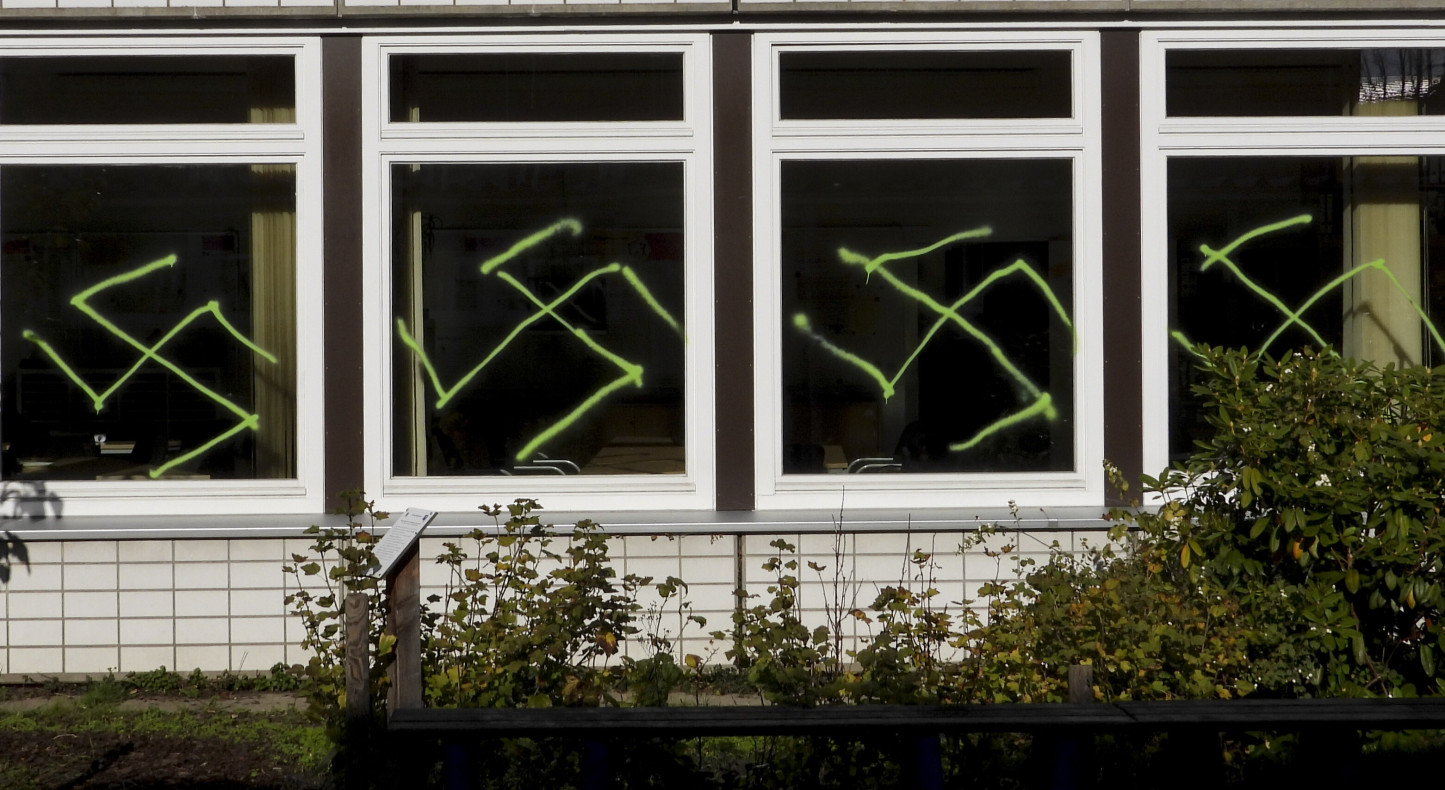
Ahead of upcoming state elections in eastern Germany, debates surrounding regional identity, education, and cultural funding have intensified. Teachers in eastern states have voiced concern over an increase in far-right behavior and extremist symbols among students. To address historical knowledge gaps, the federal commissioner for SED dictatorship victims, Evelyn Zupke, proposed mandatory student visits to East German memorial sites.

Concurrently, cultural policy has become a focal point in Saxony-Anhalt, where the Alternative for Germany leads in polls and has proposed cutting funding for cultural projects it deems "anti-German," raising concerns among heritage and arts organizations. Separately, Berlin's education administration faces logistical strain, with nearly 400 teachers on medical leave for more than a year.

Sources: Correctiv, Der Spiegel, DW, FAZ, Tagesschau

Read more
02
ContinuingAI-generated
Schools in Europe and US restrict artificial intelligence over learning concerns

Schools in Europe and US restrict artificial intelligence over learning concerns

Educational authorities in Europe and New York City are curbing AI use in schools to combat exam fraud and protect student development.

Governments and educators across Europe and the United States are increasing restrictions on artificial intelligence in classrooms to safeguard learning and academic integrity.

In Denmark, upper secondary students must now orally defend written assignments and perform more coursework under direct supervision following new government measures against exam fraud. Meanwhile, New York City has instituted a one-year ban on instructional AI for nearly 600,000 public school students aged seven to 14, prioritizing human-led instruction while allowing teachers to use AI for lesson preparation.

In Germany, child protection experts and educators have expressed growing concern regarding youth overreliance on automated tools. Some teachers are returning to analog instruction methods, while government advisors warn that technology-driven fixes cannot address the mental health and safety risks associated with AI.

Sources: Correctiv, Der Spiegel, FAZ, ORF, Tagesschau

Read more
03
ContinuingAI-generated
Disinformation and strategic rivalries shape Saxony-Anhalt election campaign

Disinformation and strategic rivalries shape Saxony-Anhalt election campaign

Ahead of the Saxony-Anhalt state election, fact-checkers debunk ballot fraud claims as parties clash over leadership and foreign policy narratives.

Ahead of the state election in Saxony-Anhalt, political tension has intensified amid widespread false claims and competing political strategies. Independent fact-checkers debunked online viral videos alleging that Minister-President Sven Schulze planned to block the vote or disqualify opposition figures. Authorities and media monitors confirmed there is no evidence supporting claims of widespread mail-in ballot tampering or election fraud.

Meanwhile, members of the Alternative for Germany (AfD) have encouraged supporters to monitor polling stations, raising unverified concerns regarding vote counts in care facilities. Minister-President Schulze of the Christian Democratic Union (CDU) framed the vote as a direct choice between his leadership and the AfD. Observers also noted that political parties adopting pro-Russian foreign policy stances hold significant combined support in public opinion polls.

Sources: Correctiv, Der Spiegel, DW, FAZ, Tagesschau.

Read more
04
ContinuingAI-generated
Monti and Vannacci clash over EU policy and fascist rhetoric at Cernobbio forum

Monti and Vannacci clash over EU policy and fascist rhetoric at Cernobbio forum

Mario Monti and Roberto Vannacci clashed over European integration, defense spending, and fascist rhetoric at the Ambrosetti Forum in Cernobbio.

Former Italian Prime Minister Mario Monti and MEP Roberto Vannacci engaged in a heated debate on European integration at the Ambrosetti Forum in Cernobbio. Vannacci, leader of Futuro Nazionale, argued against increasing defense spending, criticized the European Green Deal, and asserted that Russia poses no military threat to continental Europe.

Monti sharply rejected these claims, accusing Vannacci's rhetoric of channeling "the spirit of fascism." Vannacci dismissed the charge as "ridiculous," stating his goal is merely to reform European governance. The forum audience overwhelmingly supported Monti, openly challenging Vannacci over his past predictions regarding the war in Ukraine. The conference also featured speeches from European Council President António Costa regarding EU expansion and Rassemblement National leader Jordan Bardella.

Sources: ANSA, Corriere della Sera, Il Messaggero, Il Sole 24 Ore, La Repubblica.

Read more
05
Europe pursues greater space autonomy with defense initiatives and commercial milestones

Europe pursues greater space autonomy with defense initiatives and commercial milestones

European leaders and space agencies are advancing defense initiatives and commercial capabilities to strengthen European autonomy in space.

European leaders and space agencies are accelerating efforts to achieve greater autonomy in space technology and defense. At the International Space Summit in Paris, European officials advocated for reduced reliance on foreign powers and enhanced orbital defense capabilities. German Defense Minister Boris Pistorius announced plans to establish a "Space Safety and Security Academy" in Germany open to EU partners, alongside efforts to advance a European Space Component Command.

Parallel commercial developments highlight the sector's momentum. Munich-based startup Isar Aerospace successfully launched a carrier rocket into orbit from Norway, prompting the European Space Agency to pledge 200 million euros in additional funding. Meanwhile, European satellite manufacturers are exploring consolidation to meet surging government demand for defense, communications, and reconnaissance infrastructure.

Sources: FAZ, Hartpunkt, Handelsblatt, Der Spiegel, Die Zeit.

Read more
Share