Top news

Aug 31, 2026, 12:30 PM UTC

← Latest news

01
ContinuingAI-generated
Ukrainian strikes hit Russian rocket facilities as front-line fighting escalates

Ukrainian strikes hit Russian rocket facilities as front-line fighting escalates

Ukrainian strikes hit aerospace sites in Russia's Samara region while heavy fighting continued along eastern front-line sectors.

Ukrainian long-range strikes targeted industrial sites in Russia's Samara region, hitting facilities associated with the Progress Rocket Space Centre and the nearby Aviakor aviation plant. Satellite imagery confirmed damage to buildings involved in manufacturing Soyuz rockets and servicing strategic aircraft. Regional officials acknowledged a large-scale missile attack, while drone strikes were reported across the Nizhny Novgorod, Penza, and Rostov regions, including near the Savasleyka military airfield.

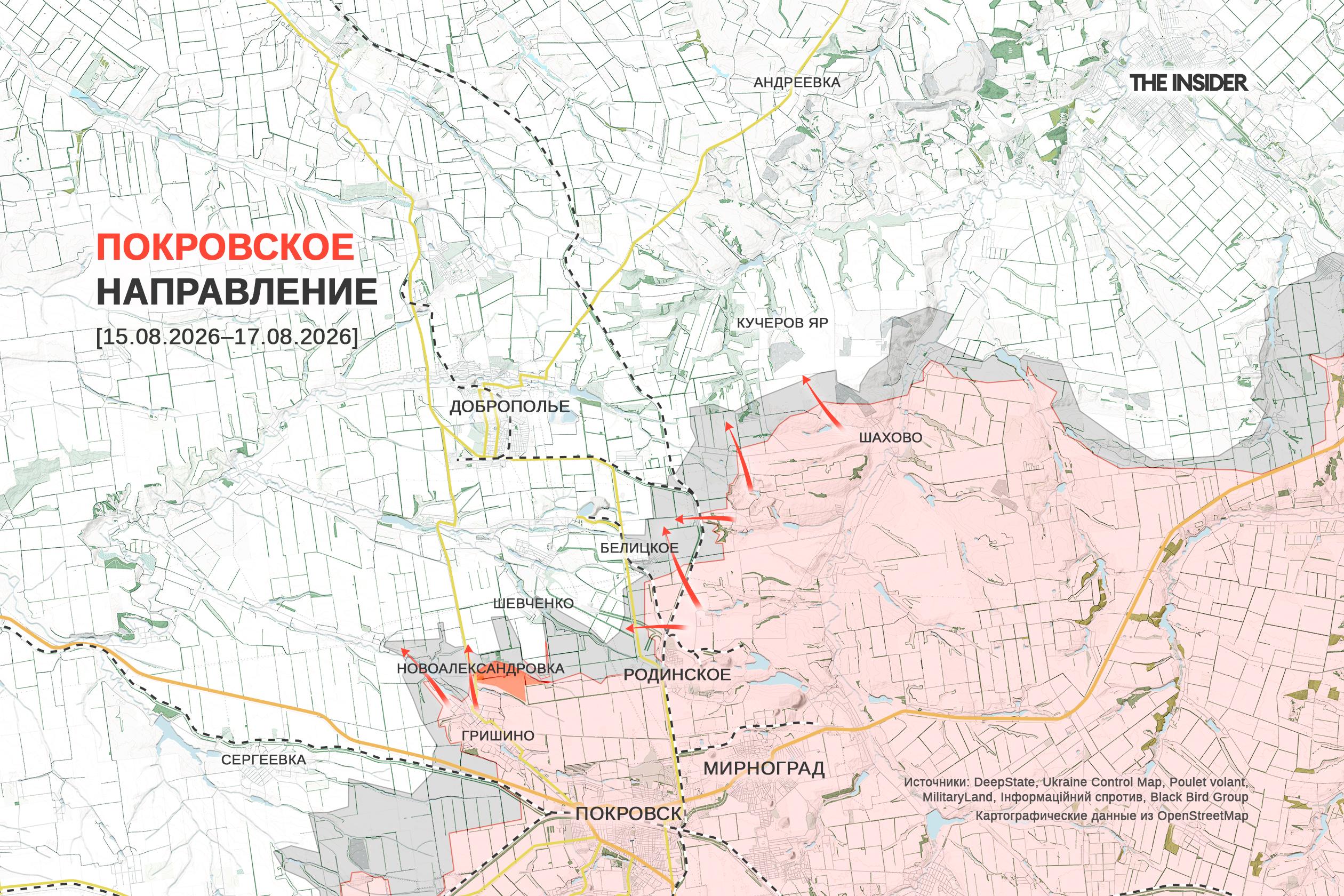
Concurrently, intense ground operations continued across eastern Ukraine, with Ukrainian authorities logging over 250 combat engagements within 24 hours. Russian forces expanded control near Dobropillia in the Pokrovsk sector and advanced toward dividing Ukrainian positions along the Oskil River near Kupiansk, while Ukrainian troops countered assaults in the Lyman and Kostyantynivka sectors.

Sources: Mediazona, Point, Radio Svoboda, The Insider, Ukrainska Pravda

Read more
02
ContinuingAI-generated
Ukraine turns to domestic weapons amid Patriot licensing delays

Ukraine turns to domestic weapons amid Patriot licensing delays

Ukraine is pushing to develop domestic missiles and glide bombs to bridge air defense gaps as U.S. licensing delays local Patriot system manufacturing.

Facing delays in obtaining U.S. licensing for local Patriot air defense system production, Ukraine is accelerating domestic defense initiatives to mitigate its vulnerability to ballistic strikes. President Volodymyr Zelensky noted that regulatory procedures could delay local Patriot manufacturing for up to several years.

In response, two domestic firms are developing indigenous ballistic missiles, though technological challenges continue to delay mass production. To meet urgent battlefield demands, the Ukrainian Armed Forces have begun procuring the "Equalizer" glide bomb kit. Developed by DG Industry alongside the Brave1 technology cluster, the module converts unguided aircraft bombs into long-range precision munitions. The system operates on Soviet-era fighters like the MiG-29 and Su-24, with planned compatibility for Western platforms including the F-16, aiming to decrease reliance on foreign military supplies.

Sources: NEXTA, NV, Point, The Insider, Українська правда

Read more
03
ContinuingAI-generated
Tensions persist in Strait of Hormuz despite Iran-Oman route agreement

Tensions persist in Strait of Hormuz despite Iran-Oman route agreement

Military strikes and strict demands prolong the Strait of Hormuz crisis, despite Iran and Oman agreeing on a safe navigation route.

Tensions in the Strait of Hormuz remain high following a United States precision attack on Iranian platforms at Larak Island, which Washington alleged were preparing naval mines. Tehran retaliated with drone strikes targeting American military facilities in Jordan and the United Arab Emirates.

The exchange comes amidst a six-month slump in maritime traffic, with daily transits dropping from 95 to around 15. Iranian Foreign Ministry spokesperson Ismail Baghaei affirmed that the waterway will remain closed until Washington lifts oil sanctions and port blockades, unfreezes assets, and halts regional military actions.

However, diplomatic talks offer a potential opening, as Tehran confirmed a technical agreement with Oman mapping a safe navigation route through the strait following weeks of discussions.

Sources: Expresso, Expresso das Ilhas, Jornal Económico, RTP (Rádio e Televisão de Portugal).

Read more
04
ContinuingAI-generated
Spain opens temporary shelters in Ceuta following migration surge

Spain opens temporary shelters in Ceuta following migration surge

Spain has set up temporary facilities in Ceuta for roughly 2,000 migrants remaining after July's mass border crossing from Morocco.

Spanish authorities have begun housing around 2,000 migrants in two temporary reception facilities in the North African enclave of Ceuta. The Spanish Ministry of Migration stated that the emergency shelters aim to provide basic accommodations and prevent individuals from sleeping on public beaches and streets.

The measure comes three weeks after an estimated 72,000 people crossed into Ceuta from Morocco in late July, though the vast majority returned shortly after. A rumored secondary mass crossing expected on 15 August failed to materialise after Spain and Morocco deployed heavy security reinforcements along the border fence.

Despite the reduced numbers, tension persists among local residents facing ongoing public disruption. While official efforts focus on humanitarian relief and security coordination, some residents have described the situation as an "invasion" while expressing anger toward political groups exploiting the crisis.

Sources: Correctiv, Die Zeit, FAZ, ORF, Tagesschau.

Read more
05
ContinuingAI-generated
German political debate turns to education, historical memory, and culture ahead of elections

German political debate turns to education, historical memory, and culture ahead of elections

German political debate intensifies over mandatory East German memorial visits, far-right classroom behavior, AfD cultural funding cuts, and teacher shortages in Berlin.

Educational policy and historical memory continue to shape political debate across Germany ahead of upcoming regional elections in the eastern states. Evelyn Zupke, the federal commissioner for victims of the SED dictatorship, advocated for mandatory school visits to former East German memorial sites to address gaps in students' historical knowledge. Simultaneously, teachers in eastern regions reported growing concerns regarding far-right symbols and extremist behavior among youth in classrooms.

Political friction has also extended to cultural policy. In Saxony-Anhalt, the Alternative for Germany proposed defunding cultural projects and institutions it considers anti-German, raising concerns for Holocaust memorial sites, the Bauhaus, and regional theater funding. Meanwhile, municipal education systems face operational strain, with parliamentary data showing nearly 400 teachers in Berlin absent on long-term sick leave for over a year.

Sources: Correctiv, Der Spiegel, DW, FAZ, Tagesschau.

Read more
Share