Top news

Aug 29, 2026, 12:00 PM UTC

← Latest news

01
ContinuingAI-generated
Ukrainian strikes hit Russian aerospace plants as frontline battles intensify

Ukrainian strikes hit Russian aerospace plants as frontline battles intensify

Ukrainian strikes hit Russian industrial and defense facilities in Samara, while heavy ground battles continue across the Kupiansk, Lyman, and Pokrovsk sectors.

Ukrainian forces launched targeted missile and drone strikes against key Russian defense and space industrial sites, while heavy ground engagements continued along the frontline. Satellite imagery confirmed damage at Samara's Progress Rocket Space Centre and the adjacent Aviakor aircraft repair facility, which service Soyuz space launch vehicles and Tu-95 strategic bombers. Drones and missiles were also reported across the Nizhny Novgorod, Penza, and Rostov regions, targeting sites near the Savasleyka airfield.

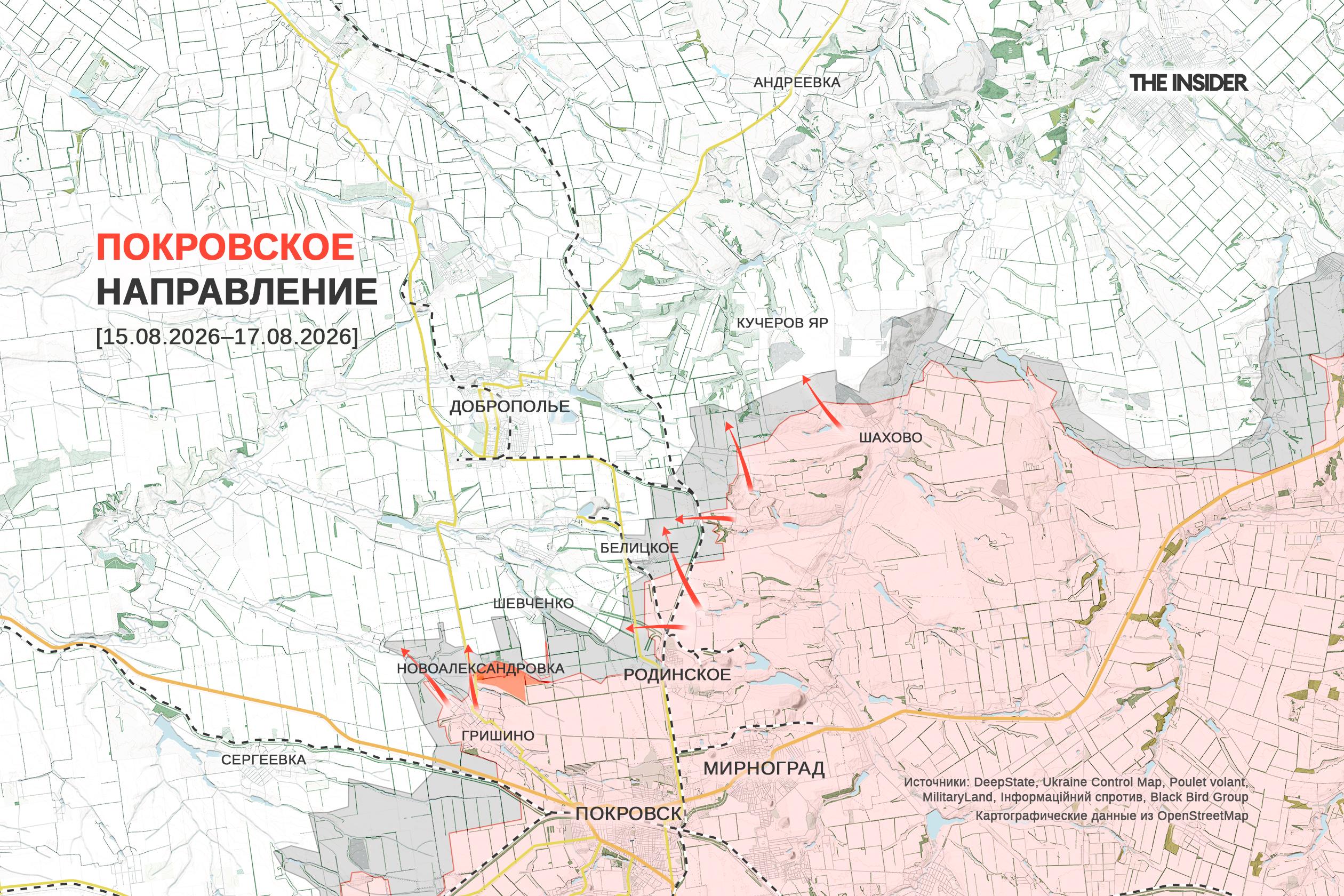
Concurrently, Ukraine's General Staff reported 254 combat clashes in 24 hours, with intense Russian assaults concentrated near Lyman and Kostyantynivka. Russian troops expanded their zone of control south of Dobropillia in the Pokrovsk sector and advanced toward severing Ukrainian positions along the Oskil River near Kupiansk. Meanwhile, Russian forces executed a missile strike targeting a major Ukrainian metallurgical enterprise.

Sources: Mediazona, Point, Радіо Свобода, The Insider, Українська правда.

Read more
02
ContinuingAI-generated
UK and Ukraine deepen defense ties as global military AI integration accelerates

UK and Ukraine deepen defense ties as global military AI integration accelerates

The UK and Ukraine have partnered on military AI data, as global powers like China accelerate the deployment of automated battlefield technologies.

International defense programs are rapidly integrating artificial intelligence into combat operations, drawing on battlefield lessons from Ukraine and technological developments in Asia.

Under a new bilateral agreement, British researchers will utilize combat footage and operational data from Ukraine’s Avengers AI Labs. The datasets will train defensive algorithms designed to shield critical infrastructure, airports, and power stations from drone attacks. Former Google chief executive Eric Schmidt characterized Ukraine’s technological adaptations as a historic military revolution, while Ukrainian analysts emphasized that frontline automation provides a vital asymmetric advantage to save military personnel.

Concurrently, China's People's Liberation Army has implemented specialized AI software to plan and coordinate simultaneous air strikes across hundreds of targets, underscoring a global shift toward automated warfare systems.

Sources: NEXTA, NV, Point, The Insider, Українська правда

Read more
03
ContinuingAI-generated
EU resists US trade pressure while advancing defense independence

EU resists US trade pressure while advancing defense independence

Brussels has rejected US claims regarding Chinese tariff evasion while moving to replace American military hardware with domestic production.

Relations between the European Union and the United States face heightened strain as Brussels pushes back against trade demands from Washington while accelerating efforts to reduce reliance on American defense technology.

European officials have rejected American claims that EU trade practices allow China to bypass US tariffs, while also declining further concessions on supply-chain sustainability and human rights regulations. Washington had asserted that previous adjustments to these green standards were insufficient.

Simultaneously, the EU is pursuing defense import substitution to build strategic autonomy in weapons production. This shift follows growing friction over NATO commitments, trade tariffs, and American policy toward Ukraine. Despite transatlantic tensions, Brussels confirmed an additional €6.1 billion military aid allocation for Ukraine, bringing total approved joint procurement commitments to over €22 billion.

Sources: NEXTA, Point, The Insider

Read more
04
ContinuingAI-generated
Iran shifts to offensive strategy as US pivots to economic pressure

Iran shifts to offensive strategy as US pivots to economic pressure

Iran declared an offensive strategy following expired talks, while the US shifted focus from military strikes to economic pressure.

Tensions between Washington and Tehran have escalated after a 60-day memorandum of understanding expired without a permanent peace agreement. Iranian military commanders announced a transition to a "fully offensive" operational strategy, vowing to persist until achieving the "complete defeat" of American and allied forces in the region.

In response to the deadlock, the United States declined to extend the temporary ceasefire. However, US President Donald Trump has temporarily deprioritized direct military action, choosing instead to intensify economic pressure. Reports indicate Trump privately suggested that reopening the Strait of Hormuz could mark a successful resolution, even if Tehran refuses a formal nuclear deal. Despite Washington's strategic adjustment, diplomatic negotiations remain stalled as both sides maintain firm positions.

Sources: Adevărul, Digi24, Flux24, HotNews, Ziarul de Gardă

Read more
05
ContinuingAI-generated
Afghan refugees share stories in Lisbon as regional migration shifts

Afghan refugees share stories in Lisbon as regional migration shifts

The Portuguese Council for Refugees launched a Human Library project in Lisbon as regional migration data shows a steep decline in West African Atlantic arrivals.

At Lisbon's Kalorama festival, the Portuguese Council for Refugees introduced a "Human Library" initiative, enabling festivalgoers to engage directly with refugees to counter social misconceptions. The effort features eight Afghan women marking one year of sanctuary in Portugal after escaping Taliban bans on female education and employment.

Simultaneously, domestic security metrics highlight ongoing societal challenges in Portugal, where law enforcement recorded over 14,000 domestic abuse cases, representing an average of 82 reported incidents per day.

On a regional level, International Organization for Migration data revealed a 78 percent reduction in arrivals along the West African Atlantic route during early 2026. Officials linked the decline to intensified maritime border surveillance between Senegal and Mauritania, though experts note that remaining transit paths have become increasingly perilous.

Sources: Diário de Notícias (DN), Expresso, Expresso das Ilhas, RTP (Rádio e Televisão de Portugal)

Read more
Share