Top news

Aug 23, 2026, 11:00 PM UTC

← Latest news

01
ContinuingAI-generated
Netanyahu rejects US-backed Gaza peace plan, demanding Hamas disarm

Netanyahu rejects US-backed Gaza peace plan, demanding Hamas disarm

Israeli Prime Minister Benjamin Netanyahu has rejected a US-backed 15-point Gaza peace plan, stating forces will not withdraw until Hamas is fully disarmed.

Israeli Prime Minister Benjamin Netanyahu has explicitly dismissed a 15-point US-backed framework aimed at securing peace in Gaza, insisting Israeli troops will not withdraw until Hamas completely surrenders its weapons.

Speaking to his cabinet on Sunday, Netanyahu declared that Israel "rejects the 15-point document" recently endorsed by Hamas and promoted by US President Donald Trump. He emphasized that the military "will not carry out any withdrawal until Hamas is genuinely disarmed and will continue to thwart threats against our forces."

The public refusal highlights growing friction with Washington, even as Israeli operations have reportedly slowed under American pressure. Netanyahu faces conflicting pressures at home, balancing demands from right-wing coalition partners ahead of the 27 October elections against diplomatic expectations from the United States.

Sources: Cyprus Mail, France24, STV News, The Guardian, The Herald.

Read more
02
ContinuingAI-generated
Ukrainian drone operators face intense psychological strain on southern front

Ukrainian drone operators face intense psychological strain on southern front

Ukrainian drone operators on the Zaporizhzhia front line confront ongoing artillery hazards and significant psychological strain from uncrewed combat operations.

Ukrainian drone operators deployed along the southern front line in the Zaporizhzhia region continue to endure severe operational hazards and psychological burdens as uncrewed aerial warfare expands. Stationed in concealed positions such as abandoned residential houses, soldiers from the 82nd Brigade's 1st Battalion rely on disguised satellite communication terminals to conduct reconnaissance and direct aerial strikes across active combat zones.

While remote piloting shields personnel from direct trench engagements, their forward bases remain vulnerable to Russian artillery shelling and guided aerial attacks. In addition to the constant risk of counter-strikes, operators report substantial mental exhaustion stemming from continuous exposure to high-resolution video feeds documenting lethal combat actions and battleground destruction.

Sources: Die Presse

Read more
03
ContinuingAI-generated
Trump dismisses reports of munitions shortages amid Middle East operations

Trump dismisses reports of munitions shortages amid Middle East operations

The US administration rejects claims of depleted ammunition reserves amid Iran operations, while reports highlight operational strain on deployed forces.

The United States administration has disputed media reports indicating that ongoing military operations against Iran are straining US weapons supplies. President Donald Trump and Defense Secretary Pete Hegseth rejected assertions that missile inventories have fallen to concerning levels, with Trump asserting that the military retains substantial reserves and warning that those circulating claims of shortages could face imprisonment.

Concurrently, reports have highlighted mounting operational pressure on US armed forces deployed in the Middle East, citing psychological strain and exhaustion among personnel aboard the aircraft carrier USS Abraham Lincoln. Meanwhile, Trump stated that diplomatic discussions with Tehran have resumed, describing the dialogue as a final opportunity for Iran to reach an agreement, despite previous statements from Iranian officials denying that any negotiations were taking place.

Sources: Der Standard, Die Zeit, FAZ, ORF, Tagesschau

Read more
04
ContinuingAI-generated
Cyprus retrospective examines 1974 displacement and 1975 Vienna Agreement

Cyprus retrospective examines 1974 displacement and 1975 Vienna Agreement

A retrospective examines how the 1974 displacement in Cyprus and the 1975 Third Vienna Agreement established the demographic separation underpinning ongoing reunification talks.

Historical assessments continue to reflect on the lasting consequences of the massive demographic shift in Cyprus following Turkey's military intervention in July and August 1974. The conflict triggered one of the largest proportional population displacements in the region's contemporary era, forcibly uprooting tens of thousands of Greek and Turkish Cypriots.

This widespread displacement paved the way for the Third Vienna Agreement in August 1975, which regulated the transfer of populations across the dividing lines. By formalising the physical separation of the communities, the accord effectively solidified the bizonal demographic framework. Decades later, the territorial and political realities established during this period remain central to ongoing United Nations-backed reunification talks and peace initiatives on the divided island.

Sources: Phileleftheros (philenews)

Read more
05
ContinuingAI-generated
US launches economic campaign against Iran as Tehran leverages Hormuz blockade

US launches economic campaign against Iran as Tehran leverages Hormuz blockade

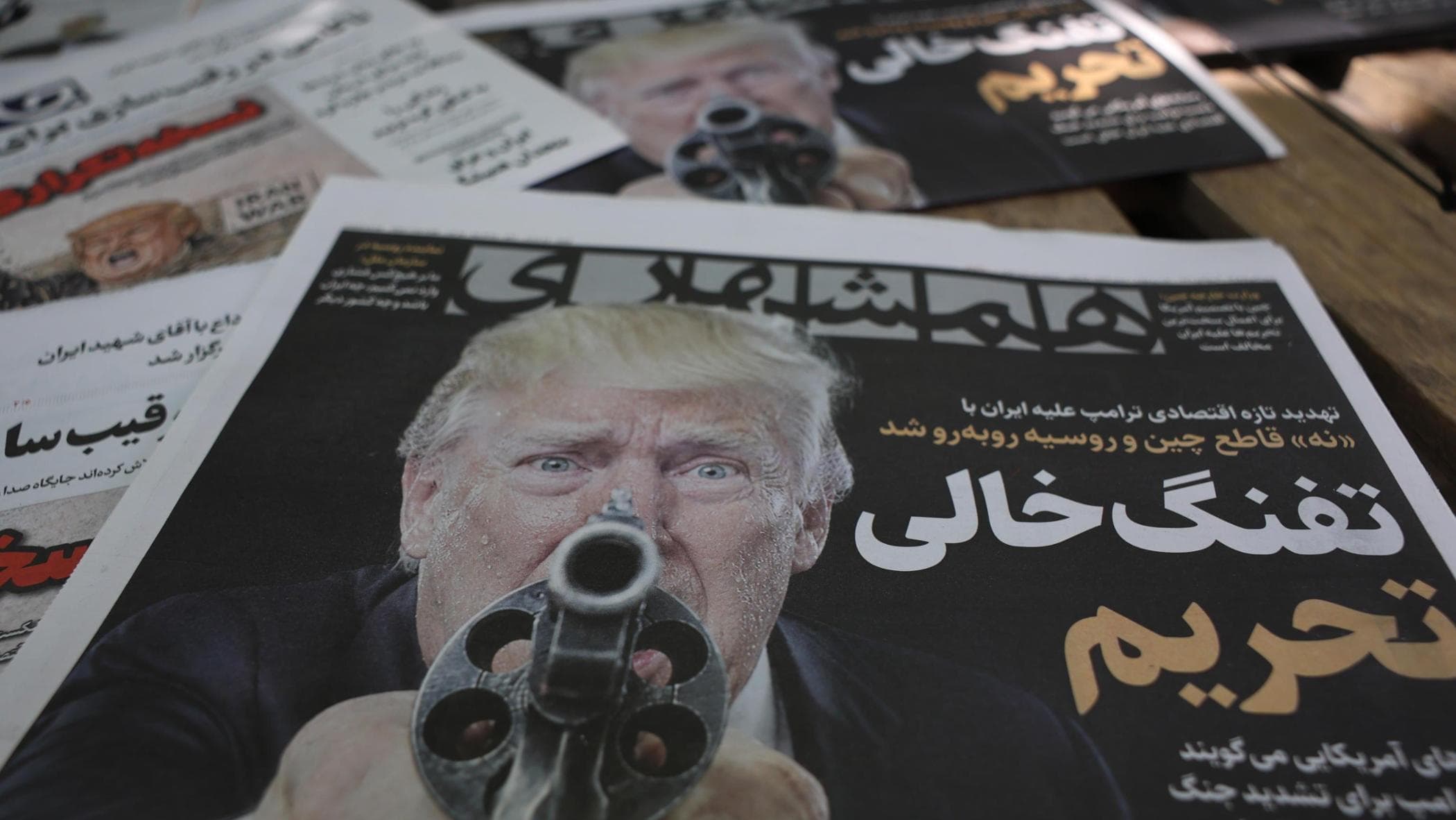
The US has launched a sweeping economic offensive against Iran, prompting Tehran to threaten regional neighbours and maintain its strategic blockade of the Strait of Hormuz.

The United States has launched a severe economic campaign against Iran following a deadlock in diplomatic negotiations, with President Donald Trump warning of unprecedented financial isolation and sanctions against entities assisting Tehran. US Treasury Secretary Scott Bessent is expected to unveil specific enforcement measures.

In response, Iranian Supreme National Security Council Secretary Mohsen Rezaei warned that Tehran would vigorously retaliate and target the interests of regional neighbours assisting Washington's financial offensive.

Meanwhile, Iranian authorities continue using their naval blockade of the Strait of Hormuz to exert strategic pressure. Tehran has rejected narrower compromises limited to reopening the maritime route, insisting instead on the full execution of a 14-point memorandum negotiated in June, which encompasses lifting sanctions, unfreezing foreign assets, and ending restrictions on Iranian ports.

Sources: ANSA, Corriere della Sera, Il Messaggero, La Repubblica

Read more
Share