Top news

Aug 23, 2026, 12:30 AM UTC

← Latest news

01
ContinuingAI-generated
Ukrainian strikes target Russian aerospace sites as frontline clashes intensify

Ukrainian strikes target Russian aerospace sites as frontline clashes intensify

Ukrainian long-range strikes hit aerospace facilities in Samara and other Russian regions as heavy frontline fighting exceeds 250 daily clashes in eastern Ukraine.

Long-range Ukrainian drone and missile strikes have targeted key military-industrial sites inside Russia, while heavy fighting persists across the eastern front.

Regional officials and open-source imagery verified strikes in several Russian regions, notably Samara, Nizhny Novgorod, and Rostov. In Samara, impacts hit an industrial complex housing both the Progress Rocket Space Centre—which manufactures Soyuz-2 carrier rockets—and the Aviakor aircraft manufacturing facility. Secondary reports indicated drone strikes near the Savasleyka military airfield.

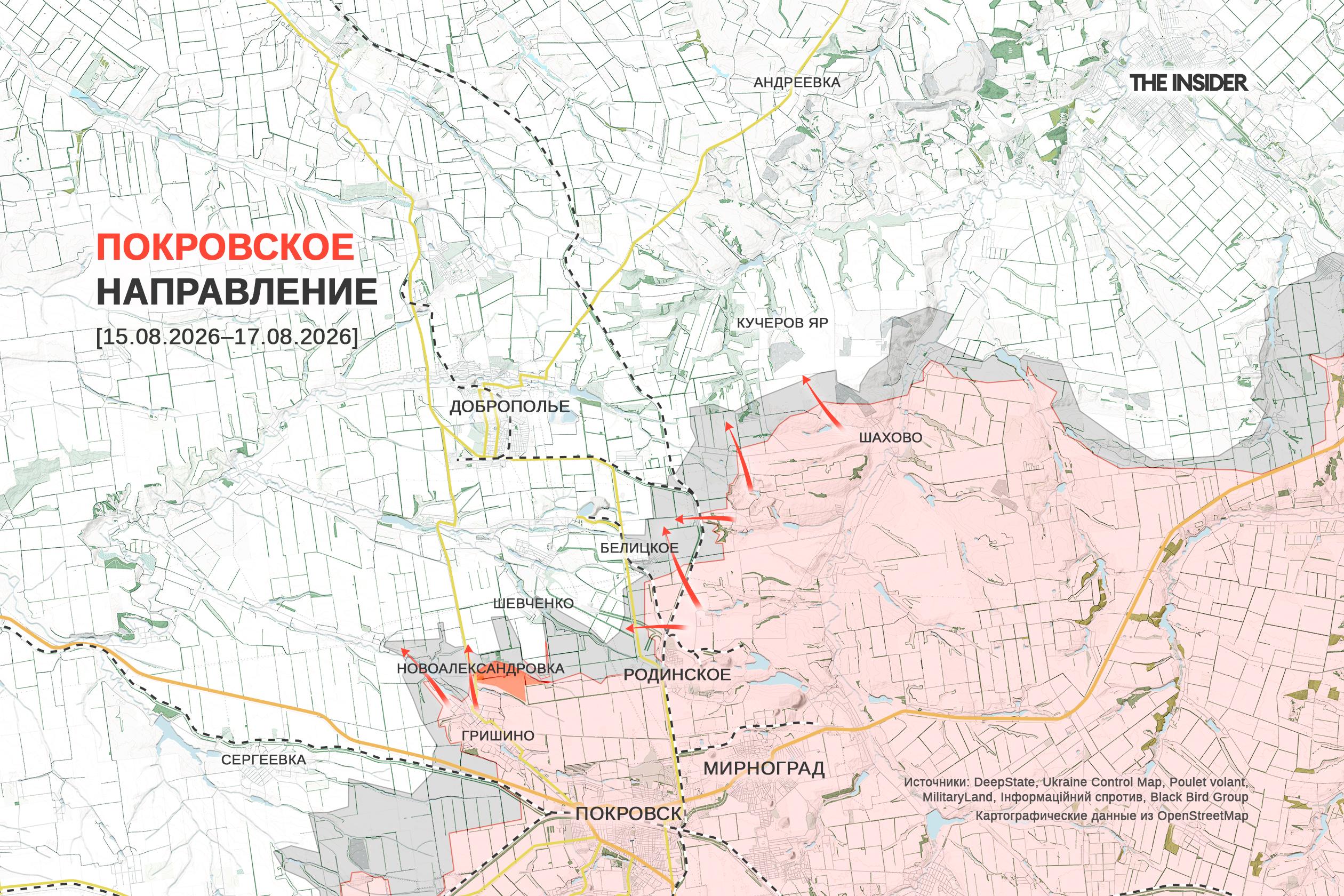
Concurrently, Ukraine's General Staff reported more than 250 combat engagements over 24 hours. Russian ground forces exerted sustained pressure across eastern sectors, attempting to breach Ukrainian defensive lines in the Lyman, Kostiantynivka, and Pokrovsk directions and push closer to the Oskil River.

Sources: Mediazona, Point, The Insider, Радіо Свобода, Українська правда.

Read more
02
ContinuingAI-generated
Talks continue over Strait of Hormuz navigation amid competing US and Iranian positions

Talks continue over Strait of Hormuz navigation amid competing US and Iranian positions

Negotiations over navigation in the Strait of Hormuz continue as Washington predicts a quick accord while Tehran insists on economic and security concessions.

Diplomatic discussions mediated by Oman regarding maritime traffic through the Strait of Hormuz are ongoing, with Washington and Tehran outlining differing expectations.

United States President Donald Trump indicated an agreement could materialize shortly, characterizing negotiations as a strategic process while highlighting Tehran's severe economic pressures. However, Iranian officials reiterated that reopening the waterway requires concrete American concessions, including the removal of economic sanctions, compensation for damages, and an end to military threats. Tehran also seeks to retain regulatory oversight over vessels transiting the corridor.

Elsewhere in the region, Lebanese and Israeli envoys opened a seventh round of diplomatic talks in Rome, while the United Nations noted that hundreds of thousands of displaced Lebanese citizens have begun returning to the country's south.

Sources: Avaz, CDM (Cafe del Montenegro), Dan, Klix, Vijesti.

Read more
03
ContinuingAI-generated
Russian strikes kill five and injure 16 across Dnipropetrovsk region

Russian strikes kill five and injure 16 across Dnipropetrovsk region

Russian forces conducted nearly 60 strikes across five districts in Ukraine's Dnipropetrovsk region over 24 hours, killing five people and injuring 16 others.

Russian military forces launched nearly 60 attacks across five districts in Ukraine's Dnipropetrovsk region over a 24-hour span, leaving at least five people dead and 16 others wounded, according to local emergency service reports.

The strikes hit several population centres throughout the region. In the Kamianske district, shelling and aerial bombardments caused three fatalities and injured five residents. In Pavlohrad, attacks left two people dead and seven wounded. Further casualties and damage to infrastructure were also documented in the Nikopol district.

Local emergency rescue teams and firefighters were deployed to extinguish fires caused by the bombardments, clear debris from damaged buildings, and administer emergency aid to those injured in the strikes.

Sources: Ziarul de Gardă

Read more
04
ContinuingAI-generated
Severe drought exposes structural weaknesses in Romania's energy grid

Severe drought exposes structural weaknesses in Romania's energy grid

An Energy Policy Group analysis highlights how drought and delayed infrastructure investments leave Romania's power grid vulnerable despite high installed capacity.

Romania's national power grid continues to face significant vulnerabilities as prolonged hydrological drought exposes structural deficits in the country's energy infrastructure, according to an analysis by the Energy Policy Group.

Despite boasting roughly 19 gigawatts of nominal installed capacity, the national grid frequently generates only a fraction of its potential during dry spells. Low water levels along the Danube River have sharply curtailed hydroelectric output, creating acute supply pressures. Analysts emphasize that while renewable energy deployment has expanded, the system remains constrained by an underdeveloped transmission network, an absence of utility-scale storage infrastructure, and prolonged delays in modernization investments. Consequently, the national energy network struggles to balance variable renewable sources and maintain stability during extreme weather conditions.

Sources: G4Media.

Read more
Share