Top news

Aug 17, 2026, 11:30 PM UTC

← Latest news

01
ContinuingAI-generated
Serbian media watchdogs document surge in threats and attacks against journalists

Serbian media watchdogs document surge in threats and attacks against journalists

Serbian media watchdogs recorded a sharp rise in hostility against reporters in July, noting over 100 verbal attacks alongside physical assaults and death threats.

Media rights groups in Serbia have documented an increase in hostility, intimidation, and physical attacks directed at journalists and media outlets.

According to the Independent Journalists' Association of Serbia, 19 safety incidents occurred in July, including two physical assaults and 14 direct security threats. The Slavko Ćuruvija Foundation separately recorded at least 106 verbal attacks made by state officials and members of the ruling Serbian Progressive Party during the same timeframe.

Recent incidents have prompted multiple investigations and widespread condemnation. Prosecutors are probing death threats sent to the local news portal Volim Zrenjanin and an assault in Belgrade against director Stevan Filipović. Meanwhile, the Association of Journalists of Serbia and other media bodies have denounced attacks across the political spectrum, including intimidation targeting the family of editor Dragan J. Vučićević.

Sources: Beta, CDM (Cafe del Montenegro), Danas, N1, Tanjug

Read more
02
ContinuingAI-generated
Kyiv residents rebuild amid persistent Russian airstrikes and air defence shortages

Kyiv residents rebuild amid persistent Russian airstrikes and air defence shortages

Kyiv residents are resuming daily routines and repairing damage from Russian missile strikes as Ukrainian officials push allies for additional Patriot air defence systems.

Kyiv residents are resuming daily routines and repairing structural damage following recent Russian missile strikes across the capital. Local businesses, outdoor markets, and eateries have reopened amid physical destruction, demonstrating civilian determination under sustained aerial bombardment.

The attacks coincide with rising civilian casualties across Ukraine, with defence analysts warning that severe Russian strikes will likely continue throughout the rest of the summer. In response to the persistent threat, Ukrainian officials are maintaining diplomatic efforts to secure additional Patriot air defence systems and munitions from international partners to protect urban centres and critical infrastructure.

Sources: LSM

Read more
03
ContinuingAI-generated
Israel rejects 15-point Gaza roadmap as US-led council advances second phase

Israel rejects 15-point Gaza roadmap as US-led council advances second phase

Israel has rejected a 15-point Gaza ceasefire roadmap, while the US-led Peace Council announced the start of phase two and initiated tenders for a military facility.

Israel's Security Cabinet has formally rejected a 15-point ceasefire roadmap for the Gaza Strip, communicating to Washington that the proposal remains unacceptable in its current form. Developed with input from Egypt and Hamas, the framework outlines a cessation of military operations, a phased Israeli withdrawal, and the transition of governance to a technocratic Palestinian committee.

Despite Israel's rejection, the US-led Peace Council announced the commencement of the ceasefire's second phase. Concurrently, reports indicate the council's first major reconstruction tender involves building a military installation in Gaza intended to accommodate approximately 150 Moroccan personnel participating in international security arrangements.

Sources: TRT Haber (Turkish Radio and Television Corporation), Cumhuriyet, Anadolu Ajansı (Anadolu Agency), Bianet

Read more
04
ContinuingAI-generated
Zelenskyy's Belgrade visit highlights Serbia's diplomatic balancing act

Zelenskyy's Belgrade visit highlights Serbia's diplomatic balancing act

Volodymyr Zelenskyy's visit to Belgrade highlights Serbia's diplomatic balancing act amid domestic divisions and scrutiny over its strategic alignment.

Ukrainian President Volodymyr Zelenskyy’s official visit to Belgrade has drawn widespread analysis across regional and international media over Serbia's foreign policy trajectory.

Observers in the region largely interpret the meeting with Serbian President Aleksandar Vučić as a continuation of Belgrade’s established diplomatic balancing strategy rather than a sharp pivot away from Moscow. The bilateral agenda encompassed European integration, bilateral trade, and energy cooperation, alongside defense production interests.

However, commentators note significant domestic political tension within Serbia, where right-wing factions and pro-European circles view the engagement with contrasting expectations. Meanwhile, foreign policy analysts caution against interpreting high-profile handshakes as a definitive strategic realignment, stressing that long-term policy follow-through remains to be seen. Russian media, in contrast, have portrayed the summit as an effort to secure Western political backing ahead of domestic elections.

Sources: Beta, Danas, HRT Vijesti, Klix, N1

Read more
05
ContinuingAI-generated
Military integration of artificial intelligence accelerates across global conflicts

Military integration of artificial intelligence accelerates across global conflicts

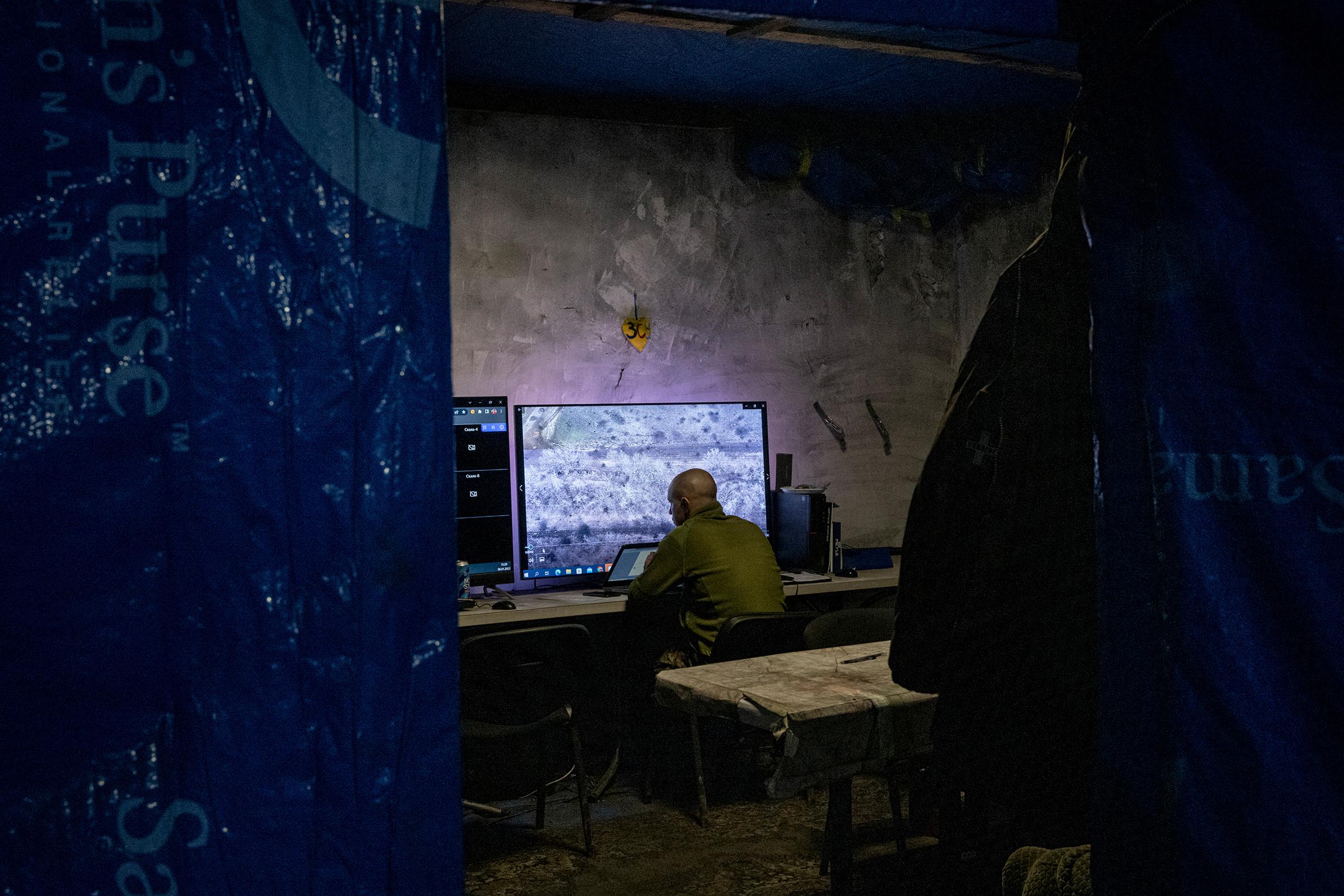
Global armed forces and defense sectors are rapidly adopting artificial intelligence, transforming drone warfare, missile targeting, and operational strike planning.

The rapid deployment of artificial intelligence and dual-use commercial technologies is reshaping modern military strategy globally. In Ukraine, former defense minister Mykhailo Fedorov characterized the ongoing conflict as a "technological war" driven by unmanned systems, though commercial satellite constraints on networks such as Starlink continue to limit cross-border operations. Meanwhile, industry leaders like former Google chief executive Eric Schmidt highlighted the disruptive impact of autonomous battlefield technology.

Simultaneously, Ukrainian military intelligence reported discovering American-made microprocessors in Russian missiles, pointing to integrated algorithmic targeting capabilities. In China, the People's Liberation Army has implemented dedicated artificial intelligence systems designed to automate and coordinate large-scale airstrikes across multiple targets, reflecting a broader international shift toward algorithmically assisted warfare.

Sources: Liga net, NEXTA, NV, Point, The Insider

Read more
Share