Top news

Aug 15, 2026, 09:30 PM UTC

← Latest news

01
ContinuingAI-generated
German defence spending draws criticism as political pressures mount

German defence spending draws criticism as political pressures mount

IfW economist Moritz Schularick criticises German military procurement as polling shows the AfD widening its lead over the CDU/CSU.

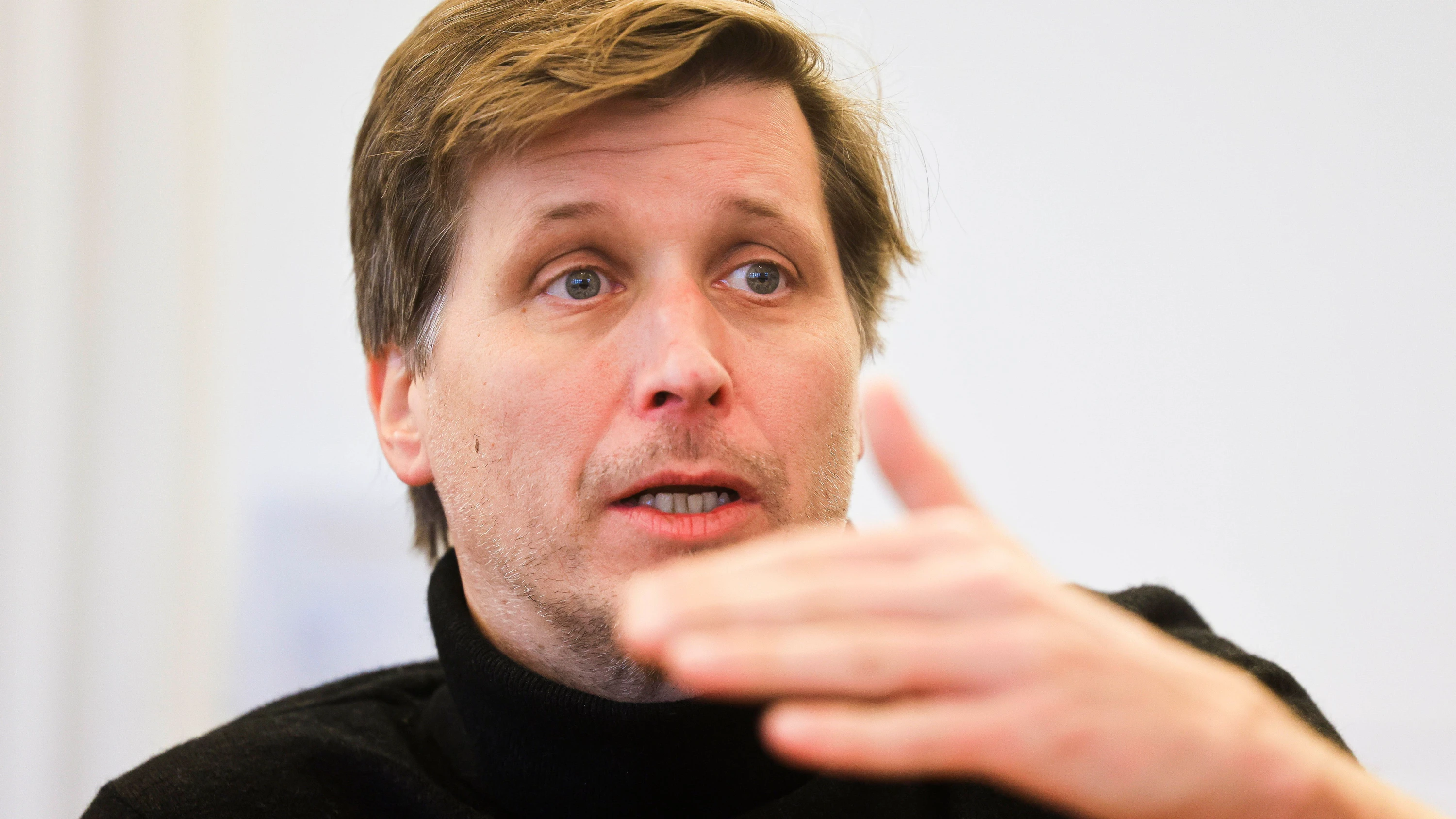
German Defence Minister Boris Pistorius faces renewed criticism over national military spending priorities. Moritz Schularick, head of the Kiel Institute for the World Economy (IfW), warned that budget allocations projected through 2030 disproportionately fund conventional hardware, including tanks and frigates, rather than modern weapon technologies.

Meanwhile, a recent Deutschlandtrend survey indicates the Alternative for Germany (AfD) has widened its lead over the conservative CDU/CSU alliance, alongside growing public support for case-by-case legislative cooperation. Domestically, the governing Social Democratic Party is managing internal party dissatisfaction. Authorities are also monitoring gang activity in Berlin, while the agricultural sector copes with severe feed shortages caused by prolonged dry weather.

Sources: Der Spiegel, Die Zeit, DW, FAZ, Tagesschau
Read more
02
ContinuingAI-generated
Ukrainian military marks major territorial advances amid leadership overhaul and security warnings

Ukrainian military marks major territorial advances amid leadership overhaul and security warnings

Ukrainian forces report significant territorial gains in Oleksandrivka alongside military command reforms, deep strikes in Novorossiysk, and disrupted Russian ambush plots.

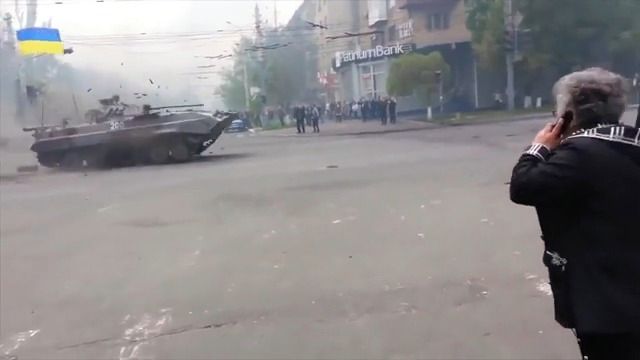
Ukrainian forces have reported substantial ground advances in the Oleksandrivka sector, marking their most extensive territorial gains since late 2022 after maintaining strict operational secrecy. In parallel, Ukrainian operations targeted naval installations in Novorossiysk, reportedly hitting Russian frigates equipped with cruise missiles.

The battlefield developments accompany major structural reforms under newly appointed armed forces commander Mykhailo Drapatyj, who is moving to overhaul command hierarchies. Meanwhile, former military chief and current ambassador Valerii Zaluzhnyi stated that Ukraine would not join NATO, arguing that the alliance relies on obsolete doctrines unsuited to 21st-century combat. Domestically, the Security Service of Ukraine announced it had disrupted dozens of Russian intelligence plots that allegedly used deceptive dating profiles to ambush and assassinate Ukrainian service members.

Sources: Deník N, Ekonomický deník, Hospodářské noviny, Respect, Seznam Zprávy

Read more
03
ContinuingAI-generated
Poland and regional allies advance transport, helicopter, and counter-drone aircraft plans

Poland and regional allies advance transport, helicopter, and counter-drone aircraft plans

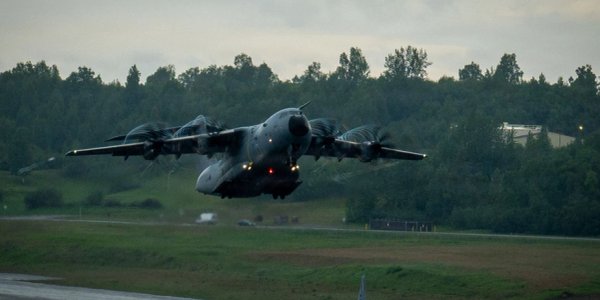
Poland explores Airbus A400M transport aircraft and signs a Boeing Apache maintenance agreement, while Latvia evaluates A-29 Super Tucano turboprops.

Poland and regional allies are advancing several defense aviation procurement and sustainment initiatives. Polish Deputy Defense Minister Paweł Zalewski confirmed interest in acquiring Airbus A400M Atlas transport aircraft, potentially funded through European Union defense credit mechanisms. Poland recently joined six NATO partners—Belgium, Croatia, France, Spain, Turkey, and the United Kingdom—in signing a letter of intent regarding cooperation on transport aircraft operations.

Concurrently, Polish state enterprise WZL-1 signed an agreement with Boeing in Łódź to establish a regional maintenance and service center for at least 96 AH-64E Apache attack helicopters.

In the Baltic region, Latvia is evaluating the purchase of Brazilian Embraer A-29 Super Tucano light turboprops to counter unmanned aerial systems and hybrid airspace incursions, a platform also monitored by Polish defense planners.

Sources: Defence24, Defense Express, Money, Portal obronny, Rzeczpospolita

Read more
04
ContinuingAI-generated
Severe drought prompts water management alerts across Czech Republic

Severe drought prompts water management alerts across Czech Republic

A 34 percent drop in precipitation forces Czech water managers to prepare rare reservoir interventions as rivers and groundwater levels fall nationwide.

Severe hydrological drought coupled with prolonged high temperatures continues to strain water reserves across the Czech Republic, making this year one of the driest since 1961. Data from the Czech Hydrometeorological Institute indicates that cumulative precipitation is down by approximately 34 percent compared to long-term averages, leading to critical drops in groundwater tables and surface flows.

Along the Vltava cascade, water management authorities are preparing contingency plans to tap emergency storage reserves in the Slapy reservoir if the Orlík dam recedes further—a measure projected to occur roughly once every 50 years. Across various regions, completely dried-up riverbeds have forced local volunteers to rescue stranded aquatic wildlife, while experts warn that escalating climate pressures heighten long-term desertification risks across southern Moravia and the Elbe basin.

Sources: Český rozhlas Plus, Deník N, Hospodářské noviny, iROZHLAS, Seznam Zprávy.

Read more
05
ContinuingAI-generated
Austria confronts record heat as officials weigh school calendar shifts and transit adaptations

Austria confronts record heat as officials weigh school calendar shifts and transit adaptations

Record heat in Austria has driven transit temperatures above 30 degrees Celsius and prompted proposals to adjust school calendars and implement classroom protections.

Austria continues to confront record-breaking temperatures and prolonged drought, with national highs reaching 41.2 degrees Celsius in Lower Austria following historic peaks in Vienna. Officials have warned that such severe summer conditions increasingly represent an ongoing reality for the country.

The extreme temperatures have placed acute strain on public services and driven calls for structural adaptation. In Vienna, tests conducted across public transit networks recorded vehicle interior temperatures exceeding 30 degrees Celsius despite operating air conditioning. Meanwhile, the federal government announced heat protection measures for educational institutions amid sustained pressure from teachers and parents. To mitigate classroom heat during early summer spikes, Vienna's education councillor proposed advancing the school holiday calendar so that the academic year resumes in August, a measure set for review by regional authorities in September.

Sources: Der Standard, Die Presse, ORF, Profil

Read more
Share