Top news

Jul 30, 2026, 11:00 AM UTC

← Latest news

01
ContinuingAI-generated
At least eight dead following widespread Russian missile strikes across Ukraine

At least eight dead following widespread Russian missile strikes across Ukraine

A widespread overnight Russian missile strike across Ukraine killed at least eight people, wounded dozens, and disrupted power in five regions.

A widespread Russian missile attack across Ukraine overnight killed at least eight people and left more than 50 injured, according to Interior Minister Ivan Vyhivskyi.

The strikes hit civilian infrastructure and residential areas in multiple regions, including a direct hit on a family home in the Kryvyi Rih district. National grid operator Ukrenergo confirmed power disruptions across five regions, with the most severe damage reported in Sumy Oblast, where emergency repairs were underway.

Air defense systems operated across the country as cruise and ballistic missiles targeted several major urban centers. Explosions occurred in Kyiv, Dnipro, Vinnytsia, and the western city of Lviv.

The attack came shortly after Ukrainian President Volodymyr Zelenskyy warned of a high probability of a large-scale strike following reports from Air Force commanders.

Sources: Ukrinform

Read more
02
UK unveils £63.6 billion plan to modernize nuclear deterrence

UK unveils £63.6 billion plan to modernize nuclear deterrence

The UK has committed £63.6 billion over four years to modernize its nuclear deterrent, increasing funding to build its new Dreadnought-class submarines.

The British government has released its delayed Defence Investment Plan, allocating £63.6 billion over the next four years to modernize the country's nuclear deterrent capabilities.

The updated framework marks a £20 billion funding increase compared to the previous 2022–2026 investment cycle. A significant share of the newly allocated capital is earmarked for the construction of the Royal Navy's upcoming Dreadnought-class ballistic missile submarines, which will eventually replace the existing Vanguard-class fleet. The investment program is designed to sustain the United Kingdom's continuous at-sea strategic deterrence while modernizing related military infrastructure and technological systems.

Sources: Opex360

Read more
03
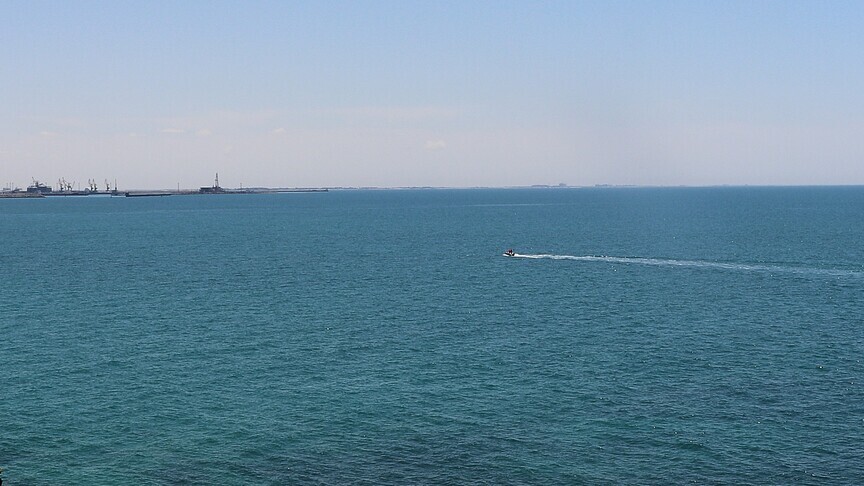
Ukraine targets Iranian vessels in Caspian Sea strike

Ukraine targets Iranian vessels in Caspian Sea strike

Ukraine's July 25 strike on two Iranian-flagged commercial vessels in the Caspian Sea highlights strategic shifts in the ongoing conflict with Russia.

On July 25, 2026, Ukrainian forces targeted two Iranian-flagged commercial vessels in the Caspian Sea, signaling an expanding strategic scope in the ongoing Russia-Ukraine conflict. An analysis published by Anadolu Agency highlighted that the attack extends beyond a simple geographical broadening of the war, reflecting calculated geopolitical objectives aimed at disruption.

The Caspian Sea serves as a crucial maritime corridor for trade and logistics between Tehran and Moscow. By striking Iranian commercial assets in these waters, Kyiv appears to be addressing maritime supply lines and defense cooperation supporting Russia's war effort. The incident underlines how regional shipping routes have become increasingly integrated into the wider geopolitical dynamics of the war.

Sources: Anadolu Ajansı (Anadolu Agency).

Read more
04
Hungarian Constitutional Court appointment faces criticism over rapid procedure

Hungarian Constitutional Court appointment faces criticism over rapid procedure

Pál Sonnevend was swiftly elected to Hungary's Constitutional Court, drawing procedural criticism from Amnesty International despite broad political respect.

The rapid election of legal scholar Pál Sonnevend to Hungary's Constitutional Court has drawn scrutiny over the speed of parliamentary proceedings. Sonnevend, a 54-year-old university professor, enjoys strong professional authority across the political spectrum and has previously voiced criticism regarding legal reforms under Prime Minister Viktor Orbán. Despite his widespread standing, civil society group Amnesty International criticized the expedited nature of the appointment process. The development comes as European media commentary highlights shifting political dynamics in Hungary following the rise of opposition figure Péter Magyar.

Sources: HVG

Read more
05
Solar storms may be more dangerous than previously thought, research suggests

Solar storms may be more dangerous than previously thought, research suggests

New research indicates solar storms caused by coronal mass ejections may pose a higher risk to infrastructure than previously calculated.

Recent assessments reveal that solar storms, driven by coronal mass ejections, could be significantly more dangerous to Earth's technological infrastructure than previously calculated.

Although the planet's magnetosphere shields against severe cosmic radiation, solar energetic particles and plasma moving along high-altitude magnetic fields can still trigger severe electromagnetic disruptions. These disruptions can induce secondary electrical currents capable of damaging orbital satellites and disabling terrestrial power distribution grids. Scientists noted that earlier measurement methods underestimated the potential intensity and impact of these space weather events.

Sources: HVG.

Read more
Share