
US-Iran War Risks Escalation as Military Buildup and Attacks on Shipping Intensify

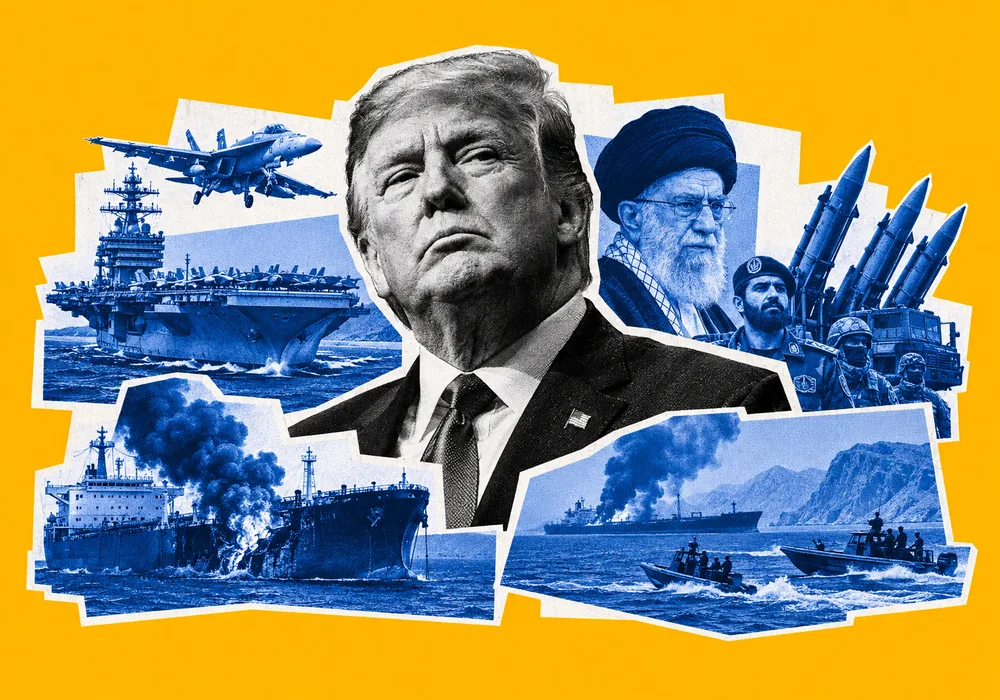
The United States has increased its military presence in the Middle East as Iranian attacks on commercial shipping intensify and Washington weighs further strikes. With two US aircraft carriers operating in the Arabian Sea and diplomatic efforts failing to resolve the confrontation, the risk of renewed large-scale hostilities is growing ahead of the November midterm elections.
The United States and Iran are facing renewed risks of a wider military confrontation as increased American deployments, escalating attacks on commercial shipping and increasingly forceful statements from both sides point to the possibility of further hostilities. Although Washington has indicated that it does not intend to launch new attacks before the November midterm elections, the growing military presence in the region suggests that the United States is maintaining the capacity to resume major combat operations if President Donald Trump decides to do so.
According to Euronews, two US aircraft carriers are operating in the Arabian Sea, while aerial refuelling missions over the region have risen by approximately 50% compared with September. These developments come amid a deterioration in maritime security and continued uncertainty over whether the existing arrangements between Washington and Tehran can prevent another major round of fighting.
The military movements do not establish that a new offensive has been authorised. However, the deployment of naval forces and the increased frequency of support flights provide the United States with greater operational flexibility should the administration decide to intensify its campaign. They also reinforce the pressure on Tehran, which must account for the possibility of further American strikes while continuing to pursue its own military objectives.
The timing is particularly significant because the conflict has become increasingly difficult to contain. Rather than producing a durable settlement, the confrontation has evolved into a prolonged standoff in which attacks, military deployments and competing demands continue to undermine diplomatic efforts. The central question is no longer simply whether Washington possesses the military capability to strike Iran again, but whether renewed force could achieve the political and strategic objectives that previous operations have failed to secure.
Attacks on commercial shipping increase pressure in the Strait of Hormuz
Maritime security has emerged as one of the most immediate sources of escalation. The Institute for the Study of War reported that Iran targeted at least 24 commercial vessels near the Strait of Hormuz over a two-week period. The United Kingdom Maritime Trade Operations, a Royal Navy organisation responsible for monitoring maritime security incidents, also reported at least seven additional incidents between Monday and Wednesday.
The figures illustrate the growing exposure of commercial shipping to the conflict. The Strait of Hormuz is one of the world's most strategically important maritime passages, connecting the Persian Gulf with international markets and serving as a critical route for global oil and liquefied natural gas supplies. Sustained disruption to traffic through the waterway can therefore affect not only the countries directly involved in the war but also energy-importing economies far beyond the Middle East.
For Washington, the security of international shipping represents both an economic and a strategic concern. Continued attacks threaten the movement of energy supplies, increase the risks faced by commercial operators and create pressure on the US administration to demonstrate that it can protect maritime traffic. If attacks continue or result in significant casualties, the political pressure for a military response could grow.
For Tehran, maritime pressure provides a means of challenging the United States without relying exclusively on direct confrontation between conventional military forces. Threats to shipping can raise the economic costs of the conflict, complicate American military planning and increase the stakes for Washington's regional partners. However, this approach also carries substantial risks for Iran, as further incidents could provide the United States with additional justification for renewed strikes.
The danger is that individual maritime incidents could trigger a broader cycle of retaliation. An attack on a commercial vessel, a confrontation involving naval forces or a strike causing American casualties could rapidly change the political calculations in Washington. Under such circumstances, military action presented as a limited response could expand into a more sustained campaign.
Washington weighs its next move ahead of the midterm elections
The political calendar adds another layer of uncertainty to the military situation. The November 3 US midterm elections are approaching, and Trump's handling of the war has become an important domestic political consideration. The administration must weigh the risks of allowing Iran to continue challenging maritime security against the potential consequences of launching another offensive before voters go to the polls.
Trump has indicated that the United States will not attack Iran before the elections, while also suggesting that the conflict could end immediately afterwards. Those statements have not removed uncertainty over Washington's longer-term intentions. Instead, they have raised questions about whether the pause in offensive operations represents a genuine effort to create space for negotiations or a temporary restriction on the timing of further military action.
Reports published on October 15 by CBS News, citing people familiar with the matter, said the White House and the Pentagon had prepared contingency plans involving the possible use of the Massive Ordnance Air Blast bomb, one of the largest conventional weapons in the US arsenal. The reports did not establish that Trump had approved its use. A White House spokesperson said the administration would not comment on sensitive military plans and maintained that the president retained all options to prevent Iran from acquiring a nuclear weapon.
The existence of contingency planning, if accurately reported, demonstrates that the administration is considering a range of possible military responses. It does not, by itself, indicate that a decision to resume large-scale attacks has been made. Military planners routinely prepare options for different scenarios, particularly during an ongoing conflict in which the situation can change rapidly.
Nevertheless, the combination of increased deployments, reports of more extensive strike planning and Trump's statements about the period after the elections has strengthened concerns that the current confrontation could enter a more dangerous phase in November. The electoral timetable may delay a decision, but it does not resolve the underlying disagreements between Washington and Tehran.
For the administration, the challenge is to balance military pressure with the political and economic costs of a prolonged war. A new offensive could demonstrate American resolve, but it could also expose US personnel to further Iranian retaliation, disrupt energy markets and deepen uncertainty over the conflict's eventual outcome.
Iran's strategy raises the risk of a wider regional conflict
Iran's approach to the confrontation increases the possibility that renewed American attacks would produce consequences beyond the immediate targets. Tehran has used pressure on maritime traffic to challenge Washington's position, while the wider regional environment remains vulnerable to further escalation involving military assets and infrastructure.
The United States retains a substantial conventional military advantage, including carrier-based aviation, long-range strike capabilities and aerial refuelling infrastructure. These assets allow American forces to sustain operations over considerable distances and provide the administration with multiple options for attacking Iranian military targets.
Yet military superiority does not automatically translate into a decisive political outcome. Iran can respond asymmetrically, impose costs on regional security and exploit vulnerabilities in maritime transport. Even if American forces successfully destroy selected military installations, the broader strategic problem may remain unresolved if Tehran continues to resist Washington's demands or retains the ability to disrupt shipping.
This creates a fundamental difficulty for US decision-makers. A limited strike might be intended to deter further attacks, but Tehran could interpret it as a reason to intensify its own response. A broader campaign could inflict greater damage on Iranian military capabilities while simultaneously increasing the likelihood of retaliation against American forces and regional partners.
The distinction between a limited exchange and a wider regional conflict could therefore become increasingly difficult to maintain. The outcome would depend not only on the scale of any initial US operation but also on how Iran responds, whether regional actors become directly involved and whether diplomatic channels remain functional after renewed fighting begins.
The consequences would extend beyond the battlefield. Further disruption to shipping could push energy prices higher, increase insurance costs for vessels operating in the region and complicate supply chains. Countries dependent on Gulf energy exports would face additional uncertainty, while governments seeking to prevent a broader conflict would come under pressure to intensify diplomatic engagement.
Diplomacy remains the key uncertainty
Despite the military buildup, the possibility of renewed negotiations remains an important factor. The United States and Iran have not resolved the fundamental issues underlying their confrontation, and military pressure has not yet produced a settlement capable of preventing further incidents.
Washington's calculations involve several interconnected objectives: protecting commercial shipping, limiting Iran's ability to threaten American forces and addressing the wider dispute over Tehran's nuclear ambitions. These goals do not necessarily require the same military or diplomatic approach. Measures intended to reopen maritime routes, for example, may not resolve disagreements over Iran's nuclear programme or the long-term security arrangements of the region.
For Iran, the central challenge is to withstand American pressure while avoiding a level of escalation that could threaten the country's military capabilities and political stability. Tehran also has incentives to preserve leverage in negotiations, particularly if it believes that disruptions to shipping can increase the economic and political costs facing Washington.
The two sides therefore remain caught between coercion and diplomacy. Military deployments are intended to strengthen their respective positions, but they can also reduce the room for compromise by increasing the consequences of perceived weakness or miscalculation.
The coming weeks will be critical in determining whether the confrontation remains a prolonged standoff or develops into another phase of sustained military operations. Continued attacks on commercial vessels, changes in American deployments, official statements about the timing of potential strikes and signs of progress or collapse in negotiations will all shape the outlook.
A military escalation is possible, but not inevitable
The available indicators point to a heightened risk of renewed hostilities rather than proof that a new US offensive is imminent. The presence of two aircraft carriers, the increase in aerial refuelling activity and the reported preparation of additional strike options demonstrate that Washington is maintaining its military readiness. Meanwhile, attacks on commercial shipping provide a continuing source of friction that could trigger further retaliation.
The November elections may influence when Trump chooses to act, but the political timetable cannot eliminate the strategic pressures driving the confrontation. If maritime incidents continue and diplomatic efforts fail, the administration could face growing pressure to demonstrate that its warnings have consequences. Conversely, a reduction in attacks and progress towards an agreement could give both sides an opportunity to avoid another major round of fighting.
The central risk is that neither side may be able to control the escalation once it begins. Washington could launch strikes intended to restore deterrence, while Tehran could respond in ways that widen the conflict and increase the costs for the United States and its regional partners.
For now, the military signals suggest that both sides are preparing for the possibility of further confrontation while leaving the door open, however narrowly, to diplomacy. Whether that posture ultimately serves as leverage for negotiations or a prelude to renewed war will depend on decisions that have not yet been publicly confirmed.
Sources: CBS News, UK Maritime Trade Operations (UKMTO)