
Ukraine Navy Earns NATO Command Status: What NEL-2 Certification Means for Black Sea Security

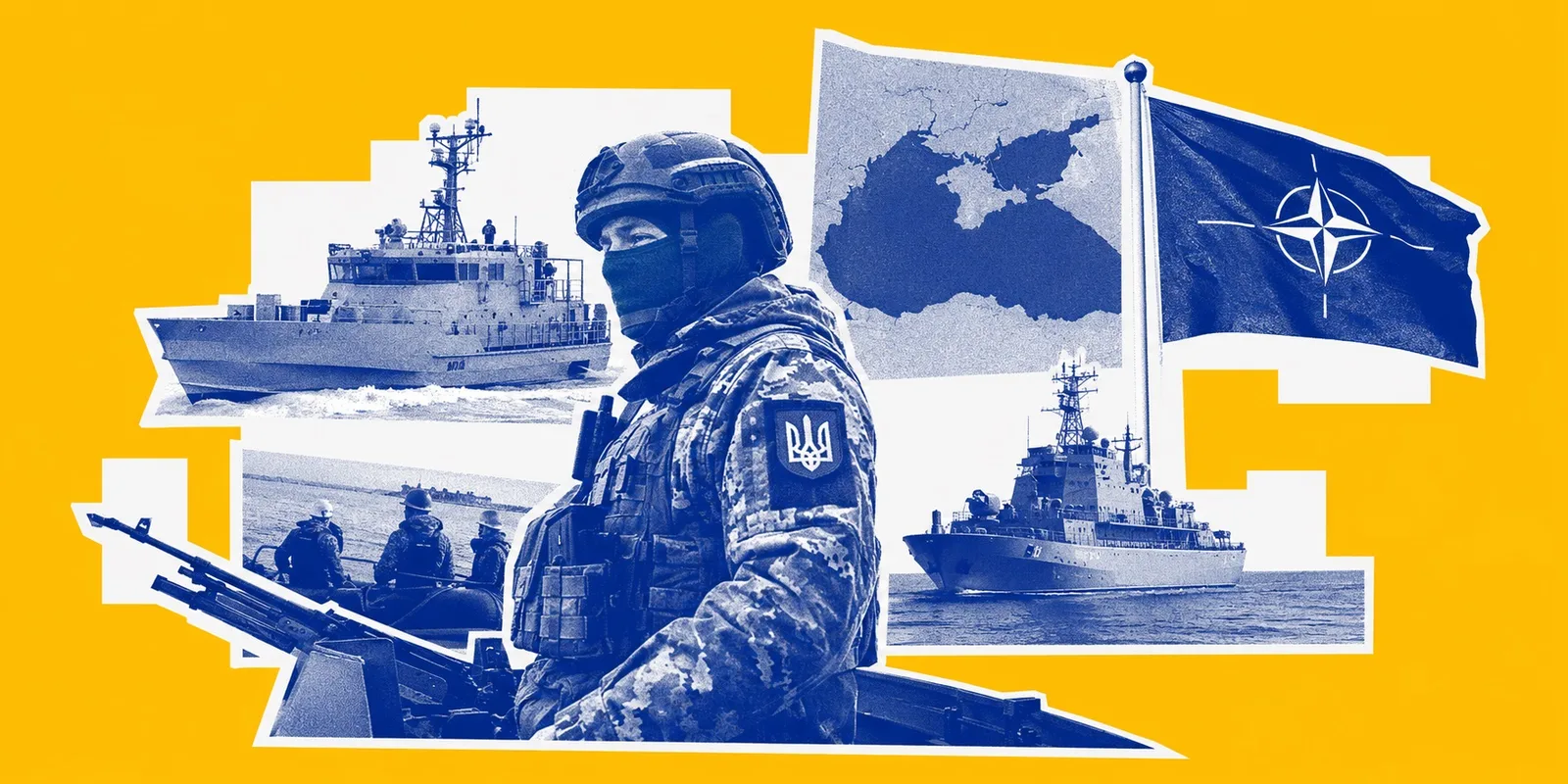
During the Sea Breeze 2026 exercises, the Ukrainian Navy’s 1st Mine Countermeasures Division achieved NATO’s "Mission Capable" (NEL-2) status. This historic certification grants a Ukrainian unit the authority to command multinational NATO forces in maritime mine-clearing operations - proving that practical military integration is outpacing political membership decisions.
The path to the certification took three years. It unfolded during Russia’s full-scale war against Ukraine, while the Ukrainian armed forces were simultaneously fighting, adapting and absorbing NATO doctrines and procedures.
The evaluation was conducted under the Alliance’s Operational Capabilities Concept Evaluation and Feedback programme, known as OCC E&F. The first level, NEL-1, primarily tests interoperability: whether equipment, communications and basic procedures can function together.
NEL-2 is a different test.
It assesses whether a unit has achieved full operational capability to perform missions according to the standards of NATO’s Allied Command Operations forces. In practical terms, the Ukrainian headquarters did not merely prove that it could communicate with NATO forces or participate in an exercise. It demonstrated that it could operate inside the Alliance’s command logic.
That distinction changes the meaning of the achievement.

The Ukrainian Navy’s mine-countermeasures headquarters can now command and control subordinate multinational forces, perform the full spectrum of maritime mine-countermeasures missions under NATO standards and interact with NATO’s Standing Naval Mine Countermeasures Groups, including at the level of operational command.
This is not a ceremonial badge. It is an authority.
Why mine warfare became the point of entry
The choice of mine countermeasures is not accidental.
The Black Sea has become one of Europe’s most complicated maritime security environments since Russia’s full-scale invasion in 2022. Mine contamination threatens shipping routes, grain corridors and the security of coastal states, including Romania, Bulgaria and Turkey.
The problem is also inherently multinational. Mines do not respect political borders, and clearing them requires common procedures, compatible equipment, coordinated command structures and a high level of trust between participating forces.
For Ukraine, the issue is particularly immediate. The future restoration and expansion of safe civilian navigation in the Black and Azov seas will depend not only on the destruction of mines but on the ability to organise large-scale operations across a maritime space affected by war.
That creates a role for a force that understands the operational environment better than almost anyone else.
The Ukrainian Navy’s newly certified capabilities therefore have a significance that extends beyond the unit itself. They create the institutional and operational basis for future multinational mine-clearance operations in the Black and Azov seas, potentially involving NATO forces under Ukrainian leadership.
The country that has been receiving military assistance to defend its coastline is now acquiring the capacity to organise and lead part of the security effort.
The deeper shift is happening below the political level
For years, Ukraine’s relationship with NATO has been discussed primarily through the question of membership. That question remains politically sensitive, and the formal path to accession has not produced a consensus within the Alliance.
But military integration has not waited for that political consensus.

The NEL-2 certification illustrates a different model of integration. It is less visible than a summit declaration and far more technical, but its consequences can be more immediate. Ukrainian forces adopt NATO doctrines, train under NATO evaluation systems, meet NATO standards and eventually become capable of operating within - and in this case commanding - multinational structures.
The result is a peculiar but increasingly important reality: Ukraine can become part of the practical architecture of European defence before it becomes part of NATO in the legal and political sense.
That is the real story behind the certification.
The Alliance is no longer simply transferring standards and capabilities to a partner country. A Ukrainian formation with direct combat experience is being assessed as capable of contributing to the Alliance’s own operational structures.
The traditional hierarchy is beginning to change.
For decades, the usual model was straightforward: NATO provided the standards, training and command framework, while partner countries sought to adapt their forces to it. Ukraine is now demonstrating that integration can work in both directions. The Alliance provides the framework, but Ukrainian military experience and operational capabilities are becoming an asset within that framework.
Three years of war changed the meaning of the result
The certification process would be notable under ordinary circumstances. It is considerably more consequential because it was completed during a full-scale war.
The Ukrainian armed forces were not preparing in a stable peacetime environment. The country was fighting a war of high intensity against Russia while simultaneously implementing NATO doctrines and building the capabilities required for interoperability.

That combination matters.
The certification offers partners a practical answer to a question that has often shaped debates about Ukraine’s future relationship with NATO: whether Ukrainian forces can actually operate according to Alliance standards.
At least in this area, the answer is no longer theoretical.
The Ukrainian Navy has spent three years moving through a process that culminated in an operational assessment. The result is not a political promise about future integration. It is a professional judgement that a specific Ukrainian command structure is capable of performing specific missions to NATO standards.
That is why the language of “Mission Capable” matters more than the political rhetoric surrounding the event.
A new calculation for the Black Sea
The immediate strategic implications are concentrated in the maritime domain.
The Black Sea is not only a military theatre. It is a commercial artery. Its security affects shipping, trade and the movement of agricultural exports. The presence of mines creates risks that persist beyond individual military operations and can continue to affect civilian navigation long after the immediate phase of fighting changes.
A future mine-clearance campaign would require more than individual ships searching for explosives. It would require a command system capable of coordinating forces from several countries, applying common procedures and managing operations across a complex maritime environment.
The Ukrainian certification provides precisely the kind of institutional capacity such an effort would need.
It also gives NATO’s eastern flank a partner with direct knowledge of the Black Sea battlespace. Poland and the Baltic states have viewed the development pragmatically, as a contribution to regional security and deterrence. Their response is understandable: for countries concerned about Russia’s military pressure, the value of a partner with real combat experience is difficult to replicate through training alone.
The wider European response has been more cautious. In parts of Western European commentary, the focus has been on the political risks of deeper military integration during an ongoing war and on the possibility that Moscow could portray such developments as escalation.
That caution is not necessarily a contradiction of the military achievement. It reveals the gap between two European conversations about Ukraine.
One is political, concerned with escalation, red lines and formal commitments.
The other is operational, concerned with whether forces can actually perform the tasks required of them.
The NEL-2 certification belongs overwhelmingly to the second category.
Russia loses an argument even without a political declaration
The development also complicates one of Moscow’s central strategic narratives: that NATO’s expansion toward Russia’s borders can be prevented by keeping countries such as Ukraine outside the Alliance’s formal structures.
The certification does not mean that NATO membership has been granted. It does not create Article 5 guarantees. Those distinctions are essential.
But formal exclusion from NATO has not prevented the gradual integration of Ukrainian military structures into the Alliance’s operational environment.
A Ukrainian headquarters is now certified to command multinational forces under NATO standards in its specialised field. That reality exists regardless of whether the political debate over membership advances.
For supporters of Ukrainian neutrality within parts of Europe, the development removes another argument based on alleged operational incompatibility or lack of readiness. The issue is no longer simply whether Ukraine can adapt to NATO standards.
In at least one critical maritime capability, it has already met them.
The next test is whether the model can expand
The achievement of the 1st Mine Countermeasures Division will now raise a broader institutional question for the Ukrainian Navy and the Ukrainian armed forces: whether this experience can be reproduced elsewhere.
The significance of a single certified headquarters lies partly in the precedent it creates. If a Ukrainian unit can complete a three-year certification process under wartime conditions and gain authority to operate within NATO’s multinational command framework, then the model becomes relevant to other formations and other areas of military capability.
That does not mean every Ukrainian unit can be integrated in the same way or at the same speed. Different capabilities require different standards, training and evaluation. Nor does one certification transform the legal status of Ukraine’s relationship with NATO.
But it does change the practical conversation.
The political question of whether Ukraine will formally join NATO remains unresolved. The military question of whether Ukrainian forces can function as part of the Alliance’s operational system is becoming increasingly difficult to answer with a simple “not yet.”
In the Black Sea, the distinction has already become visible: Ukraine is still waiting for political guarantees, while one of its naval headquarters has received the authority to command multinational forces operating according to NATO standards.
That is the kind of integration that does not require a summit to become real.