
Turkey’s $18bn Tera Yatırım Fund Collapse: Inside the 'Ponzi-Like' Crisis Rocking Borsa Istanbul

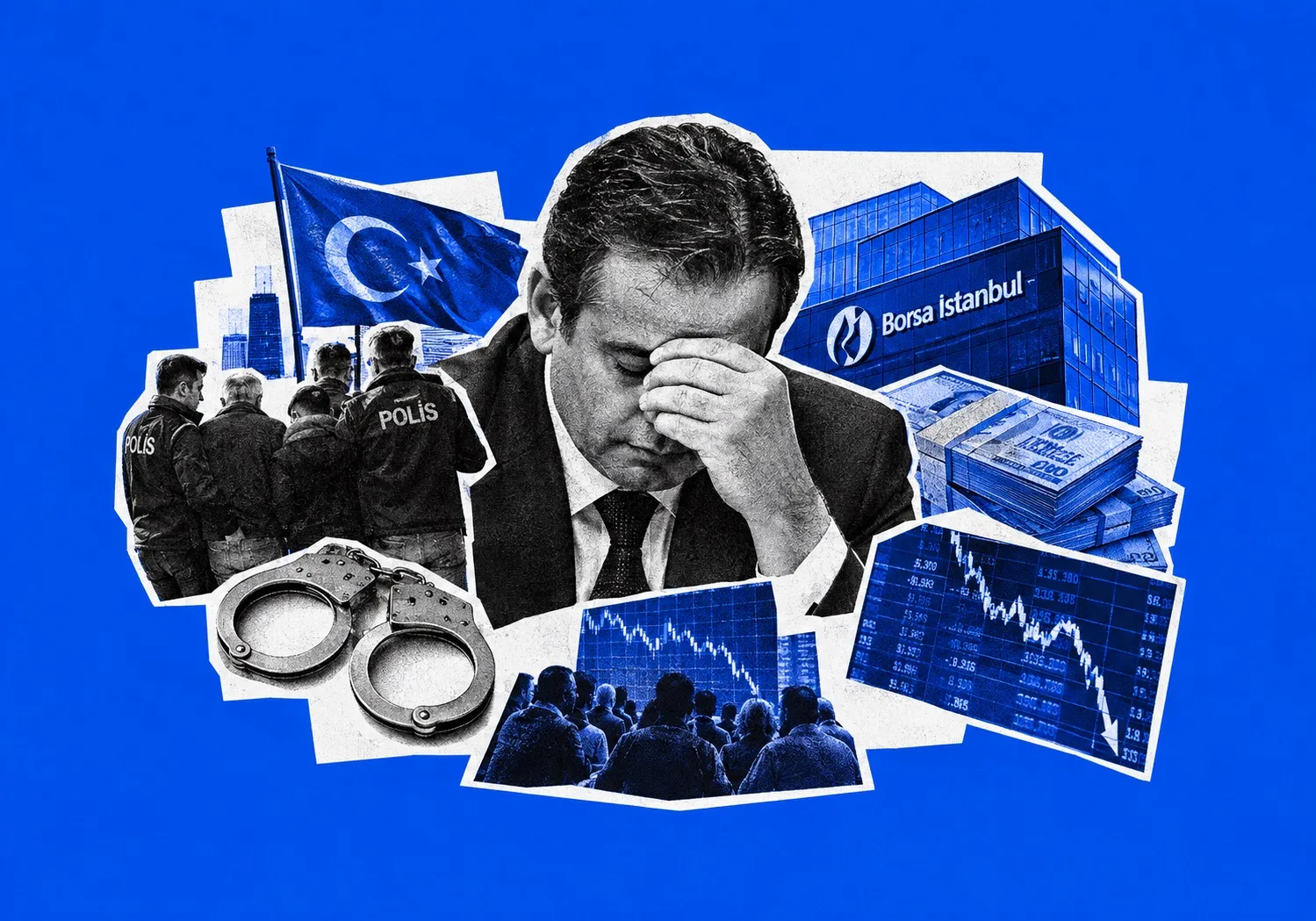
Turkey’s capital markets are facing their largest shock in decades after an $18.3bn investment fund scheme collapsed into mass liquidations and high-profile arrests, leaving over 450,000 investors with frozen assets. Center stage is brokerage Tera Yatırım, whose liquidity default triggered regulatory enforcement against 131 funds, exposing how low-free-float market manipulation and inflation-hedging retail mania generated fragile, artificial valuations.
Within days, Turkish authorities had ordered the liquidation of 131 funds managed by seven financial institutions and launched criminal proceedings against dozens of people.
But the significance of the episode extends beyond the fate of individual brokerages. It exposes a market structure in which extraordinary returns could be generated from assets that were difficult to sell in meaningful volumes. Once regulators forced those positions to be unwound, the prices supporting the apparent wealth of the funds proved far less durable than their valuations suggested.
The problem with extraordinary returns
The mechanics were relatively simple.
Funds accumulated shares in companies with very limited free float, meaning that only a small proportion of their stock was actually available for trading. Concentrated buying could therefore push prices sharply higher. Some funds recorded returns of between 4,000% and 17,000%.
Those gains then became part of the attraction. Rising net asset values encouraged further retail investment, providing fresh capital while making the underlying positions appear increasingly valuable.
Leverage amplified the process. Shares whose prices had already been pushed higher could be pledged as collateral for short-term loans. The borrowed money could then be used to purchase more of the same stocks, adding another layer of demand and reinforcing the price increases that supported the collateral.
The structure became vulnerable precisely because the apparent gains depended on continued liquidity.
A portfolio can carry a very high valuation on paper while being difficult to liquidate at anything close to that valuation. When investors begin demanding their money simultaneously, the distinction becomes critical.
That is what the September collapse exposed.
Regulation turned a valuation problem into a liquidity crisis
The catalyst came in August, when Turkish regulators tightened rules for investment funds heavily exposed to low-free-float stocks. Fund holdings were limited to between 2% and 8% of an issuer’s free float, while cross-product investment was capped at 20%.
For funds built around concentrated positions, the new limits meant that holdings had to be unwound.
The problem was that the market did not necessarily have enough natural buyers to absorb those positions without sharply reducing prices. Once selling began, falling valuations weakened the collateral behind short-term borrowing. That put further pressure on funds to sell assets, creating a feedback loop between declining prices, shrinking collateral and rising redemption demands.
Tera Yatırım became the point at which the mismatch became impossible to contain.
Its failure was not simply a brokerage collapse. It exposed the liquidity assumptions underpinning a much wider network of funds and financial institutions.
The BIST 100 fell 12% in mid-September, while roughly 50 benchmark stocks lost more than 40% of their value before regulatory measures and bank liquidity injections helped stabilise the market.
The speed of the reversal matters. A market capable of producing thousands of per cent in apparent returns through concentrated buying can also destroy those valuations rapidly when the flow of new money reverses.
A retail boom built around inflation protection
The episode also reflects a broader feature of Turkey’s financial environment: the pressure on households to protect savings from chronic currency depreciation.
Retail investors were drawn towards investments promising returns far beyond conventional assets. In that environment, extraordinary equity gains could appear less like speculation and more like a necessary response to inflation and currency weakness.
That demand created fertile conditions for products built around spectacular performance.
The vulnerability was not simply that investors were taking risks. It was that the market structure allowed illiquid assets to acquire valuations that could attract further capital, while the same valuations could then support additional leverage.
This is where the distinction between market growth and market depth becomes important. More retail capital entering an equity market does not automatically make that market more resilient. If the money becomes concentrated in a small number of securities, rising participation can increase fragility rather than reduce it.
The fund collapse brought that distinction into the open.
The people behind the institutions matter
The credibility of the affected firms has also become part of the crisis.
Between September 19 and 23, authorities detained and arrested Tera Yatırım founder and chairman Emre Tezmen, board members Kerem Alkin and Emre Alkin, and executive Alper Öztürk. Alkin had served as Turkey’s ambassador to the OECD, while Emre Alkin is a prominent economist.
Other senior figures were also arrested, including Serdar Turhan, chairman of Pusula Finans Holding; Muhammed Yarız, chairman of Pusula Portföy; Namık Kemal Gökalp, chairman of Hedef Holding and Info Yatırım; Altunç Kumova, majority owner of Destek Yatırım and Destek Holding; and İbrahim Bekçi, vice chairman of Tera Portföy.
The authorities say criminal proceedings involve 60 suspects. At least four have been imprisoned pending trial, 44 remain in custody, travel bans have been imposed on 51 people and warrants have been issued for 12 others.
Those proceedings will determine individual legal responsibility. The wider institutional question is different: how did financial structures capable of accumulating such exposure operate for so long?
That question is particularly uncomfortable because the institutions involved were not operating entirely outside the established financial system. Their senior figures included people with recognised positions in Turkey’s economic and financial establishment.
The six-month problem
The immediate burden now falls on investors.
The Capital Markets Board has ordered the mandatory liquidation of 131 funds managed by Tera Portföy, Pusula Portföy, Hedef, Atlas, A1 Capital, Pardus and Bulls. Ziraat Bank and İşbank have been appointed to manage the liquidation process over six months.
That timetable reflects the central problem: many of the assets cannot simply be sold immediately without potentially deepening the losses.
Pusula Portföy illustrates the scale of the adjustment. Its main funds reportedly fell from 115bn liras to less than 8bn liras after 129bn liras in capital flight.
There is no reliable recovery percentage yet contained in the available facts. For retail investors, the eventual outcome will depend on what the underlying assets can realise during liquidation rather than on the valuations attached to them before the crisis.
Authorities have also frozen financial assets and property transactions involving executives, their spouses and close relatives across nine financial institutions. Prosecutors are examining foreign bank and cryptocurrency transfers dating back to 2024 as they investigate possible capital flight.
The liquidation process is therefore becoming both a market operation and a legal enforcement exercise.
Turkey’s international market reputation is now part of the damage
The domestic shock comes after international investors had already been given reasons to question the structure of the Turkish equity market.
In May, MSCI removed several Turkish equities from its indices over concerns about free-float levels and pricing transparency. MSCI and FTSE had also warned that continued problems with free-float manipulation could push Turkey towards reclassification as a frontier market.
The latest crisis gives those concerns a more consequential backdrop.
Index classification is not merely a matter of prestige. It affects how international investors assess access, liquidity and market infrastructure. A deterioration in institutional confidence can therefore have effects beyond the securities directly caught up in the investigation.
The paradox is that the retail investment boom that helped drive spectacular valuations was also exposing the weaknesses that international investors were already watching.
Turkey now faces a regulatory choice with consequences beyond this particular scandal. The response is likely to push capital-market supervision away from tolerance of concentrated retail flows and towards quantitative limits on fund exposure, free-float allocations and holdings across affiliated products.
That may make the market less accommodating to the structures that produced the extraordinary returns.
It also means confronting the harder question revealed by the collapse: whether the valuations of assets accumulated under the old rules represented genuine market depth, or simply the price that could be sustained while new money kept arriving.
Sources: EuroNews, The Edge Malaysia, Al-Monitor, Reuters, Turkish Minute, BIS