
TAP Air Portugal Privatisation: Air France-KLM and Lufthansa enter final bids for strategic stake

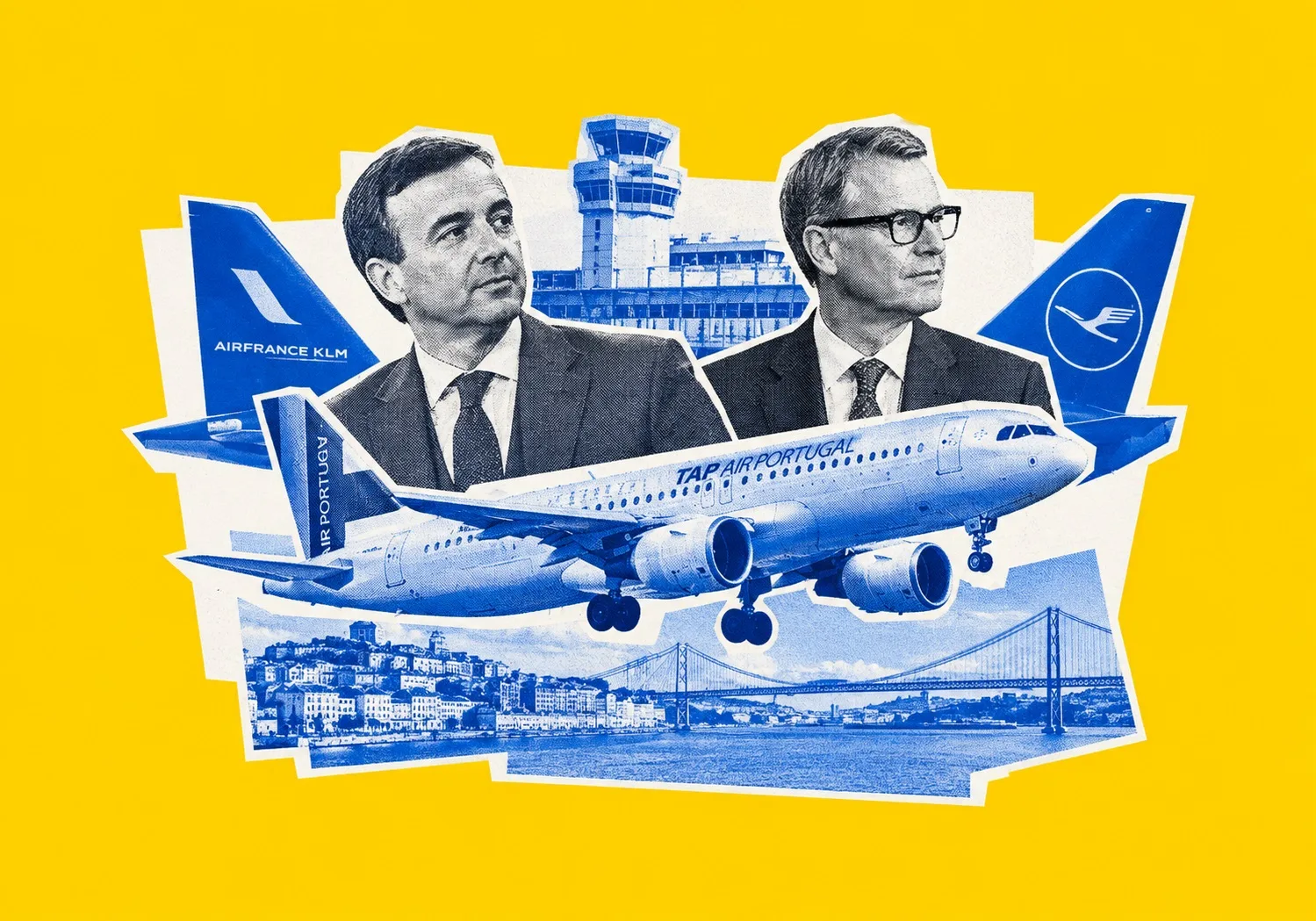
Portugal has launched final negotiations for the sale of a 44.9% stake in TAP Air Portugal, placing Air France-KLM and Lufthansa Group in direct competition for Lisbon’s Atlantic hub. With initial binding offers deemed too close to separate, Lisbon is demanding improved terms, turning the flag carrier’s privatisation into a crucial contest for Western Europe’s airline consolidation.
TAP's appeal begins with its network.
The airline has established connections to major Brazilian markets including São Paulo, Rio de Janeiro and Curitiba, while its reach extends into Angola, Mozambique and Cape Verde. Its North American network is also expanding, with Orlando due to be added in October 2026 and year-round Porto-Boston services planned.
Lisbon's airport position makes those routes more valuable than the individual destinations might suggest. TAP controls the vast majority of valuable peak-hour slots at Humberto Delgado Airport, giving the carrier significant influence over how long-haul traffic is channelled through the Portuguese capital.
For Air France-KLM and Lufthansa, this is a way of adding another hub without having to build one from scratch.

The geography matters because the established European hubs are becoming harder to expand. Frankfurt, Paris-CDG, Amsterdam-Schiphol and Munich all operate under different combinations of slot constraints, infrastructure limitations and environmental restrictions. A group dependent on a small number of heavily congested airports has less room to increase capacity even when demand exists.
Lisbon offers a different proposition: a perimeter hub positioned directly on the Atlantic routes that matter to Portugal and its diaspora, while also connecting passengers from elsewhere in Europe.
That makes TAP an infrastructure asset as much as an airline.
Two different visions for the same hub
The rival bids reflect different ways of incorporating Lisbon into Europe's existing airline architecture.
Air France-KLM proposes making Lisbon its primary exclusive southern European hub, alongside its established operations at Paris-CDG and Amsterdam-Schiphol. Its strategy would combine TAP's Atlantic network with the group's wider commercial infrastructure, including cooperation with US partner Delta Air Lines and opportunities in cargo, maintenance and loyalty programmes.
Lufthansa Group approaches the asset through a broader multi-hub model. Its existing system spans Frankfurt, Munich, Zurich, Vienna, Brussels and Rome through ITA Airways. TAP would add another geographical component, particularly strengthening the group's position across the South Atlantic while allowing it to apply group-wide procurement and IT systems.
The distinction is important. Neither bidder needs TAP simply to add Portuguese passengers to its network. Both can use the airline to redistribute flows across a much larger European system.
Passengers travelling from secondary European markets could increasingly be routed through Lisbon rather than northern European hubs when their final destination lies in Brazil, North America or Lusophone Africa. That creates commercial pressure well beyond Portugal.
Air Serbia, Croatia Airlines and Bulgaria Air, among other regional carriers, could face a stronger competitor for long-haul connecting traffic if TAP becomes more deeply integrated into one of Europe's largest airline groups.
The government is selling control without giving up control
Lisbon's negotiating position makes the transaction unusual.
The strategic investor will acquire 44.9% of TAP, while employees can receive up to another 5%. The Portuguese state will retain a 50.1% majority.
That means the buyer is being offered operational influence and access to TAP's commercial platform without acquiring outright political control of the airline.
For the government, this structure addresses a tension that has complicated TAP's history. Portugal wants private capital and the commercial discipline of a major airline group, but it also wants to preserve TAP's national role and Lisbon's position as an aviation hub.
The final bidder will therefore have to make commitments extending beyond financial performance. Lisbon is demanding guarantees on international network expansion, long-term fleet and technology investment, the retention of TAP's headquarters in the capital, preservation of national routes and the continued development of Lisbon Airport as a major global hub.
Those conditions explain why the government did not simply select the highest financial offer.
Parpública, the state holding company, completed its assessment of the competing proposals before the final round. Its review found the initial binding bids to be "very close" across the relevant criteria. The government subsequently asked both groups to improve their terms.
The result is effectively a negotiation over the future shape of TAP rather than a straightforward auction.
TAP is valuable despite its deteriorating finances
There is an obvious contradiction at the heart of the transaction: TAP is strategically attractive at precisely the moment when its financial performance has become more difficult.
The airline carried a record 16.7 million passengers in 2025 and generated €4.31 billion in revenue. Yet its net profit was only €4.1 million, sharply lower than the previous year, after a €42 million one-off tax adjustment.
The deterioration continued into 2026. Revenue rose 4% to €1.9 billion in the first half, but TAP recorded a net loss of €99.2 million. Its recurring operating result moved from a €17.3 million profit in the first half of 2025 to an €83.7 million loss a year later.
Fuel costs, higher wages and the expense of expanding the fleet have increased faster than revenue.
That financial pressure gives the buyer a clear commercial challenge. TAP's strategic value cannot simply be translated into immediate profitability. The new owner will need to invest in an airline whose network is valuable partly because of the infrastructure around it, while absorbing the costs required to make that network more productive.
Bernstein's assessment puts the value of the 44.9% stake at about €700 million, implying an enterprise value of roughly €1.5 billion for TAP. The actual bids remain undisclosed.
The Portuguese government is therefore negotiating over two different kinds of value: the company's current financial position and the strategic value of the network it could become under a major international group.
The end of the old European airline model
TAP's sale is also significant because it represents the final major transaction involving a state-controlled flag carrier in Western Europe.
The airline was previously the subject of privatisation efforts in the mid-2010s, before political changes and the Covid-19 pandemic resulted in its renationalisation and restructuring under EU state-aid rules. The process relaunched in July 2025 with the state seeking a strategic investor while preserving majority ownership.
What has changed is the role assigned to the private partner.
The model emerging from Lisbon is neither a traditional state airline nor a conventional privatisation. The government keeps majority ownership and political leverage while a multinational airline group provides capital, management expertise and access to a much larger commercial network.
That hybrid structure could become increasingly relevant for governments that want national airlines to remain politically anchored but cannot easily finance their long-term expansion alone.
For the airline groups, meanwhile, the lesson is more immediate. The most valuable assets in the next stage of European consolidation may not be airlines with the largest passenger numbers or the strongest balance sheets. They may be airports, slots and geographical positions that cannot easily be replicated.
The strategic investor is expected to enter TAP's joint management framework before the end of 2026, with the full equity capital injection targeted for summer 2027.
By then, the competition that began as a bid for 44.9% of a Portuguese flag carrier will have produced something more consequential: a decision over which European aviation group gets to build its South Atlantic strategy around Lisbon.
Sources: Reuters, France24, EUToday, AirwaysMag