
Swiss Neutrality Faces Test Over Russia Sanctions

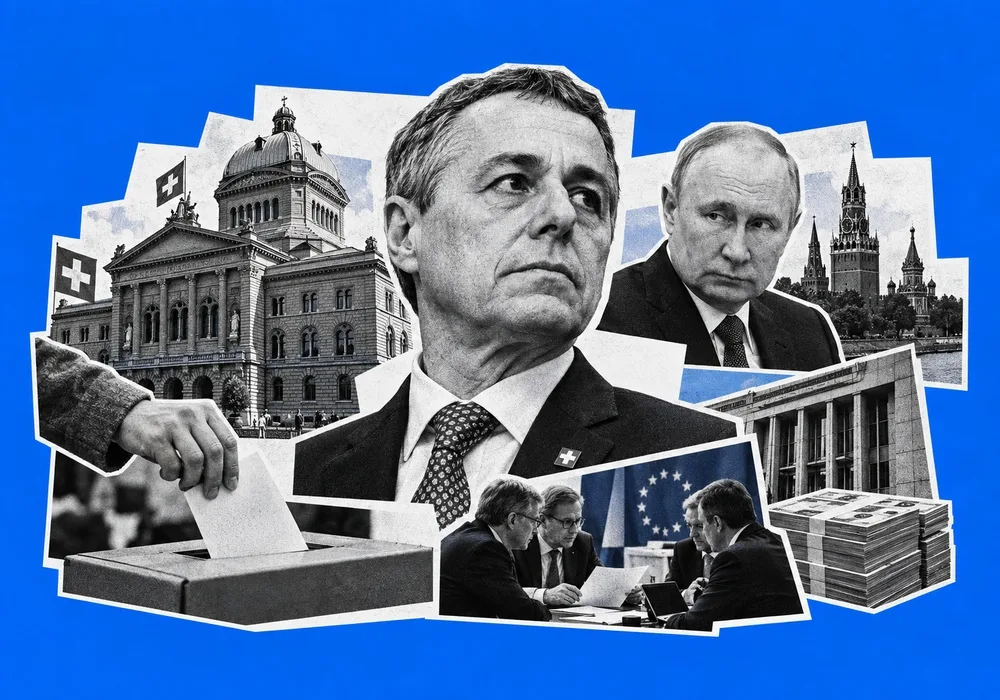
Switzerland’s 27 September referendum could reshape the country’s approach to neutrality and sanctions. A stricter constitutional definition could limit Bern’s ability to align with EU sanctions against Russia and constrain parts of its security cooperation with European partners.
Switzerland is voting on 27 September on an initiative that would introduce a stricter definition of neutrality into the country’s Constitution. The proposal goes beyond Switzerland’s traditional military non-alignment and would also affect the government’s ability to impose sanctions on countries involved in wars. The issue has become particularly significant because Bern has largely aligned its sanctions policy with the European Union since Russia launched its full-scale invasion of Ukraine, despite Switzerland remaining outside the EU.
Under the current system, the Swiss Federal Council can decide whether to adopt sanctions imposed by international partners, including the EU. Since 2022, Switzerland has introduced most EU sanctions against Russia, including financial restrictions and asset freezes. The proposed constitutional changes could significantly narrow that flexibility by preventing Switzerland from imposing sanctions on states involved in wars unless the measures have been authorised by the UN Security Council or are intended to prevent sanctions evasion.
Russia at the centre of the debate
The proposed restrictions could have direct consequences for Switzerland’s current sanctions regime against Russia. Moscow is a permanent member of the UN Security Council and has veto power, meaning that sanctions imposed by the EU without a corresponding Security Council resolution would not meet the initiative’s proposed criteria. The Swiss government has warned that approval could therefore require the country to reconsider sanctions that are currently in force against Russia.
The issue is particularly sensitive because Switzerland has become an important part of the wider European sanctions architecture despite its formal neutrality. By July 2026, around 2,790 Russian individuals and entities were subject to Swiss sanctions, while assets worth approximately 8.5 billion Swiss francs had been frozen. The country has also faced pressure from G7 governments to strengthen efforts to identify and freeze Russian assets and prevent sanctions circumvention.
Switzerland’s role is significant beyond the size of the assets involved. The country is a major financial centre and has historically been closely connected to Russian capital and commodity trading, with Swiss-based companies playing an important role in international commodity markets. Maintaining alignment with European sanctions has therefore allowed Bern to remain integrated into the broader Western economic response to Russia while formally preserving its non-aligned status.
Bern defends the existing model
The Swiss government opposes the initiative and argues that neutrality does not require the country to remain passive when international law is violated. Its position is that economic sanctions can be compatible with neutrality because they do not in themselves amount to military participation in a conflict. The government also distinguishes between general economic measures and restrictions directly connected to the military capabilities of parties to a war.
Bern has warned that a stricter constitutional definition could also reduce Switzerland’s room for manoeuvre in European security cooperation. The proposed rules could restrict cooperation with military and defence alliances even when Switzerland itself was not directly involved in a conflict. This could affect joint exercises, defence cooperation and Switzerland’s relationship with European security structures.
The debate also has implications for Switzerland’s defence industry. The government has argued that limiting cooperation with European partners could affect confidence in Switzerland as a supplier and security partner. At a time when European states are increasing defence spending and seeking closer industrial cooperation, the question of how Switzerland defines neutrality could therefore have consequences beyond its sanctions policy.
A wider European question
The referendum reflects a broader tension between Switzerland’s traditional understanding of neutrality and its growing integration into European economic and security structures. Switzerland is neither an EU nor a NATO member, but it maintains extensive political, economic and security links with European states and has increasingly coordinated its response to Russia with its European partners.
Supporters of the initiative argue that this cooperation has gradually weakened the distinction between Swiss neutrality and the policies of Western governments. They want the principle of neutrality to be placed beyond the reach of short-term political decisions and to establish clearer constitutional limits on sanctions and military cooperation.
The government, by contrast, argues that the current system provides the flexibility needed to respond to changes in the international environment while preserving Switzerland’s non-aligned status. The referendum will therefore test not simply whether Switzerland remains neutral, but how much room its government should have to interpret and apply neutrality in response to major international crises.
For Europe, the outcome could be particularly relevant to the future of sanctions coordination with a country that remains outside the EU but has a significant financial sector and an established role in international diplomacy. Switzerland has spent the past four years balancing its traditional neutrality with participation in the European response to Russia. A constitutional shift could force Bern to reconsider that balance and potentially create a new distinction between Swiss neutrality and the sanctions policy of its European partners.
Sources: Swiss Federal Council, Euractiv