
Slovenia Has Turned a European Appointment Into a Domestic Political Battle

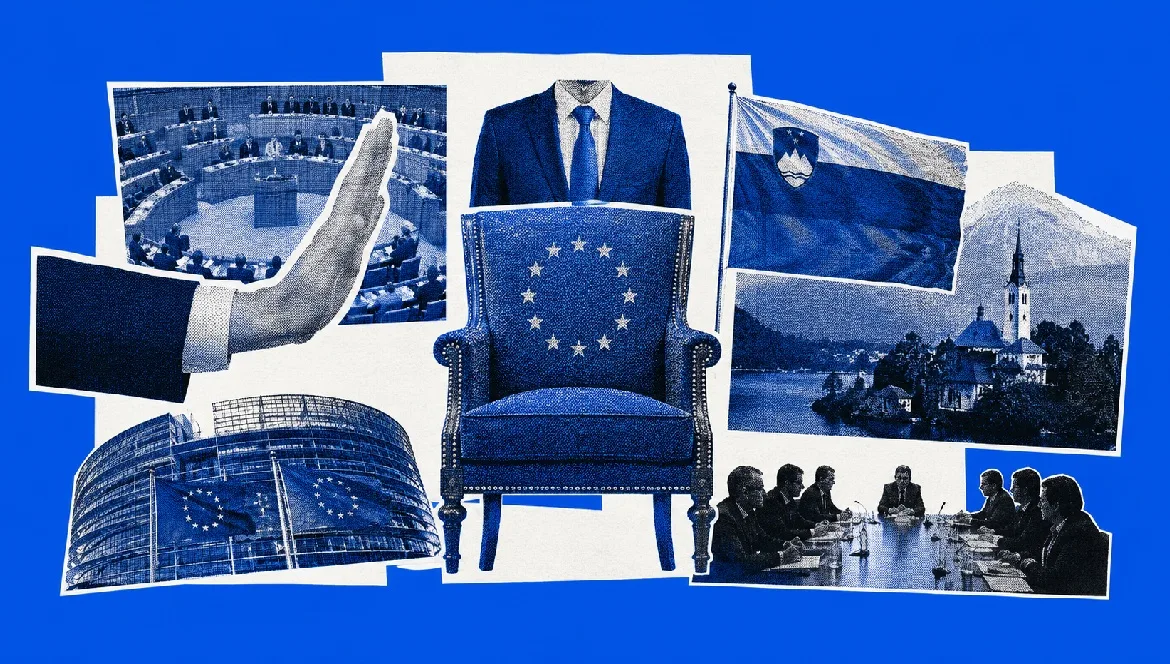
Slovenia’s decision to block Tanja Fajon’s appointment to a senior EU diplomatic post shows how quickly domestic political rivalries can reach Brussels. The dispute is more than a Slovenian power struggle. It exposes a wider European vulnerability: the EU wants a more strategic foreign policy, but its international appointments remain exposed to national political change, party networks and domestic battles.
Slovenia has blocked the appointment of its former foreign minister Tanja Fajon to a senior European diplomatic post, turning what was supposed to be a routine Brussels nomination into a test of how far domestic political rivalries can reach into the EU’s foreign policy machinery.

Fajon had emerged as the leading candidate to become the European Union’s Special Representative for the Sahel. The position would have placed a Slovenian politician at the centre of one of Europe’s most difficult external policy files, covering a region where military coups, the retreat of Western influence, Russian engagement and the collapse of traditional European partnerships have fundamentally changed the strategic environment.
Instead, the appointment became entangled in Slovenia’s own political transition. The country’s new right-wing government, led by Janez Janša, challenged the legitimacy of the procedure through which Fajon had been nominated. After weeks of uncertainty, EU ambassadors approved the second-ranked candidate, Danish diplomat Birgitte Nygaard Markussen, for the position.
The outcome was not simply a failed appointment. It was a demonstration of how quickly a national political dispute can become a European institutional problem.
The Candidate Became Part of the Political Conflict
Fajon is not an anonymous diplomat whose nomination could be assessed independently of national politics. She served as Slovenia’s foreign minister until June and is a prominent figure in the country’s Social Democrats. Her candidacy was submitted while the previous government was still operating in a caretaker capacity.
That timing became the central argument used by the new government. Slovenia’s current foreign minister, Tone Kajzer, has rejected claims that he supported Fajon’s candidacy or participated in the process that produced it. The ministry has argued that the nomination was submitted under the previous leadership and that the current government should not be held responsible for a procedure in which it did not participate.
But the political meaning of the dispute was difficult to separate from the formal argument. Fajon’s candidacy had become associated with the previous political establishment, while the new government had both the incentive and the opportunity to challenge decisions taken before it came to power.
This is where Slovenia’s internal politics began to matter for the EU. The question was no longer simply whether Fajon was the strongest candidate for a diplomatic post. It became a question of whether the new government was willing to allow a prominent political rival to receive an influential international position through a process inherited from its predecessor.
Brussels Was Forced to Manage a Slovenian Dispute
The appointment process exposed an uncomfortable feature of the European Union’s foreign policy system. Brussels can conduct an international selection procedure, identify a preferred candidate and build political support around that choice. But the candidate’s national government can still possess the political leverage to disrupt the process.
Fajon had reportedly ranked first in the selection process and was supported by EU foreign policy chief Kaja Kallas. Yet the nomination became increasingly difficult to advance after Ljubljana raised objections and sought to question the legitimacy of the procedure.

The Slovenian government’s intervention also carried political weight beyond the formal dispute. According to Euractiv, the campaign against Fajon was backed by Janša and his European political network. The episode is particularly significant because it follows an earlier attempt by Janša in 2024 to prevent another Slovenian politician, Marta Kos, from becoming the country’s European commissioner. That earlier effort was unsuccessful.
This time, however, the result was different. The first-choice candidate disappeared from the process and the second-ranked candidate was selected instead.
The message for Brussels is clear. European appointments may be formally European, but they remain vulnerable to national political power. A change of government in a small member state can still alter the composition of the EU’s diplomatic leadership.
The Sahel Was Supposed to Be the Strategic Question
The irony is that the appointment concerned a region where the EU can ill afford political distraction.
The Sahel has become one of the clearest examples of the decline of European influence in Africa. Military governments in Mali, Burkina Faso and Niger have rejected or weakened traditional partnerships with European states. France has lost much of its former political and military influence in the region. Russia has expanded its presence through security cooperation and political engagement. European governments are now attempting to maintain influence in an environment where the old instruments of leverage are increasingly ineffective.
The EU Special Representative for the Sahel is therefore not merely a ceremonial post. The mandate covers a region extending beyond the core Sahelian states and includes engagement with neighbouring countries, the Lake Chad Basin, the Maghreb and the Gulf of Guinea. The position exists precisely because European policy in the region requires political coordination at a time when the Union’s influence is under pressure.
Yet the appointment process became dominated by a dispute over the political legitimacy of a Slovenian nomination.
That contrast illustrates a broader problem in European foreign policy. The EU increasingly wants to act as a geopolitical power, but its institutional mechanisms remain exposed to the political calculations of individual member states. Strategic priorities can be delayed, reshaped or abandoned because of domestic disputes that have little direct connection to the external challenge the EU is trying to address.
A Small Country Has Demonstrated a Large European Vulnerability
Slovenia is not one of the EU’s largest powers. It does not possess France’s military capacity, Germany’s economic weight or Poland’s growing strategic importance. But the Fajon affair demonstrates that influence inside the Union is not determined solely by size.
A government can use appointments, procedural questions and political alliances to shape outcomes far beyond its own borders. Janša’s influence within the European People’s Party appears to have been an important factor in the political struggle surrounding the nomination. The appointment therefore became part of a wider contest over who controls the European political centre and how far party networks can be used to influence institutional decisions.
For Slovenia, the episode carries an obvious domestic political benefit. Blocking a senior international appointment associated with a political rival allows the new government to demonstrate that the previous administration’s decisions will not automatically survive a change of power.
But the cost is more complicated.
Fajon herself argued that the episode represented a loss for Slovenia, particularly because the country has relatively few citizens occupying senior international positions. The dispute has therefore created a paradox: a national government may have succeeded in preventing one political figure from receiving an international role, while simultaneously weakening the country’s ability to place its own nationals in influential European positions.
Europe’s Foreign Policy Is Becoming More Politicised at Home
The deeper significance of the episode lies beyond Slovenia and beyond Fajon.
Across Europe, foreign policy is increasingly being pulled into domestic political competition. European governments are no longer treating international appointments as purely technocratic decisions. Candidates carry political identities, ideological histories and links to national parties. Their appointment can therefore become a continuation of domestic political conflict by other means.

This creates a structural tension for the EU. Brussels needs diplomatic continuity, institutional credibility and the ability to appoint people based on experience and political suitability. National governments, meanwhile, remain accountable to domestic electorates and increasingly view European institutions as another arena in which political rivals can be rewarded or constrained.
The Slovenian case shows how quickly those two logics can collide.
The EU had a preferred candidate. Slovenia had a new government. The selection process had already been completed. Yet the political dispute did not end with the conclusion of the process. It moved into the Council, into national party networks and into the broader contest over who has the right to define a country’s international representation.
In the end, Brussels chose a different candidate.
That may resolve the immediate appointment. It does not resolve the larger problem. If every change of government can reopen international nominations made by its predecessor, the EU’s foreign policy system will become increasingly vulnerable to national political turnover.
Europe is trying to build a more strategic foreign policy while its member states are becoming more willing to use European institutions as extensions of domestic political battles. The Slovenian episode is a small event in institutional terms. But it reveals a much larger tension: the EU wants its diplomacy to operate with geopolitical speed, while its political reality remains deeply national.
And in an increasingly unstable external environment, that gap is becoming harder to ignore.
Source: EURACTIV