
Russia Forces Businesses to Pay for Own Air Defences Under Threat of Nationalisation

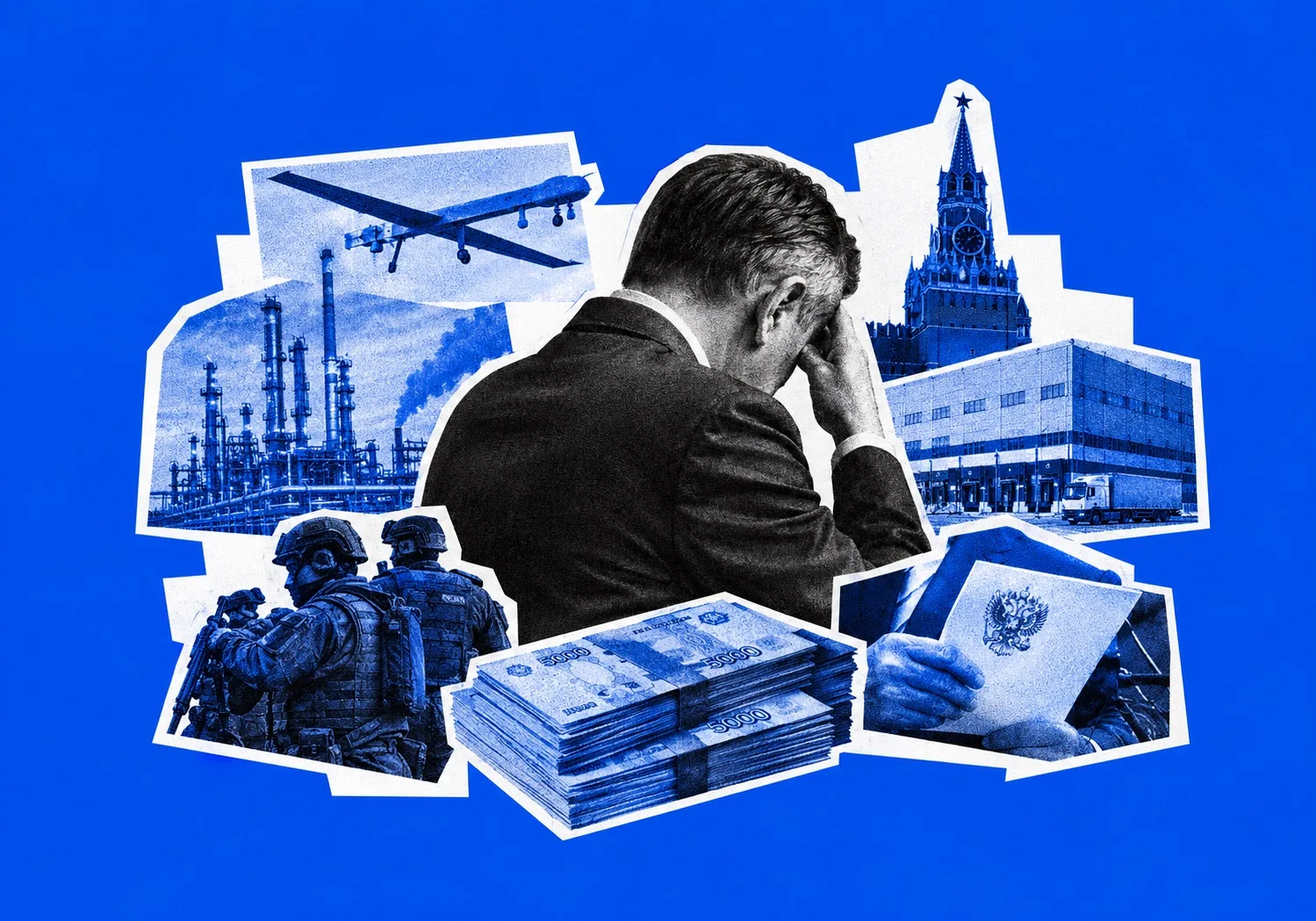
A new Kremlin decree is ordering Russian companies to self-fund protection against Ukrainian drone strikes or risk temporary state requisition and nationalisation. The mandate forces commercial enterprises to absorb the costs of military hardware, armed guards, and air defences at the exact moment rising taxes and soaring interest rates are driving hundreds of thousands of civilian businesses into liquidation.
The shift is already visible in corporate spending.
Russian companies spent more than 440mn roubles on anti-drone technologies during the first half of 2026, almost seven times the amount recorded during the same period a year earlier. Businesses are not simply buying commercial surveillance equipment. Some are leasing air defence systems from the Ministry of Defence and paying for the military personnel and technicians required to operate them.
Others are building their own security capacity. Companies are recruiting defence engineers, specialist technicians and armed personnel to monitor airspace and intercept drones. Recruitment advertisements in the Moscow region have offered anti-drone guards from 240,000 roubles a month, while protection of particularly sensitive infrastructure commands still higher remuneration.
The private sector is therefore becoming part of the physical defence architecture of the Russian rear.
That is not merely a new expense category. It changes the relationship between companies and the state.
The Kremlin is no longer asking businesses only to comply with regulations, pay taxes and maintain production. Their ability to protect their own assets is becoming part of the conditions under which they are allowed to remain in private hands.
The threat of state intervention gives the requirement an additional dimension. A company that cannot secure its facilities adequately risks temporary state management or requisition. Security expenditure is consequently not an optional investment in resilience but a cost of retaining operational and ownership stability.
For large enterprises, that distinction may be manageable. For smaller companies, it can be existential.
The civilian economy is being squeezed from both sides
The new security burden arrives as Russia's 2026 tax changes are already putting pressure on the smallest businesses.
VAT has risen from 20% to 22%. The annual revenue threshold for compulsory VAT registration under the simplified and patent tax regimes has fallen from 60mn to 20mn roubles, with a further reduction to 10mn scheduled by 2029. Corporate income tax has increased from 20% to 25%, while preferential social insurance contribution rates have been removed and personal income tax brackets have also risen.
For micro-enterprises, the effective tax burden has consequently increased from roughly 3% of revenue to 8–9%.
That would be difficult under normal economic conditions. It is more consequential when credit is expensive, labour is scarce, and consumers are spending less.
Russia's central bank benchmark rates have remained at 13–15%, raising the cost of working capital for businesses outside the sectors receiving the strongest state support. The result is a narrowing space in which civilian companies can absorb another large fixed expense.
Air defence is one of those expenses.
A refinery, warehouse or distribution centre may now require surveillance systems, electronic warfare equipment, specialist personnel and physical security while simultaneously facing higher taxation and borrowing costs. The money devoted to protecting existing assets is money that cannot be invested in expansion, inventory or new production.
The distinction between wartime resilience and economic deterioration becomes increasingly blurred.
The SME contraction changes the market itself
The scale of business closures points to a wider structural adjustment.
Between January and May 2026, 466,900 companies and individual entrepreneurs ceased operations. In the first quarter alone, 209,000 small and medium-sized businesses were liquidated, 9% more than a year earlier. New business registrations fell by 26.8%.
The pressure is particularly visible in consumer-facing sectors. Closures in food service increased by 29% in January and February, while major chains such as Shokoladnitsa closed dozens of locations.
Surveys by Opora Rossii found that 68.7% of businesses reported declining revenues and 65% failed to generate a profit in the first quarter. Estimates cited by tax officials and business representatives put the share of SMEs facing potential near-term liquidation at up to 30%.
These figures matter beyond the number of companies disappearing from registries.
A shrinking SME sector changes who can afford to operate in Russia. Businesses with stronger balance sheets can absorb higher taxes, finance security infrastructure and survive periods of weak demand. Smaller operators cannot necessarily do all three.
The resulting consolidation can therefore shift market share towards larger and better-capitalised companies, including state-aligned enterprises. Distressed assets become available at a moment when the pool of potential buyers is itself narrowing.
There is another possible consequence: some businesses may attempt to survive outside the formal economy. As the cost of remaining compliant rises, informal activity becomes more attractive to companies that cannot carry the full burden of taxation and security requirements. That weakens the transparency of the economy while narrowing the formal tax base on which the state depends.
Ukraine’s strikes are reaching deeper into the economic system
The pressure on corporate security is being driven by the scale and reach of Ukraine's long-range drone campaign.
Tracking by Rochan Consulting indicates that Russian oil refineries have been struck at least 194 times in 2026, around eleven times the level recorded over the comparable period in 2025. Since March, Ukrainian drones have carried out roughly 200 strikes against Russian oil refineries and other economic infrastructure, with May recording 16 successful refinery impacts.
The targets extend beyond energy.
At least 36 major distribution hubs have been hit, including fulfilment centres associated with Ozon and Wildberries. Damage or disruption to such facilities matters because the consequences do not stop at the perimeter fence. Fuel production, distribution networks and retail logistics are interconnected with the wider civilian economy.
For companies operating these networks, the threat is no longer an exceptional security event that can be managed through insurance or occasional repairs. It has become an operational variable.
The Kremlin's response is revealing because it does not centre on a promise that the state will restore comprehensive protection. Instead, responsibility is being pushed down to the enterprises themselves.
Even state infrastructure is moving in that direction. Pochta Rossii has authorised operational employees to carry firearms for defensive duties, illustrating how the boundary between civilian administration and armed security is becoming less distinct.
A different state-corporate bargain
Russia's wartime economic model has depended heavily on directing resources towards military priorities while maintaining enough civilian activity to keep the broader economy functioning.
The new security requirements put another layer on that model.
The state retains the authority to requisition or place businesses under temporary management, while companies are expected to finance protection against attacks that threaten nationally important infrastructure. The Ministry of Defence can lease equipment and provide personnel, generating revenue while transferring part of the financial and logistical burden of rear-area defence to commercial operators.
That creates a peculiar arrangement: private companies pay for access to state military capabilities while also being compelled to provide security that the state has historically treated as a public responsibility.
For Moscow, this may be a practical response to finite resources. Air defence assets have to cover military priorities as well as an increasingly exposed domestic industrial geography. Moving more responsibility to companies avoids a direct choice between protecting the front and protecting the rear.
For the civilian economy, however, the cost does not disappear. It simply changes who pays.
The longer the strike campaign continues, the more deeply security expenditure can become embedded in the cost structure of Russian energy, logistics, retail and manufacturing. A company may remain open while becoming less productive, less profitable and less willing to invest.
That creates a difficult policy problem for the Kremlin. The state needs businesses to generate tax revenue, maintain supply chains and keep production running. Yet the mechanisms being used to finance the war and protect its economic infrastructure are simultaneously increasing the costs of doing business.
The threat of requisition adds further uncertainty: capital is no longer deployed solely against market risks. Businesses must also account for the possibility that failure to meet state-defined security requirements could affect control over their own assets.
The result is a civilian economy increasingly organised around the demands of war without necessarily receiving the protection normally associated with that arrangement. The more the state shifts the physical and financial costs of rear-area defence onto private balance sheets, the less clear it becomes where public security ends and corporate survival begins.
Sources: WSJ, Novaya Gazeta, The Moscow Times, BNN Bloomberg