
Russia Demands ICC Extradition from Netherlands: Why Moscow’s Lawfare Won’t Work

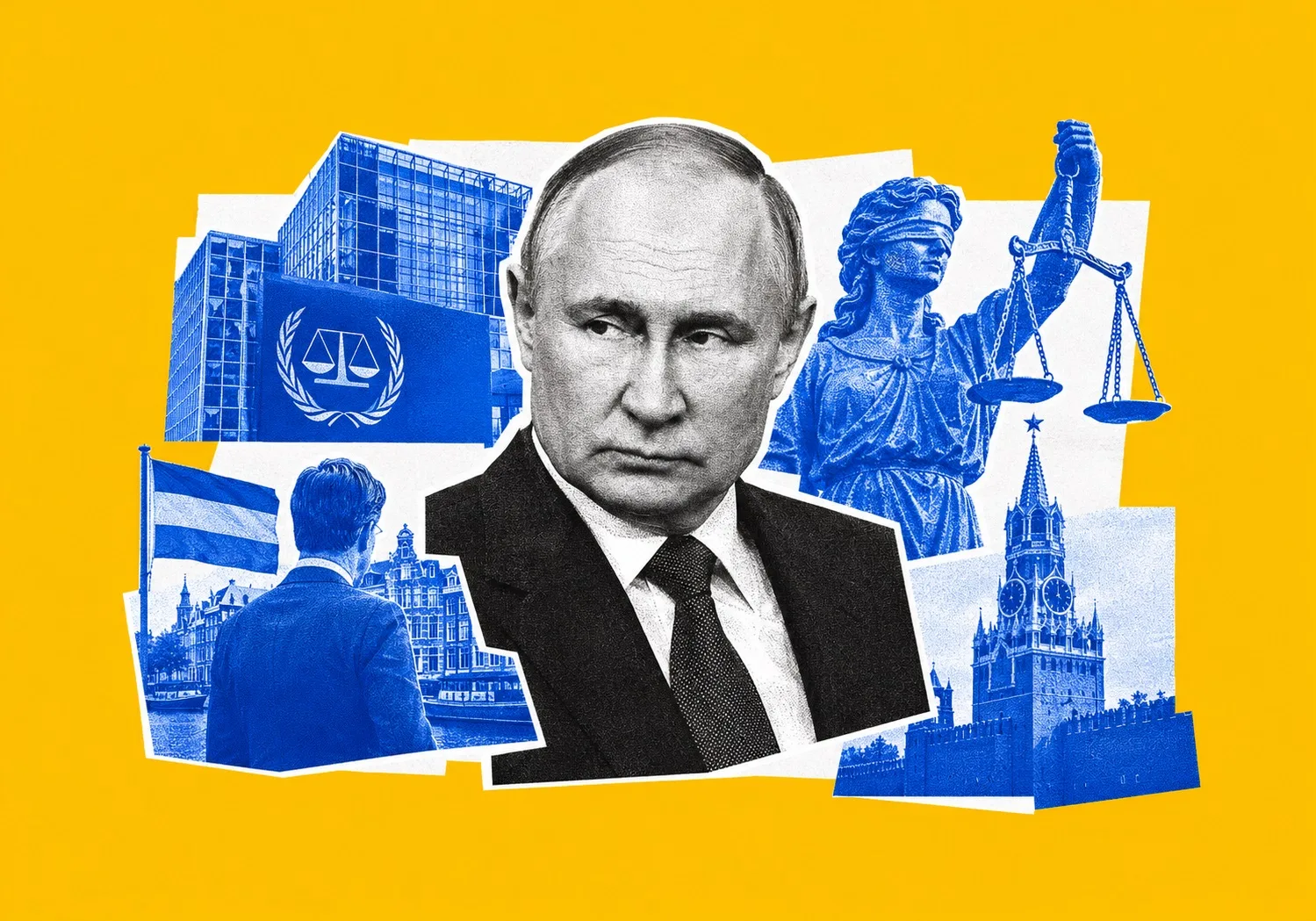
Russia has requested the Netherlands and several other nations to extradite nine International Criminal Court (ICC) officials, including President Tomoko Akane and Prosecutor Karim Khan, over the 2023 arrest warrant for Vladimir Putin. The Netherlands swiftly rejected the demand, citing a 2021 statutory ban on extraditions to Moscow. While legally non-executable, Russia’s unprecedented request shifts its confrontation with international justice from domestic courts to global pressure on foreign judges.
Addressing the demand, Justice and Security Minister David van Weel stated plainly that the country "will not do this." Beyond the statutory barrier, the Netherlands carries a formal treaty obligation as the ICC’s host country to protect the Court and ensure its personnel can operate without political interference.
Moscow was unlikely to secure the surrender of the officials through this route. Yet the request fits a pattern that has developed since the ICC issued warrants for Putin and Russia’s children’s rights commissioner, Maria Lvova-Belova, in March 2023. Russian authorities have pursued ICC personnel through domestic criminal proceedings, wanted lists and prison sentences imposed in absentia. The latest move takes that campaign beyond Russia’s borders.
From arrest warrants to personal retaliation
The original confrontation began on 17 March 2023. The ICC issued arrest warrants for Putin and Lvova-Belova over the alleged war crime of unlawful deportation and transfer of Ukrainian children from occupied territories to Russia. The Court said there were reasonable grounds to believe that both bore individual criminal responsibility.
Moscow answered by opening criminal cases against ICC officials. It subsequently introduced Article 284.3 of the Russian Criminal Code, which penalises assistance with the implementation of decisions by international bodies in which Russia does not participate, as well as certain decisions by foreign state organs targeting Russian officials or military personnel.
In December 2025, the Moscow City Court sentenced nine ICC officials in absentia to prison terms ranging from three and a half to 15 years. The new extradition requests are a further step in the same confrontation. Officials who cannot be reached through Russia’s domestic courts are now being pursued through requests to foreign governments.
The distinction matters. Russia is not merely refusing to recognise the ICC’s authority. It is trying to impose consequences on the people responsible for exercising it.
Russia signed the Rome Statute in 2000 but never ratified it. In November 2016, it withdrew its signature after the ICC classified the situation in Crimea as an ongoing armed conflict and occupation. Moscow rejects the Court’s jurisdiction over Russia, yet has used its own criminal legislation to prosecute those involved in the institution’s work.
That position creates an obvious contradiction in practice, even if the two sides rely on different legal frameworks. Russia denies the authority of the Court while attempting to make its own judgments matter to the Court’s officials.
The point is not whether the Netherlands will comply
The Dutch refusal was predictable. The country had already halted legal extraditions to Russia in 2021, citing concerns over human rights and judicial independence. Its obligations as host of the ICC provide another reason to reject an attempt to remove or intimidate the Court’s personnel.
So why submit the requests at all?
Their value to Moscow does not depend on a successful extradition. Domestically, the proceedings allow Russian authorities to portray the ICC as an institution whose officials are themselves subject to criminal accountability. The sentences imposed in Moscow, followed by the extradition requests, give that narrative a procedural form: criminal cases, court judgments and demands transmitted to foreign governments.
The international purpose is different. A request that fails in one country can still create complications elsewhere. A judge or prosecutor named in Russian proceedings may have to consider the legal environment in other jurisdictions before travelling. Whether an arrest is possible would depend on the country concerned, its domestic law and the protections available to the individual. A Russian wanted notice or extradition request does not automatically oblige another state to act.
But uncertainty itself can become a burden.
The danger is not that every country will follow Moscow’s demands. It is that international officials may increasingly have to weigh personal legal exposure when carrying out their duties. Even unsuccessful attempts at enforcement can put pressure on the people responsible for investigating alleged crimes by powerful states.
For the Kremlin, this is a way to challenge the Court without changing its own position on the Rome Statute. Moscow can continue to reject the ICC’s authority while using the language and procedures of criminal justice against those who work for it.
The protection is real, but it has limits
The ICC is not without legal safeguards. Article 40 of the Rome Statute protects the independence of its judges. Article 48 grants judges, prosecutors and the registrar privileges and immunities needed to perform their functions, including protections equivalent to those afforded to diplomatic heads of mission under the statute’s terms.
The Court’s headquarters agreement with the Netherlands adds a practical obligation. The host country must provide effective protection for the institution and its personnel, preserving the conditions needed for the ICC to carry out its work.
These arrangements explain why the Russian request cannot simply be treated as an ordinary extradition case. The officials concerned are not merely individuals accused by a foreign government. They hold positions in an international judicial body whose independence is protected by treaty and host-country commitments.
Article 70 of the Rome Statute also covers offences against the administration of justice, including intentional intimidation, obstruction and improper influence over Court officials. Whether particular conduct meets the legal threshold requires a specific assessment. The broader principle, however, is clear: pressure on judges and prosecutors can threaten the administration of justice itself.
There is a limit to what these safeguards can achieve. The Rome Statute does not automatically force a non-member state to accept every obligation arising from it, and immunity cannot guarantee that an official will never face hostile action abroad. The Netherlands can enforce its own legal restrictions and honour its responsibilities as host, but it cannot dictate the conduct of every other government.
That leaves a gap between formal protection and practical security. The ICC has rules intended to preserve its independence; their effectiveness still depends, in part, on the decisions of sovereign states.
Japan's response gives the dispute a wider reach
Russia’s decision to target Akane has brought Japan directly into the confrontation. On 9 October, Deputy Chief Cabinet Secretary Masanao Ozaki described measures against people connected to the ICC as unjust and unacceptable. He also criticised Moscow for submitting extradition requests to several countries and said Japan was coordinating with the Court and its member states while considering further diplomatic protests and measures.
Prime Minister Sanae Takaichi has reaffirmed Tokyo’s support for the ICC.
Japan’s involvement changes the diplomatic character of the dispute. What began as retaliation against an international court now also concerns a Japanese national serving as its president. Tokyo is defending not only the institution but also the principle that its nationals should be able to hold international judicial office without becoming targets of another government’s reprisals.
The response also gives the issue a reach beyond Europe. The Netherlands has direct responsibilities as the ICC’s host, but Japan’s protest shows that opposition to the Russian move need not be confined to countries with a formal role in protecting the Court.
Whether this develops into a broader coordinated response remains uncertain. Governments will make their own legal assessments, and their willingness to challenge Russia may vary. Still, targeting the president of an international court carries consequences beyond the immediate case. It brings the security of international officials into bilateral relations and forces their home countries to decide how firmly they are prepared to defend the institutions those officials represent.
When national law becomes a weapon abroad
The underlying dispute exposes a weakness in international justice that cannot be resolved by one successful refusal.
The ICC operates under a multilateral treaty. Russia rejects the Court’s authority, while relying on domestic legislation and judgments to pursue its officials. There is no shared legal framework through which the two sides can resolve the confrontation, and neither side’s decisions automatically compel the other to comply.
The immediate result is a divided system. International institutions continue to exercise the authority granted to them by their members, while states outside that framework can use national legal procedures to challenge their legitimacy. The practical consequences emerge when those states seek cooperation from third countries.
For governments receiving such requests, the distinction between criminal justice and political retaliation becomes critical. Extradition mechanisms depend on legal scrutiny, not simply on the existence of an arrest warrant or a court judgment. If states begin treating politically motivated proceedings as ordinary requests for law-enforcement assistance, the consequences could extend well beyond the ICC.
The problem is particularly acute for judges and prosecutors whose work involves politically powerful defendants. Their formal independence means little if carrying out their duties exposes them to an expanding range of personal threats. Yet the response cannot rest on immunity provisions alone. It also requires host countries and other jurisdictions to decide whether they will uphold the protections attached to international judicial work.
The Netherlands has drawn its line. Japan has protested. The ICC has said it will not yield to threats against its independence. Russia’s request has not altered the Court’s legal position, but it has brought a more uncomfortable issue into view: international justice can establish rules for protecting its officials, while the ability to enforce those protections remains uneven across national borders.
Sources: NHK World, Mediazona, Democrata, Ground News, AP