
Protecting the Skies: Why the Commercial Squeeze on Radio Frequencies Threatens European Weather Forecasting

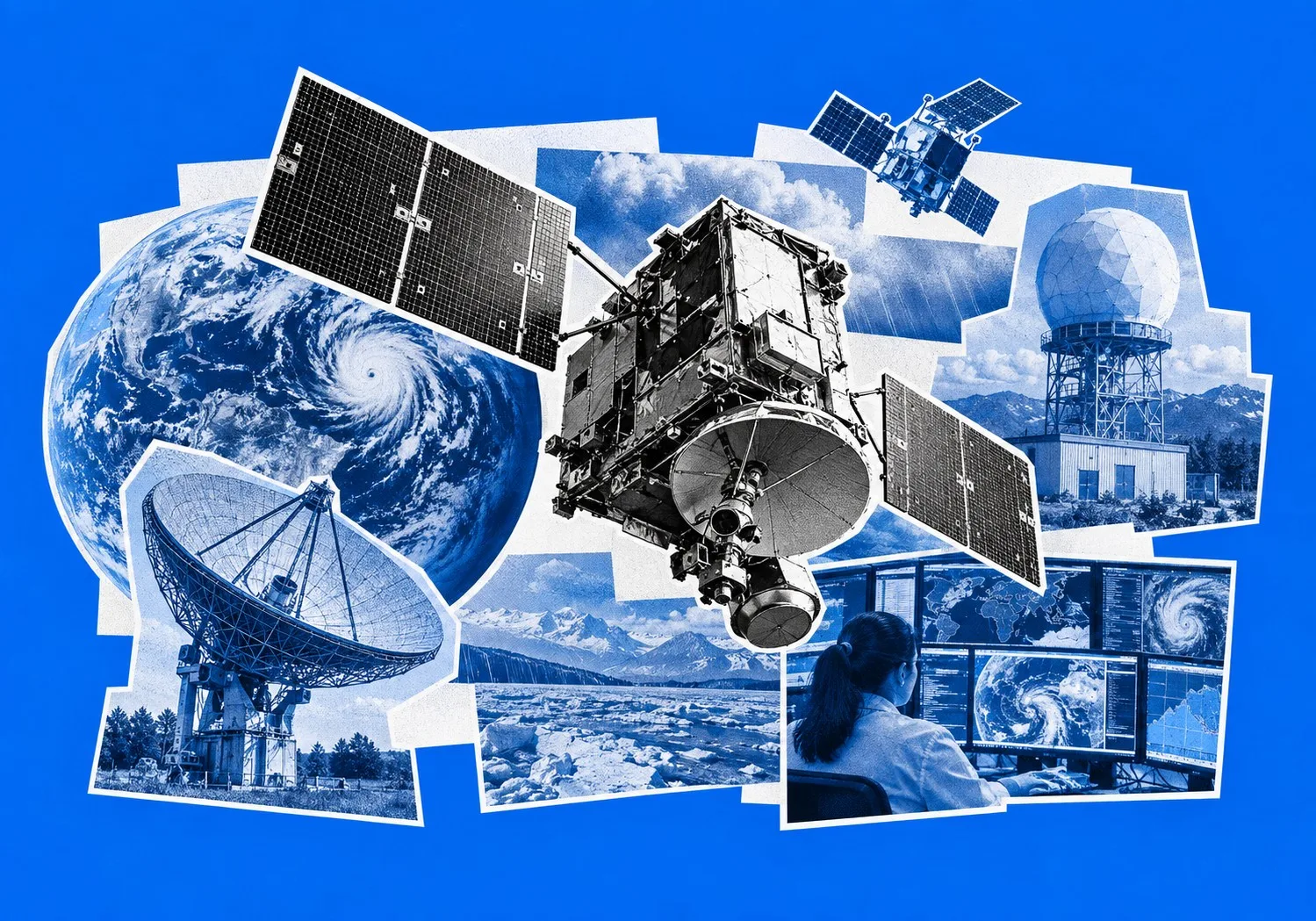
Geneva sat at the center of an unpublicized institutional collision as autumn began. In the headquarters of the United Nations, international regulators gathered to issue warnings that cut straight into the plumbing of European meteorological infrastructure. When the International Telecommunication Union and the World Meteorological Organization opened a joint global seminar on 28 September 2026, the formal schedule promised a routine technical update. Instead, the opening addresses laid bare an acute administrative emergency. Radio frequencies needed for weather forecasts, early warning systems, climate monitoring and water management must be safeguarded against the growing threat of interference from emerging technologies, the United Nations said.
The invisible bands of the radio frequency spectrum that keep national weather services informed are running out of breathing room.
Commercial telecommunications companies are pushing forward with such relentless momentum that they are crowding out the exact frequencies used for Earth observation and early warning systems.
UN leadership did not mince words before the assembled delegates, insisting that radio frequencies vital to Earth observation must be protected from commercial interference.

Simultaneously, the two specialized agencies - International Telecommunications Union (ITU) and the World Meteorological Organisation (WMO) - dropped a heavily revised 2026 handbook on meteorological spectrum use onto the desks of member states, marking an aggressive pushback against the tech sector’s footprint in the upper atmosphere.
For generations, state telegraph offices and early frequency planners treated the electromagnetic spectrum as a bottomless scientific commons.
No one worried about overcrowding when radio waves were used primarily for terrestrial broadcasting and maritime navigation.
Today, that generous assumption looks obsolete.
A hyper-commercialized space economy has transformed near-Earth orbit into a parking lot for broadband constellations, while terrestrial operators demand wider channels to feed endless consumer appetites for mobile data.
The radio space required to measure atmospheric pressure, humidity, and wind velocity finds itself squeezed between competing commercial priorities.
Unlike software infrastructure that can be patched over a weekend, meteorological observation is chained to uncompromising laws of physics.
Molecules of water vapor and oxygen emit and absorb radiation at fixed, unalterable frequencies.
Passive sensors have to listen to these exact wavelengths to read the atmosphere.
"As we speak, satellites are measuring changes in our oceans and our atmosphere," ITU head Doreen Bogdan-Martin told Monday's event.
When commercial signals spill over into these narrow scientific reserves, the underlying data starts to break down.
"Preventing harmful radio interference is a matter of public safety and can save lives," Bogdan-Martin stressed.
The Cost of the Commercial Squeeze
National Meteorological and Hydrological Services across Europe are watching this friction with mounting apprehension.
Their daily forecasting models depend on an uninterrupted data chain running from satellites down to surface radars.
When extreme weather events increase in frequency and punch through historical averages, meteorologists rely on absolute data integrity to issue timely warnings.
Yet the economic weight sits entirely on the other side of the ledger.
Aerospace firms and telecom giants command vast capital reserves and formidable lobbying operations in Brussels, Geneva, and national capitals.
They push for broader allocations because spectrum availability directly dictates revenue growth.
Caught between these commercial giants, the ITU and the WMO find themselves acting as institutional firefighters.
The Geneva seminar and the updated handbook serve as tactical warnings ahead of the upcoming World Radiocommunication Conferences, known as WRC-27.
Multilateral bodies are tasked with defending public-interest science against commercial actors who treat the atmosphere simply as an under-monetized resource.
If the spectrum degrades to the point where weather radars and space-borne passive sensors can no longer filter out commercial noise, the blind spots in global forecasting will expand rapidly.
That deterioration threatens the core architecture of disaster preparedness.
Governing the Electromagnetic Frontier
What is happening in the frequency allocations is a symptom of a broader transformation.
The sky is being commodified.
What used to be quiet technical coordination among specialized agency bureaucrats has mutated into high-stakes geopolitical bargaining.
Trillion-dollar commercial interests now collide directly with planetary survival mechanics.
Governments find themselves straddling an uncomfortable divide.
They want national champions to lead in 5G, 6G, and satellite broadband, yet they also need functioning weather services to protect agriculture, infrastructure, and human lives from climate volatility.
The institutional machinery managing this conflict was built for a different era.
The ITU dates back to 1865, born in an age of copper wires and mechanical telegraphs.
Today, it operates alongside the WMO through specialized channels like Radiocommunication Study Group 7 and the WMO Expert Team on Radio Frequency Coordination.
For decades, these bodies functioned quietly in the background, ensuring that commercial signals and scientific instruments lived as peaceful neighbors.
Those technical firewalls are now cracking under market pressure.
The spectrum is no longer treated as a neutral scientific commons, but as a contested strategic frontier where every megahertz has a price tag.
The Physics of Planetary Observation
Grasping why Geneva matters requires looking past the diplomatic language and examining how environmental monitoring actually works.
Earth observation relies on a strict division between active and passive systems.
Active systems, such as conventional weather radars, behave like bats.
They send out a pulse and measure the reflection to track storms and rainfall.
Passive systems do nothing of the sort.
They are listening posts, tuned to detect faint natural thermal emissions radiating from the Earth’s surface and atmosphere.
These passive bands are entirely non-negotiable.
Because they correspond to natural molecular resonance lines, scientists cannot simply move their instruments to another frequency when interference ruins a channel.
If a commercial satellite or a terrestrial cellular network bleeds into a neighboring band, the natural signal is drowned out.
The corruption cascades directly into numerical weather prediction models.
By the time meteorologists realize the data has been skewed, the forecast has already lost its predictive edge, leaving populations exposed to unannounced severe weather.
The Regulatory Tug-of-War
As delegations prepare for the next cycle of treaty negotiations, the diplomatic trenches are deepening.
Governments remain torn between the short-term economic gains of digital leadership and the slow, unglamorous necessity of environmental monitoring.
The authority of the UN specialized agencies rests entirely on their ability to draw lines that powerful market players would prefer to erase.
Satellite operators and telecommunications firms retain enormous momentum.
They hold the capital, the legal teams, and the ear of trade ministries.
Against that pressure, the ITU and the WMO leverage their normative authority, trying to position themselves as indispensable referees between corporate expansion and planetary safety.
Yet the asymmetry remains glaring.
National meteorological offices operate on tight public budgets, while the tech sector moves at venture-capital speed.
If commercial encroachment continues unchecked, the operational risks for weather services will escalate into systemic vulnerabilities.
Whether international law can preserve the quiet radio channels that keep humanity informed about the state of the atmosphere remains an open question.
For now, the integrity of global climate tracking hangs suspended in an increasingly crowded sky.