
Polish Diplomatic Security Chief Critical After Embassy Fall in Slovenia: What We Know About the Ljubljana Incident

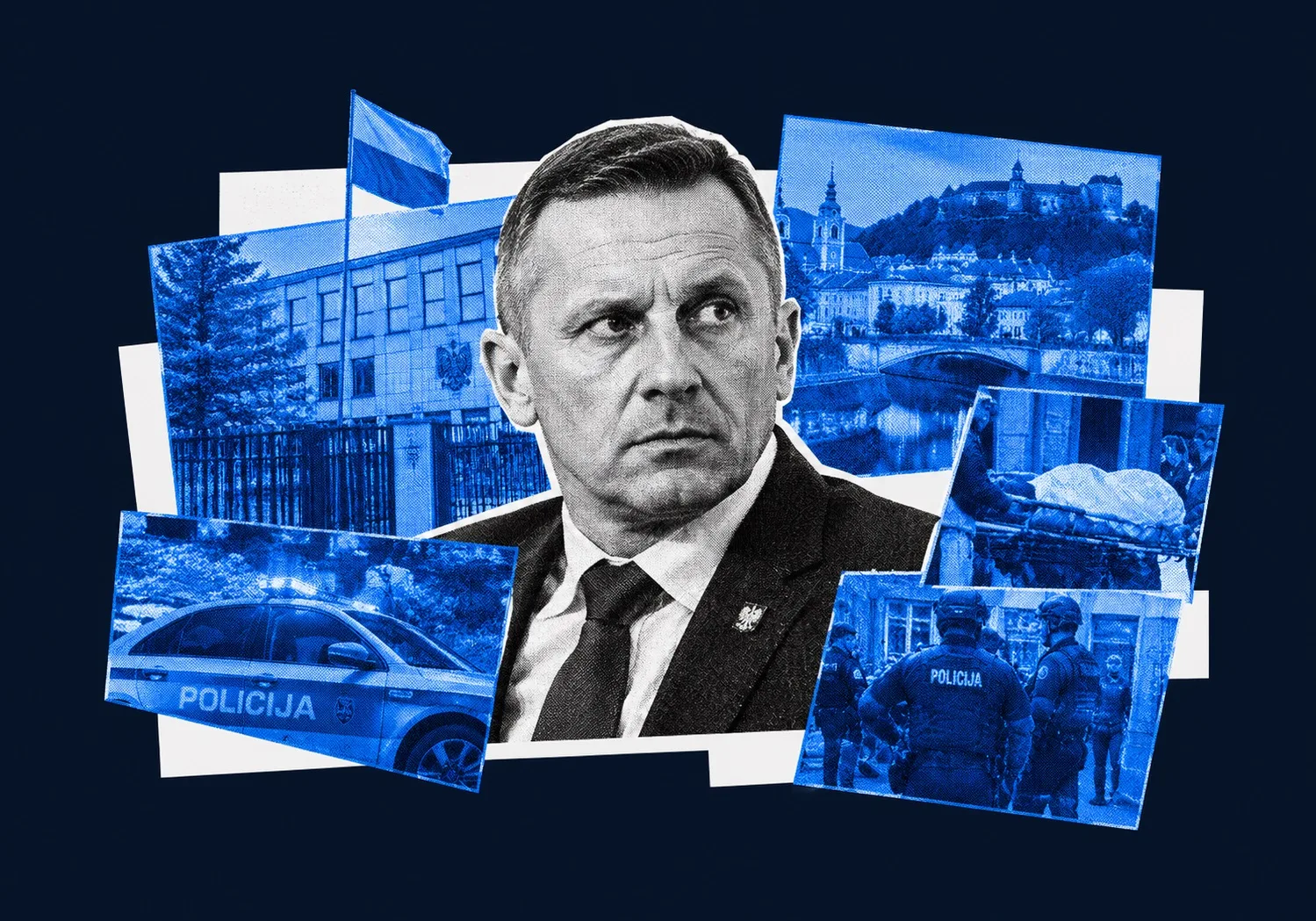
The fall of Poland’s diplomatic security chief from a third-floor window at a Polish embassy compound in Ljubljana has turned a private incident into a high-stakes security test for Warsaw. As the official remains in critical condition following the September 13 fall, allegations regarding an unauthorized diplomatic pouch and Poland’s refusal to allow Slovenian police onto the premises under the Vienna Convention have transformed the case into a broader institutional inquiry.
That leaves Warsaw facing questions about its own controls at precisely the moment when European governments are tightening their attention to espionage, sabotage and other hybrid threats.
The security chief at the centre of the case
The Bureau of Diplomatic Security is not an ordinary administrative unit. It coordinates security measures across the Polish Ministry of Foreign Affairs and its diplomatic and consular posts, covering physical protection, information security, counter-espionage coordination, investigations into security violations and sensitive diplomatic communications.
The position held by the injured official therefore makes the incident institutionally significant even if investigators ultimately establish that the fall had nothing to do with his professional duties.
Polish MFA spokesman Maciej Wewiór has stressed that the official was on private leave and staying in the apartment for personal reasons. Reports have also described a private gathering there. Those details may explain the immediate circumstances, but they do not answer the more consequential questions surrounding access to diplomatic material and the security arrangements governing ministry accommodation.
One allegation is particularly sensitive: that the official took a diplomatic pouch without authorisation while off duty.
The briefing does not establish whether such a pouch was actually carried, what it contained or whether any classified information was involved. Those points remain allegations and questions for investigators. But if the allegation is confirmed, the issue would extend well beyond personal conduct. It would raise questions about who can access diplomatic communications, under what authority and how those movements are recorded.
For a security official, the distinction between private time and official responsibility may not always be straightforward.
Vienna Convention creates an unusual investigative boundary
The most striking institutional feature of the case is what happened after the fall.
Slovenian police responding to the incident were denied entry to the diplomatic premises. The Polish mission relied on Article 22 of the 1961 Vienna Convention on Diplomatic Relations, under which diplomatic premises are inviolable and authorities of the receiving state cannot enter without the consent of the head of mission.
That protection is a fundamental part of diplomatic practice. It is designed to prevent host governments from interfering with foreign missions and their operations. But cases involving potentially serious criminal or security incidents expose a less comfortable consequence: the state whose premises are protected can become the state responsible for investigating events that take place there.
In Ljubljana, Polish authorities formally informed Slovenia that Poland's own investigators would conduct the necessary procedural actions and examination of the site.
That arrangement is legally comprehensible. It is also institutionally sensitive.
The Slovenian authorities are left without the ability to carry out their own forensic examination on premises situated in Slovenia, while Poland must demonstrate that its internal investigation can provide sufficient scrutiny when the person at the centre of the case was one of the officials responsible for Poland's diplomatic security system.
The question is therefore not simply whether diplomatic immunity was correctly applied. It is whether the resulting investigation can command confidence when national security interests and institutional accountability overlap.
The missing chain of custody
The most important unanswered questions concern procedures rather than the circumstances of the fall.
If an off-duty senior security official could possess a diplomatic pouch without authorisation, investigators will need to establish what rules governed access to it, who could authorise its removal and whether the relevant controls operated as intended.
The same applies to the apartment itself. The accommodation is part of a diplomatic complex but is available for paid rental to diplomats and ministry personnel. That creates a mixed-use environment in which private residential activity exists alongside the security requirements of a diplomatic mission.
Such arrangements are manageable only if access, occupancy and sensitive materials are governed by clear rules.
The case puts those rules under scrutiny. Investigators will have to establish what was present in the apartment, whether any sensitive material or communications equipment was accessible, who had authorised access and how the premises were secured before and after the incident.
The briefing does not establish what Polish investigators are doing in these respects. That absence is itself one of the central questions for the foreign ministry to address.
There is also the question of the official's own appointment. Senior personnel responsible for diplomatic security are frequently drawn from, or closely connected with, state intelligence structures such as Poland's Internal Security Agency. That makes prior security clearance and vetting especially relevant. What checks preceded the appointment, and what mechanisms exist to review the conduct and access privileges of someone occupying such a position?
Those are administrative questions, but in a security service administrative weakness can become an operational vulnerability.
A diplomatic rule meets a modern security environment
The case arrives at a difficult moment for European security services. European intelligence authorities have issued heightened warnings about Russian hybrid activity, espionage and sabotage affecting NATO states, while governments across Central and Western Europe have faced incidents involving infrastructure and airspace.
There is no established evidence connecting the Ljubljana fall to any foreign intelligence operation. Suicide, an accidental fall and third-party involvement remain among the possibilities discussed publicly, but none has been established as the cause.
That distinction matters.
The security implications do not depend on proving an espionage connection. A diplomatic pouch allegedly handled outside authorised procedures, if confirmed, would be significant even in an entirely personal incident. So would weaknesses in access controls at mission accommodation. The exposure would arise from the procedures themselves, not necessarily from what caused one particular night to go wrong.
This is where the Ljubljana episode becomes relevant to a wider European problem. Diplomatic security systems were designed around clearly defined institutional roles and protected premises. Modern counter-intelligence increasingly operates in environments where personal devices, private accommodation, official communications and sensitive information can exist close together.
The vulnerability is often found in the gap between those categories.
Parliament now has a security question to ask
The incident is already entering Poland's political arena. Krzysztof Bosak, deputy speaker of the Sejm from the Confederation party, has described the circumstances as highly suspicious and pointed to the combination of the official's security responsibilities, his leave status and reports concerning unofficial packages.
Such political scrutiny is likely to focus attention on the MFA's internal controls rather than on the private circumstances of the gathering.
The crucial issue for parliament is what mechanism will be used to examine the ministry's security arrangements. An inquiry that concentrates only on the injured official would miss the institutional questions raised by the case. The more consequential examination concerns authorisation procedures, diplomatic mail, access to mission accommodation, appointment vetting and the division of responsibility between the MFA and state security institutions.
The ministry will also face questions about whether guest quarters attached to diplomatic missions require tighter access and security management.
None of this requires assuming that a security breach occurred. It requires establishing whether the system was capable of preventing one.
That distinction may become increasingly important as diplomatic missions across Europe operate under greater counter-intelligence pressure. The traditional protection offered by diplomatic inviolability remains essential, but it also places a heavier burden on sending states to investigate serious incidents on their own premises transparently and competently.
In Ljubljana, Poland has exercised its right to keep Slovenian police outside the compound. The harder question now is whether Warsaw can provide the level of internal scrutiny that such exclusion demands - particularly when the person at the centre of the investigation was responsible for safeguarding the diplomatic system itself.
Sources: Wydarzenia Interia, CBN, The Sun, Big News Network