
Norway Enters Winter Ready to Sustain Europe’s Gas Supply

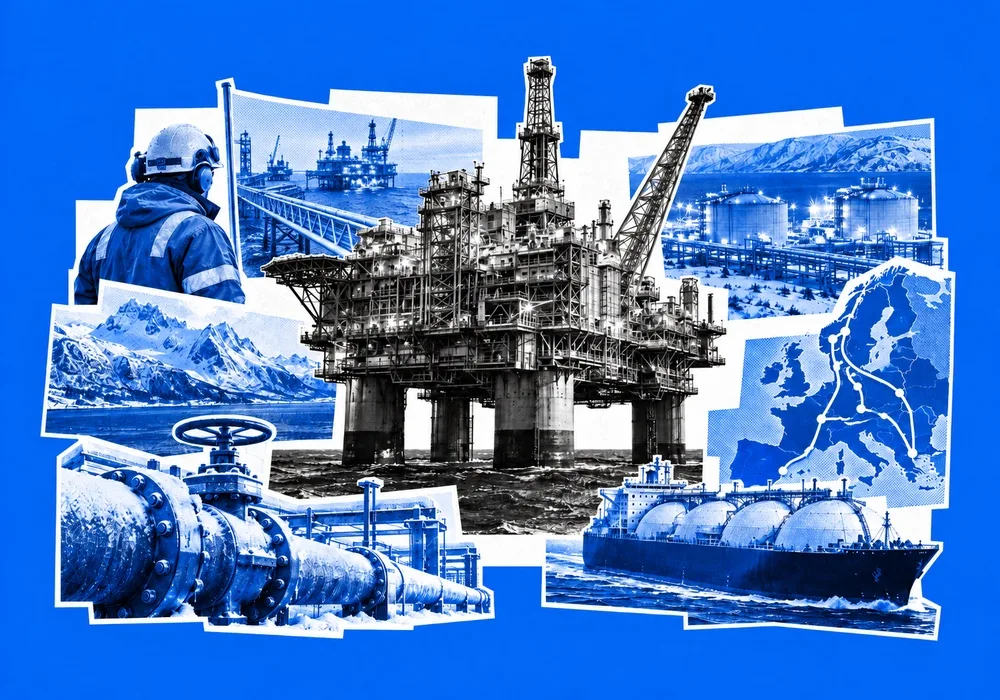
Norway is entering Europe’s winter gas season with its export infrastructure ready for high deliveries, reinforcing a supply relationship that has become central to European energy security since the collapse of Russian pipeline gas flows.
Norway is entering the European winter gas season with its export system ready to maintain high deliveries, reinforcing its position as the continent’s most important pipeline gas supplier at a time when European markets remain exposed to tight supply, volatile prices and geopolitical disruption. Norwegian gas operator Gassco said on October 1 that planned maintenance on the Norwegian continental shelf had been completed and that the transportation system was operating normally, allowing the country to enter the period of peak seasonal demand with its infrastructure prepared for high exports.
The development comes as Europe prepares for another winter in which energy security remains closely linked to the reliability of imported gas. Although the EU has substantially reduced its dependence on Russian pipeline supplies since 2022, natural gas continues to play a significant role in heating, electricity generation and industrial production. The ability of Norway to maintain strong deliveries therefore provides an important element of stability for European markets as demand begins to rise.
Norway has become central to Europe’s post-Russian gas system
Norway has become a central pillar of Europe’s energy system since Russia’s full-scale invasion of Ukraine transformed the continent’s gas market. The sharp reduction in Russian pipeline supplies forced European countries to rapidly diversify their sources of gas, increasing imports from Norway, the United States and other suppliers while expanding LNG infrastructure. Norwegian pipeline gas has since provided a relatively predictable component of European supply, reducing the market’s dependence on spot LNG cargoes during periods of high demand.
Gassco transported almost 115 billion cubic metres of natural gas to European markets in 2025, while flows have remained strong during 2026. Germany has been the largest destination, with significant volumes also going to France, Belgium and the United Kingdom. The scale of these flows means that the performance of Norway’s offshore production and pipeline network has a direct impact on the availability and price of gas across several of Europe’s largest economies.
Germany illustrates the shift particularly clearly. Before the energy crisis, Europe’s largest economy had built much of its gas system around Russian pipeline supplies. The collapse of those flows forced Berlin to rapidly develop LNG import capacity and secure alternative pipeline supplies. Norwegian gas has become one of the most important replacements, alongside LNG and supplies from other European and international sources.
For Germany and other major European importers, the importance of Norwegian gas is therefore not simply a question of commercial volumes. It has become part of the infrastructure underpinning the continent’s broader energy-security strategy.
Europe enters winter with less room for supply shocks
The readiness of Norway’s export system is particularly significant because Europe is entering the winter with less comfortable storage conditions than in some previous years. Gas storage levels in several major European markets remain below those recorded at the same point in earlier seasons, increasing the importance of reliable incoming supplies once temperatures fall and heating demand accelerates.
Storage provides Europe with a buffer against short-term disruptions, but that buffer is finite. A prolonged cold period can lead to rapid withdrawals, forcing importers to secure additional supplies while competition for LNG cargoes increases. This can push prices higher even when physical shortages are avoided.
The European market is also more exposed to global developments than it was before 2022. LNG has become a much larger component of the continent’s supply mix, meaning European buyers increasingly compete with Asian consumers for cargoes. Changes in global demand, production outages, shipping disruptions or geopolitical tensions can therefore quickly feed through into European gas prices.
Norwegian pipeline deliveries cannot eliminate these risks, but they can reduce the volume of LNG that European countries need to secure during periods of strong demand. That makes the reliability of Norway’s system particularly valuable when global gas markets tighten.
Energy infrastructure has become a security issue
The role of Norwegian gas has also changed because the infrastructure transporting energy to Europe is now viewed through a much stronger security lens. The destruction of the Nord Stream pipelines and subsequent concerns about sabotage and hybrid threats have made the protection of offshore installations, pipelines, processing facilities and terminals a permanent part of European energy policy.
Gassco operates a pipeline network stretching thousands of kilometres between Norwegian processing facilities and European receiving terminals. The company has maintained heightened security measures and strengthened preparations against both physical and cyber threats. The objective is not simply to protect commercial infrastructure but to ensure that a disruption cannot quickly translate into a wider European energy crisis.
This reflects a broader change across Europe. Energy security is increasingly understood as a combination of supply diversification, sufficient reserves, protected infrastructure and the ability to respond rapidly when individual supply routes are disrupted. Norway’s pipeline system fits into this model because it provides a direct connection between European consumers and one of the continent’s largest sources of natural gas.
The security of those routes will become increasingly important as Europe continues to rely on fewer Russian supplies and a more diversified network of alternative sources. The loss of any major route can have a disproportionate effect when markets are already tight.
Norway provides stability, but not a complete solution
Strong Norwegian exports will not remove Europe’s structural exposure to the international gas market. Norway has finite production capacity, while European demand can rise sharply during an unusually cold winter. At the same time, LNG availability remains dependent on global production and shipping conditions that European governments cannot fully control.
This means that Norway should be viewed as one component of a broader European energy strategy rather than as a substitute for diversification. LNG terminals, interconnectors, storage facilities, renewable generation, energy efficiency and alternative pipeline suppliers all remain important parts of the system built since 2022.
The relationship also highlights a longer-term tension in Europe’s energy transition. EU countries are seeking to reduce fossil-fuel consumption and accelerate electrification and renewable generation, yet natural gas remains necessary in the near term for heating, industry and balancing electricity systems when renewable output is low.
Norwegian gas can therefore continue to play a role during the transition even as European demand is expected to decline over the longer term. The challenge for policymakers is to ensure that this transitional dependence does not recreate the kind of concentrated external vulnerability that characterised Europe’s relationship with Russian gas.
Another test for Europe’s post-2022 energy system
The start of the new gas year is consequently more than a routine operational milestone. Europe is entering another heating season in which the resilience of the energy system built since 2022 will be tested by weather conditions, storage levels, global LNG competition and geopolitical instability.
Norway’s readiness to maintain high deliveries gives European markets an important source of stability at the beginning of that test. It cannot guarantee low prices or protect the continent from every external shock, but reliable Norwegian pipeline flows can reduce pressure on storage and limit Europe’s dependence on additional LNG during periods of peak demand.
For Europe, the longer-term objective remains broader: to combine diversified gas supplies with faster development of alternatives so that future winters become progressively less sensitive to disruptions in any individual supplier or route. For now, however, Norwegian gas remains one of the key foundations of the continent’s energy security as the heating season begins.