
Moscow’s Shadow in Luanda: How a Failed Coup in Angola Exposed Russia’s Expanding African Network

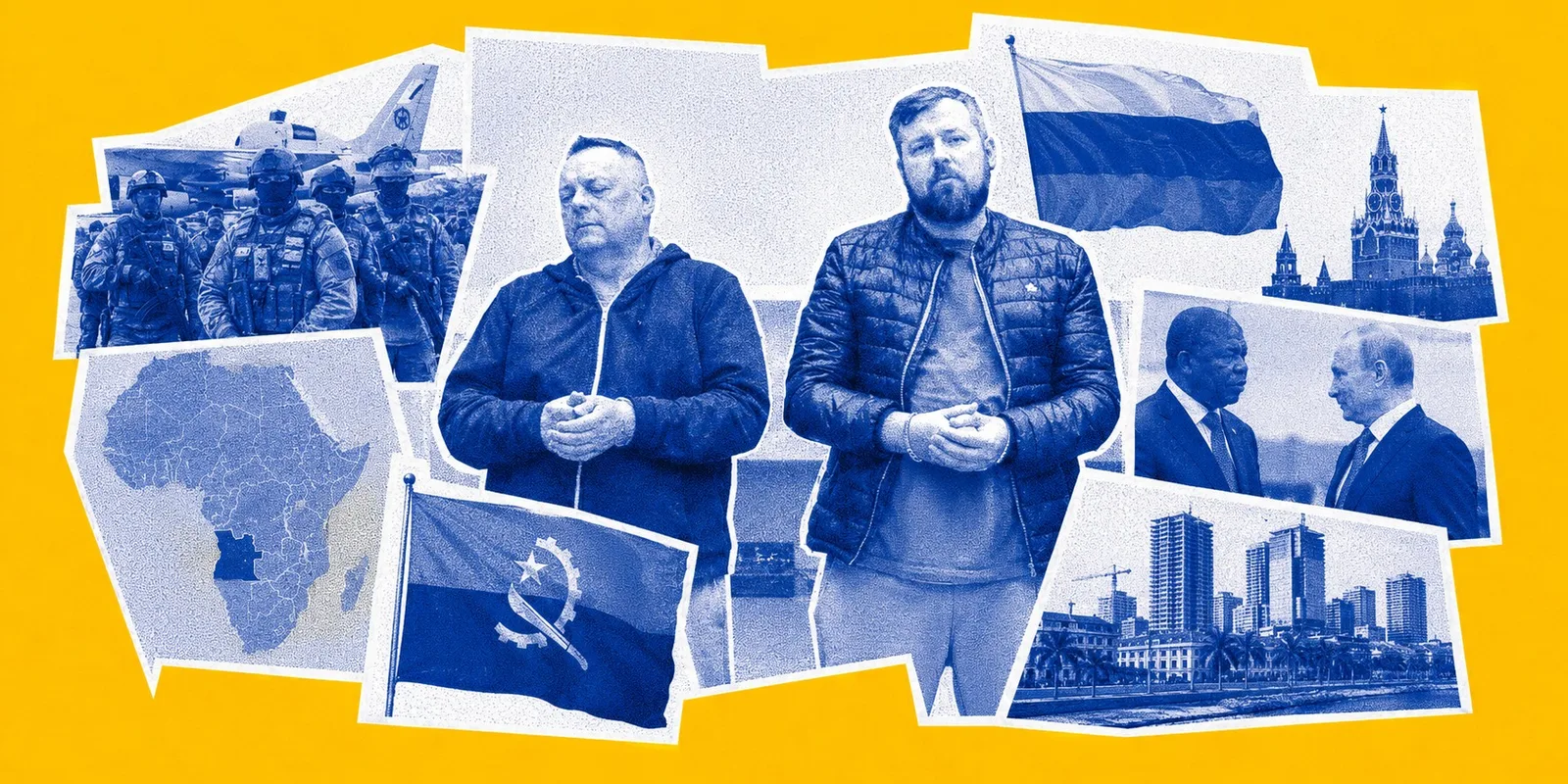
A court in Luanda has convicted two Russian nationals on charges of terrorism, espionage, and inciting violent anti-government unrest. The convictions of Igor Ratchin and Lev Lakshtanov—sentenced to 11 and 8 years in prison respectively—mark one of the most high-profile legal crackdowns on covert Russian influence operations in Sub-Saharan Africa to date.
The trial, which concluded this week, laid bare an intricate scheme involving political manipulation, funding of opposition groups, and the exploitation of socio-economic discontent. Prosecutors argued that the pair were key operatives in a state-backed strategy aimed at destabilizing Angola’s political landscape and orchestrating a potential regime change ahead of the upcoming national elections.
From Fuel Riots to Political Sabotage
The origins of the legal battle trace back to the summer of 2025. What began as localized strikes over sharp fuel price hikes rapidly escalated between July 28 and July 30 into violent nationwide riots and widespread looting. The unrest resulted in at least 22 deaths and led to over 1,600 arrests as security forces moved in to restore order.

While international human rights organizations criticized the government’s heavy-handed response, Angolan intelligence services were investigating a far more sinister underlying threat. Authorities alleged that the street protests were not entirely spontaneous, but rather covertly stoked and amplified by foreign actors.
Enter Igor Ratchin, identified as a political consultant, and Lev Lakshtanov, a long-time resident and translator. According to evidence presented in court, the two men actively coordinated with local actors to aggravate civil unrest. Angolan prosecutors proved that the duo sought to leverage public frustration over the economy to engineer a political crisis, force a leadership shift within the ruling Popular Movement for the Liberation of Angola (MPLA), or back rival opposition factions such as the National Union for the Total Independence of Angola (UNITA).

Throughout the trial, both Ratchin and Lakshtanov denied the charges, claiming their presence and activities in Angola were strictly linked to cultural exchange and private business—specifically initiatives to establish a Russian cultural center in Luanda. However, the court found their defense unpersuasive, convicting them on four major counts, including criminal association, illegal currency retention, spying, and terrorism.
Two Angolan nationals were tried alongside the Russians. Local sports journalist Carlos Tomé was handed a two-year suspended sentence, while Francisco de Oliveira, secretary-general of UNITA’s youth wing, was acquitted. Prosecutors have already appealed the lenient sentences of the Angolan defendants, while the convicted Russians have lodged appeals against their lengthy prison terms.
The Shadow of "Africa Politology" and Kremlin Strategy
Central to the prosecution's case was the connection between the defendants and Africa Politology—a sophisticated Russian propaganda and disinformation network. Originally established as an arm of the Wagner private military group under the late Yevgeny Prigozhin, Africa Politology specializes in political engineering, digital campaign manipulation, and spreading anti-Western narratives across the African continent.

Investigative reports reveal that following Prigozhin’s death in 2023 and the subsequent rebranding of Wagner into the state-controlled "Africa Corps," Africa Politology was directly absorbed by Russia’s Foreign Intelligence Service (SVR). The Angolan court’s ruling confirms that Moscow has continued to employ these hybrid warfare tactics to subvert sovereign political systems under the guise of private initiatives.
The trial highlights a broader pattern of Russian expansionism across Africa. Over the past decade, Moscow has made deliberate inroads into the continent, offering regime security, paramilitary support, and political consultancy in exchange for strategic influence and access to rich natural resources. From the Central African Republic and Mali to Niger, Burkina Faso, and Libya, Russian forces and state-aligned mercenaries have positioned themselves as key powerbrokers.
Geopolitical Shift in Luanda
The conviction of the two Russians carries profound geopolitical implications for Angola. During the Cold War, the Soviet Union was a primary backer of the ruling MPLA during the country’s bloody 27-year civil war. However, since President João Lourenço took office in 2017, Angola has gradually recalibrated its foreign policy.
While maintaining diplomatic ties with traditional partners, Lourenço has actively sought stronger economic, security, and diplomatic relations with the United States and the European Union.
Angola’s shift toward Western investment and its increasing independence from Moscow’s orbit appear to have made it a target for Russian covert operations aiming to realign Luanda's political direction.
By pushing forward with the public trial and handing down heavy sentences to Russian nationals, the Angolan government has sent an unequivocal message: Luanda will not tolerate foreign intervention in its domestic affairs or covert attempts to destabilize its political order.
Lakshtanov and Ratchin have appealed against their sentences, but will remain in detention while the appeal is processed, according to Lusa. Russia’s embassy in Angola did not comment on the court decision.
Sources:The Guardian,BBC, The Africa Report