
Lithuania’s Defence Ministry Party Scandal: How a €48,000 Celebration Threatens Military Spending Trust

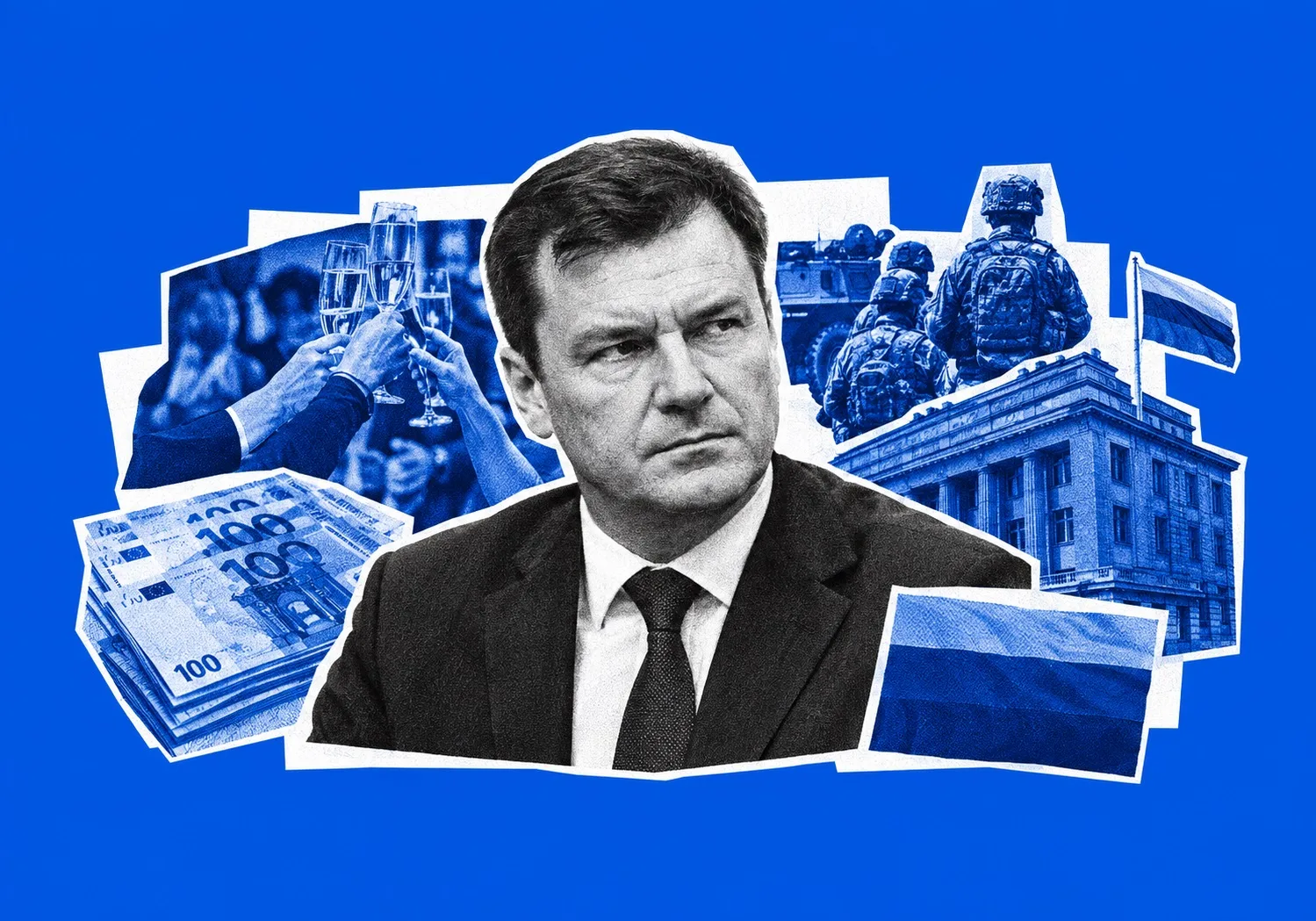
A €47,559 corporate party hosted by Lithuania’s Ministry of National Defence has sparked a major political crisis in Vilnius. As Defense Minister Robertas Kaunas apologizes for the lavish event, the scandal exposes a growing clash between civil-service perks and the political legitimacy of expanding military budgets.
The ministry spent €44,994 directly from the state budget. Employees contributed €15 each, covering two alcoholic drinks. The final budget of €47,559 was already lower than the initial proposal of €50,364 after intervention by the ministry’s Finance and Budget Department.
Yet the reduction did not resolve the central issue.
The spending included €12,000 for catering, €7,865 for a performance by Donatas Montvydas, €5,600 for event planning and coordination and more than €4,300 for sound, lighting and technical services. An illusionist cost another €2,178. Venue rental accounted for €5,100.
The resulting public reaction was driven less by any single invoice than by the overall image. A defence ministry had chosen an expensive private venue in Vilnius’s historic centre for an event whose average state cost was roughly €225 per participant.
There is no indication of a criminal investigation or a finding that the expenditure was unlawful. The dispute is instead about political judgement, budgetary ethics and institutional credibility.

That makes it more consequential, not less.
Defence budgets are different from ordinary government spending because they are built around urgency. Lithuania's security policy since Russia's full-scale invasion of Ukraine has required sustained increases in military expenditure. The political argument for those increases depends partly on the belief that additional resources are being directed towards genuine security needs.
A corporate-style celebration creates an awkward counter-image: the same institution asking society to accept greater defence costs appears capable of spending public money on entertainment and luxury facilities.
A corporate management model collides with a defence ministry
There is a legitimate institutional problem underneath the controversy.
Large public organisations need to recruit and retain civilian specialists. They need functioning administrative structures and employees who are not treated as interchangeable machinery. Team-building and staff motivation are familiar tools in the private sector, and Minister Robertas Kaunas initially defended the event on precisely those grounds, arguing that defence employees were human beings rather than “robots”.
The difficulty is that a defence ministry cannot simply import private-sector management practices without adapting them to its political environment.
A company spends its shareholders’ or owners’ money according to its own priorities. A ministry spends taxpayers’ money while simultaneously asking the public to finance national security under exceptional conditions. The standard applied to discretionary spending is therefore inevitably different.
The choice of Bokšto skveras made that distinction more visible. The restored historic complex is an established high-end venue for corporate events and private functions. Previous defence ministers Arvydas Anušauskas and Dovilė Šakalienė had indicated that team-building activities could instead rely on cheaper or internal facilities.
The ministry has not publicly established, in the material available for this case, why a luxury external venue was necessary. That unanswered question is part of the political problem.
When the rationale for a discretionary expense is difficult to explain in one sentence, the expense becomes vulnerable to a much broader argument about priorities.
The minister made the controversy harder to contain
The political escalation was not driven by the expenditure alone.
Kaunas initially defended the event, presenting corporate activities as a normal element of organisational management and agreeing to examine whether the budget was rational. President Gitanas Nausėda responded sharply, arguing that the affair discredited defence funding and warning that critics could use it in future debates over military budgets.
That was an important shift in the controversy.
The president was no longer discussing a ministry's internal administrative decision. He was connecting it directly to the political legitimacy of national defence expenditure.
Prime Minister Mindaugas Sinkevičius also demanded explanations and said the public deserved an apology, although he maintained his political confidence in Kaunas. Opposition figures, including Remigijus Žemaitaitis of Nemuno aušra, used the episode to attack the government's handling of security spending. Former defence minister Anušauskas argued that the event could have been organised much more modestly, while Social Democrat leaders Orinta Leiputė and Dovilė Šakalienė called for apologies and a reassessment of spending.
Kaunas eventually changed his position.
On September 29, he issued a public apology, accepting political responsibility and acknowledging that the format, timing and level of expenditure were incompatible with the geopolitical situation. He also ruled out shifting blame to subordinates and promised a systemic review of administrative and office operations.
That reversal is significant because it moves the discussion from whether the event was defensible to what should change inside the ministry.
Defence spending is becoming a social contract
Lithuania's experience points to a broader change in how security budgets are likely to be judged.
For years, defence expenditure could be presented primarily through the language of capability: more troops, equipment, infrastructure and deterrence. That logic remains central. But as defence allocations grow, citizens are also likely to scrutinise the machinery surrounding those capabilities.
A ministry can no longer assume that security spending sits outside ordinary expectations of fiscal discipline simply because the underlying objective is national defence.
The political danger is especially clear in Lithuania because the country is already undertaking an unusually large national effort. Defence spending has exceeded 3 per cent of GDP, supported by national defence taxes and structural reallocations. Every visible example of discretionary expenditure can therefore become part of the argument over whether additional money is being managed responsibly.
That does not mean employee motivation is illegitimate. Nor does it establish that all non-operational expenditure should disappear from defence institutions.
It does mean that the justification must fit the institution.
The next test is institutional, not theatrical
Kaunas has agreed with the KAM trade union to create a new employee motivation framework based on transparent and rational use of public money. The proposal could provide a way to separate two questions that became conflated in the controversy: how to maintain a professional civilian workforce, and how to demonstrate restraint in the use of public funds.
The harder question is whether the response will remain confined to the ministry.
The episode has raised the possibility of stricter rules for administrative spending across Lithuania's public sector, although no legal cap has yet emerged from the affair. For parliament and opposition parties, the event offers an unusually simple political example with which to challenge broader arguments about taxes and defence allocations: the abstract figure of a growing military budget can be turned into the concrete image of a €7,865 concert, a €2,178 illusionist and an expensive corporate venue.
That is why the political consequences may outlast the €47,559 bill.
For the defence establishment, the challenge is now to prove that professionalising the civilian side of the ministry does not mean reproducing private-sector perks without private-sector accountability. For politicians defending higher defence spending, the distinction is equally important. Military budgets depend on weapons and capabilities, but they also depend on the credibility of the institution asking society to pay for them.
The most difficult part of rebuilding that credibility may therefore have little to do with the party itself. It will be whether Lithuania can establish a sufficiently clear boundary between legitimate investment in its defence workforce and discretionary spending that citizens can reasonably regard as detached from the security burden they are being asked to carry.
Sources: Bernardinai, LRT, Delfi