
Leopardus Tilcayo: What a New Wild Cat Species Tells Us About Hidden Extinction Risks

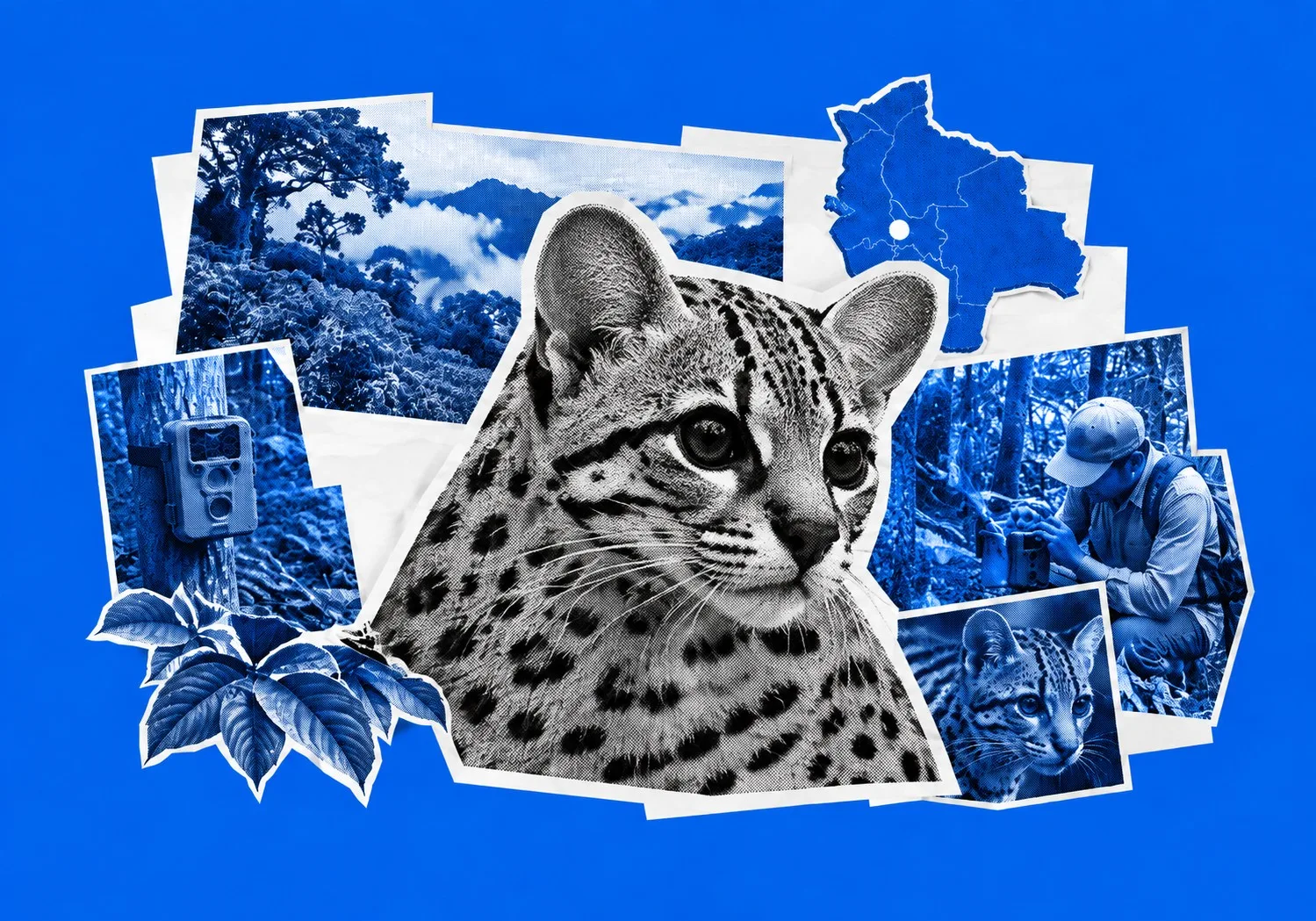
Scientists have officially named Leopardus tilcayo, a small spotted feline indigenous to the Bolivian cloud forest, marking the first discovery of a new living wild cat species in over a century. Measuring just 45 centimetres and weighing barely 1.3 kilograms, the cat was long misclassified under a broad regional species umbrella. Its discovery via DNA sequencing reveals how traditional visual taxonomy leaves hyper-localised species vulnerable to unchecked deforestation and mining expansion.
The scientific description traces back to 2017, when a local family surrendered a ten-year-old male cat to the Senda Verde Animal Refuge along the Yolosa River in Bolivia’s Yungas region. National Geographic Explorer Paola Nogales-Ascarrunz examined the animal, noting muted light-brown fur, larger rosettes, and a slender tail that diverged from standard records of the South American tiger cat complex (Leopardus tigrinus).

Subsequent multi-year genetic analysis upended that legacy classification. Working alongside Jonas Lescroart of the University of Antwerp and Eduardo Eizirik of the Pontifical Catholic University of Rio Grande do Sul, Nogales-Ascarrunz analyzed DNA samples from 38 wild cats across South America. The data proved that what was long treated as a single widespread species actually comprises five distinct species: L. tilcayo, L. guttulus, L. emiliae, L. pardinoides, and L. tigrinus.
Genetic sequencing indicates the lineage of Leopardus tilcayo split from related tiger cats roughly 1.4 million years ago. In feline evolutionary biology, an isolation period of that duration marks a definitive species-level divide.
The finding exposes a practical flaw in global conservation strategy. Relying on physical appearance to identify and protect species leaves environmental bodies blind to isolated populations disappearing in plain sight.
The Limits of Physical Taxonomy
Global conservation policy still relies heavily on morphological taxonomy. This is the practice of classifying organisms primarily by their visual traits. Through the 19th and 20th centuries, zoologists lumped small American spotted cats into broad categories because the animals look superficially similar to the human eye. International monitoring bodies and national governments treated them as widespread, stable populations scattered across South America.
Genomics dismantles that assumption. Cryptic species may look identical on the surface, but their genetic lines tell a story of ancient geographical separation. Lumping these animals into umbrella categories hid the acute vulnerability of isolated sub-populations.
Split one widespread species into five distinct lines, and the population numbers for each group collapse instantly. What looked like a secure population becomes five fragmented groups. Several of these face immediate extinction risks.
International regulatory bodies are now forced to adjust their baseline risk assessments. The International Union for Conservation of Nature lists tiger cats under two broad, "Vulnerable" categories on its Red List of Threatened Species. Following the publication of the study, the IUCN started a formal review to assess all five lineages separately.
For Leopardus tilcayo, restricted entirely to high-elevation cloud forests in the Bolivian Andes, an individual assessment will mean an immediate shift to "Endangered" status. Field data remains thin. Beyond the single male housed at Senda Verde, scientists rely on scat samples showing a diet of small rodents and limited camera-trap footage confirming nocturnal habits.
Resource Conflicts in the Yungas
Moving from broad species management to genomic micro-taxonomy carries direct consequences for land-use policy and economic development across South America.
The Bolivian Yungas bridges the Amazon basin and the peaks of the Andes. It is a narrow strip of humid forest under constant pressure from agricultural expansion, timber cutting, slash-and-burn farming, illegal gold mining, and road construction.
Under older conservation models, commercial operators could argue that clearing a patch of cloud forest had a negligible impact on widespread feline populations. Mining companies, timber concessions, and agricultural developers used this defense routinely.
The identification of Leopardus tilcayo alters those legal calculations. The same study also identified a distinct subspecies in neighboring Peru, named Leopardus tigrinus antisuyo. With incoming IUCN Red List updates, local authorities and commercial projects face stricter environmental oversight, mandatory habitat reviews, and legal holds.
The taxonomic rewrite reshuffles regulatory leverage across the regional landscape. DNA sequencing moves from an academic exercise to a binding regulatory tool. This shifts international research funds and authority toward genetic mapping in threatened corridors.
Local researchers in Bolivia gain legal mechanisms and international backing to block land clearing in high-altitude forest patches. By adopting tilcayo, the regional name long used by local communities, the scientific literature formally recognizes field observations that predated laboratory sequencing by decades.
Commercial operators face direct disruption. Agriculture, timber, and mining ventures in the Yungas face delayed permits, stricter impact assessments, and costlier regulatory compliance requirements.
The species population sits in a vulnerable position. Leopardus tilcayo enters the official register not as a curious novelty, but as an isolated population in an active deforestation zone.
Genomic Auditing in Threatened Habitats
The identification of Leopardus tilcayo shows how much vertebrate life remains unmapped at the molecular level. A mammalian carnivore went unrecognized until late 2026. Smaller vertebrates, reptiles, amphibians, and plant species in tropical micro-habitats are likely disappearing before scientists record their presence.
Relying on broad land area metrics or visible population estimates to track ecological health no longer works. International climate funds, environmental donors, and multilateral conservation bodies will have to fund rapid genomic surveys rather than waiting for chance field sightings or morphological studies.
By the time traditional visual surveys distinguish one rare animal from another, the forest patch holding it is often gone. The survival of Leopardus tilcayo depends on how fast legal protections adapt to the genetic reality on the ground.
Reforming International Conservation Protocol
The discovery highlights a need to overhaul international legal definitions regarding habitat preservation. Historically, legal protections have been triggered by visual evidence of animal density. In steep, cloud-covered topographies like the Bolivian Yungas, such requirements create a barrier to legal intervention.
Deploying camera traps across thousands of meters of vertical terrain takes years. Conducting genetic sequencing on scat samples or museum specimens takes weeks. If environmental policy continues to demand physical sightings before granting protected status to a parcel of land, logging and mining interests win the race against time.
The precedent set by Leopardus tilcayo provides a practical template for environmental ministries across the Andean region. Incorporating genetic divergence metrics directly into national land-use legislation allows governments to freeze commercial development in disputed corridors the moment a distinct lineage is confirmed via DNA.
Administrative agility is essential. Defining a new species in an academic journal accomplishes little if the micro-habitat sustaining its remaining individuals is cleared before the paper reaches print.
The task facing conservation institutions is no longer cataloguing what exists. It is building a regulatory framework capable of protecting newly identified species before their immediate environments are erased.
A Benchmark for Andean Biodiversity
The broader Amazon-Andes transition zone contains hundreds of narrow micro-climates that have received almost no systematic genetic sampling. These pockets are isolated by steep valleys, high ridges, and persistent cloud cover. They foster unique evolutionary branches that traditional surveys routinely miss.

Field biologists working in Bolivia, Peru, and Ecuador have long stated that the region’s species richness is understated in official registries. The five-way split of the tiger cat complex provides empirical backing for those statements. It establishes a methodology that can be applied to other mammalian groups across the region.
Institutions funding South American conservation must now reallocate capital toward regional laboratories and local field teams capable of executing ongoing genomic audits. Empowering in-country scientists with sequence-level analysis reduces reliance on foreign expeditions. It ensures that data feeds directly into local environmental policymaking.
Leopardus tilcayo provides a practical baseline for modern taxonomy. It proves that the biological map of the world remains incomplete, and that the current pace of habitat destruction is outstripping the pace of scientific discovery.
Whether this wild cat survives the coming decade will depend on whether global environmental institutions treat its discovery as an isolated event or as the prompt for a systematic change in how we define, measure, and protect endangered life.
Institutional Inertia and Field Realities
The gap between field discoveries and policy enforcement remains a primary hurdle. Academic journals publish genetic papers on a monthly basis. National ministries often take years to translate peer-reviewed findings into protected land designations.
In Bolivia, environmental enforcement agencies operate with limited budgets and sparse personnel in remote regions like the Yungas. Assigning legal protection to a newly split species does not automatically stop illegal clearing on the ground.
Local sanctuaries like Senda Verde carry a disproportionate burden of frontline work. They rescue animals displaced by habitat loss while providing the physical evidence scientists need to perform taxonomic updates.
Without sustained state support and direct integration with local enforcement, scientific identification remains an academic exercise. The description of Leopardus tilcayo shows that genomic tools work. The remaining question is whether administrative structures can match their speed.
Sources: AP, The Guardian, BBC Wildelife Magazine