
Karl Bushby Swims English Channel to Reach UK: How a 28-Year Walk Home Exposed a Changing World

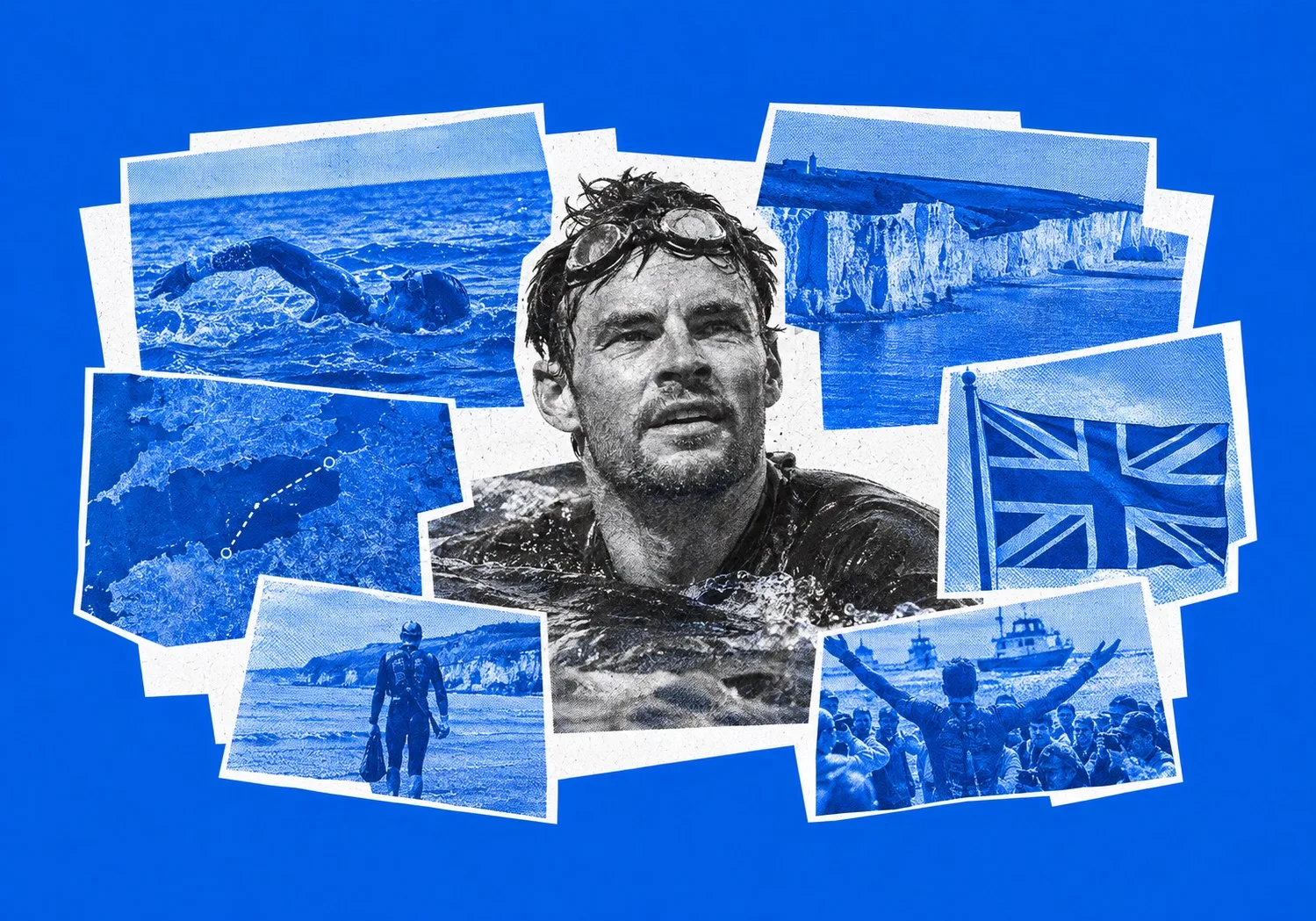
Former British paratrooper Karl Bushby reached Dover on 5 October after swimming the English Channel from France, bringing his 28-year global expedition within walking distance of home. What began in Chile in 1998 as a 12-year walk to Hull without motorized transport became a masterclass in navigating a closing world - stalled by visa freezes, geopolitical shifts, and strict infrastructure rules.
The physical feat is extraordinary. But the expedition also tells a less obvious story about the distance between a world that people can imagine crossing and one that its institutions will actually let them traverse.
A journey planned for a different world
When Bushby left Punta Arenas, in southern Chile, on 1 November 1998, he expected to spend roughly 12 years making his way home. He imposed two conditions on himself: no transport to advance his route, motorised or otherwise, and no return to Hull until the journey was complete.
The rules turned an ambitious walk into something much more demanding than a conventional expedition. A traveller can ordinarily bypass an impassable stretch, take a flight around a closed border or use a vehicle when geography makes walking impractical. Bushby had ruled out those options. Every interruption therefore threatened to become a problem without an easy solution.

His progress initially followed the logic of the landscape. He crossed South America, negotiated the Darién Gap and travelled through North America towards Alaska. In 2006, he crossed the Bering Strait into Russia on foot and by swimming through icy waters. But entering a new country did not mean that the next stage was assured.
After reaching Chukotka, Russian border guards detained him, and diplomatic intervention was needed to prevent his deportation. The episode exposed a fundamental weakness in the expedition's premise. Bushby could prepare for physical hardship, but he could not make a sovereign state accept his presence simply by arriving on foot.
That distinction would shape the next two decades.
The obstacles that no amount of endurance could overcome
The expedition's delays were not caused by a single dramatic setback. They accumulated as the political and economic environment around Bushby changed.
The global financial crash of 2008 wiped out key corporate sponsorship arrangements, forcing him to stop and find independent funding. A journey that depended on personal determination still required money to sustain it. Without that support, endurance alone could not keep him moving.
Then came the visa problems. Russian authorities denied extensions in April 2012, leaving Bushby unable to continue his route for years. The distinction between being physically capable of travelling and being legally permitted to do so became increasingly stark. A border could halt the expedition without any failure on the part of the person attempting to cross it.

The COVID-19 pandemic added another layer of disruption in 2020, when international border closures interrupted progress across national boundaries. By then, the original 12-year timetable had long since ceased to be realistic.
These setbacks help explain why the expedition took 28 years rather than 12. Its duration cannot be understood simply as a measure of distance or physical difficulty. It also records the time required to navigate systems over which Bushby had no control.
The world he entered in 1998 was not the world through which he eventually travelled into Europe in 2025. His ambition remained constant, but the conditions for fulfilling it did not.
When infrastructure says no
The English Channel presented the final major obstacle, but the immediate problem was not a lack of physical means to cross it. It was finding a permitted way to do so without violating the expedition's rules.
In June 2026, Bushby requested permission to walk through the service tunnel of the Channel Tunnel. Eurotunnel executives rejected the proposal on safety and operational grounds. For the company, an exceptional passage through infrastructure designed and operated under strict safety procedures was not an option.
From an institutional perspective, that decision is understandable. A major transport link cannot simply suspend its operating rules because one individual's undertaking would benefit from an exception. The potential consequences of departing from established safety arrangements extend beyond the person making the request.
For Bushby, however, the refusal removed the most direct alternative to a sea crossing. If he was to preserve the terms of his expedition, he would have to find a different route across the Channel.

The result was a swim that required extensive preparation and formal approval from both French and British authorities. French authorities have historically restricted Channel swims departing from France towards the UK, making permission a significant part of the undertaking. Bushby's logistics team secured the necessary authorisations, while HM Coastguard coordinated with French authorities and maritime partners on safety arrangements.
The schedule was kept confidential until the crossing was complete, for safety and security reasons.
There is a revealing contrast here. The Channel Tunnel, built to carry people and goods between Britain and continental Europe, was unavailable to a traveller whose defining rule was to avoid transport. The sea remained physically open, but crossing it still required official consent, coordination and safeguards.
Bushby could not negotiate his way around the system by sheer determination. He had to work within it.
Borders became part of the expedition
The Goliath Expedition began in the aftermath of the Cold War, when a continuous journey between continents could be conceived as a long, if difficult, undertaking. Its eventual route passed through a period marked by financial instability, increasingly restrictive border controls and the disruption of a global pandemic.
Bushby's experience offers an unusually concrete way to understand how those changes affect individual mobility. International borders are often discussed in terms of migration, security or trade. His journey shows what happens when a person attempts to cross them repeatedly without the flexibility normally available to travellers.
A visa rejection that might delay an ordinary trip can immobilise an expedition for years. A closed border can invalidate an entire section of a carefully planned route. An infrastructure operator's refusal to grant an exception can force a traveller towards a far more physically demanding alternative.
None of these decisions needs to be unreasonable in isolation to produce an extraordinary cumulative effect. Governments must enforce immigration rules; transport operators must manage risk; maritime authorities must protect people using busy waterways. The friction emerges from the collision between these legitimate responsibilities and an undertaking that depends on uninterrupted movement.
That is what makes Bushby's achievement more than a record of endurance. He has spent almost three decades negotiating the difference between a route that exists on a map and a route that institutions will permit him to follow.
Britain is not yet the finish line
Bushby's arrival at Dover has brought him back to British soil for the first time in 28 years, but it has not completed the expedition. Roughly 250 miles, or 400 kilometres, remain between the Kent coast and his mother's house in Hull.
That final distance matters because the rules he set himself were never simply about reaching the United Kingdom. They required him to return home on foot, without using transport to advance the route. Crossing the Channel resolves the last major geographical and regulatory barrier between continental Europe and Britain; the remaining walk fulfils the original promise.

The distinction also leaves the expedition exposed to a final, less spectacular set of risks. Bushby must still cover the distance on foot after years of travel and a demanding Channel swim. The remaining stage is shorter than almost any major section of his global route, but it cannot be treated as a formality while the journey remains unfinished.
His father, Keith Bushby, a former SAS soldier, was among those waiting at Shakespeare Beach. The filmmaker Werner Herzog was also there, documenting the expedition for Walk of Life, a feature-length film whose narrative now has its long-awaited return to Britain.
Bushby himself has acknowledged the cost of continuing. In September, he said it was "definitely time to call it a day". Yet the terms of the expedition leave little room for a symbolic finish: Hull, not Dover, is the destination.
After 28 years, the final barrier is no longer an international border or a tunnel operator's safety policy. It is the remaining distance between the point where the world has finally let Bushby back in and the place he promised himself he would reach.