
Is NATO Ready for a Russian Attack? Europe’s Air Defence Faces an Industrial Crisis

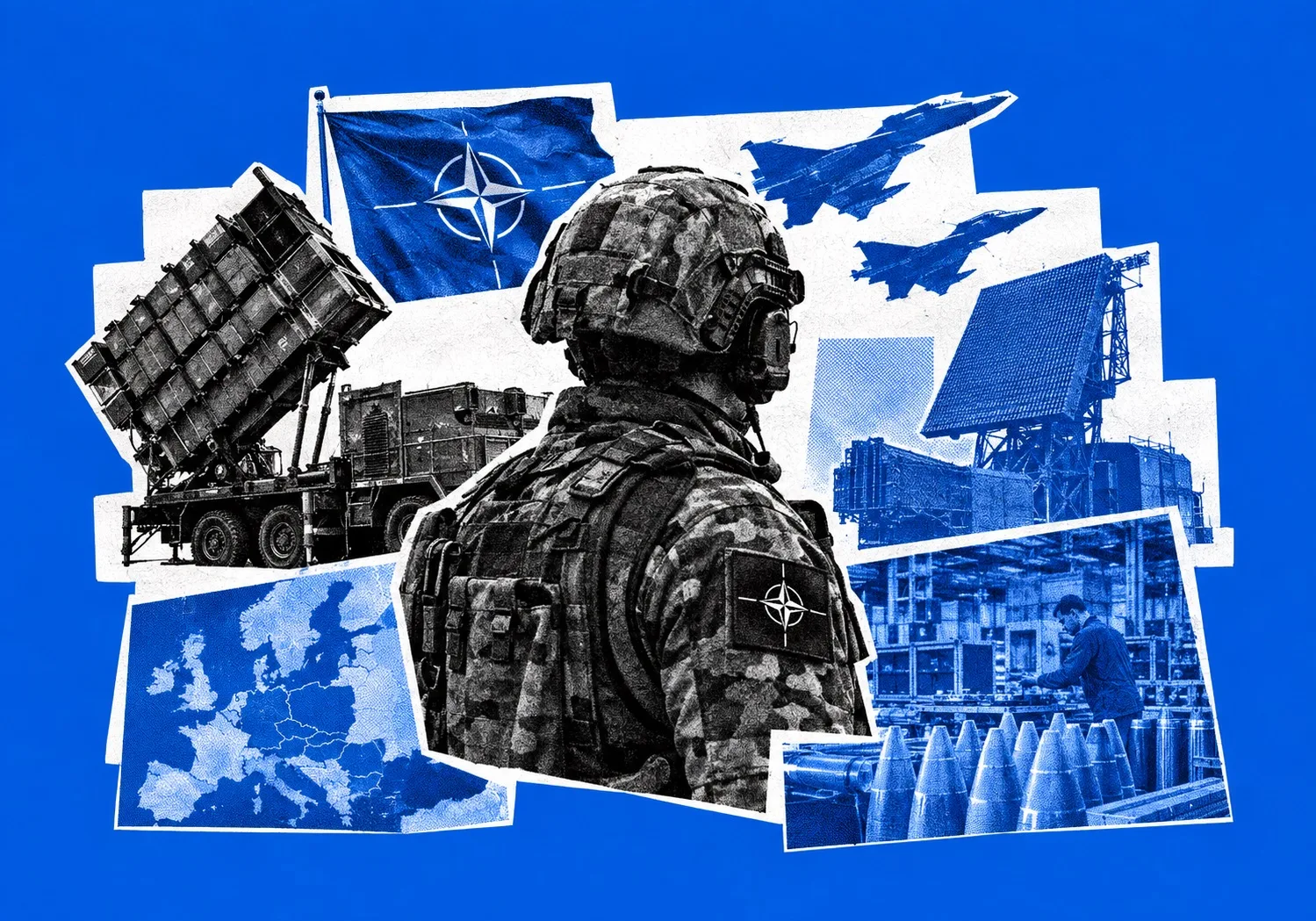
Most NATO countries would struggle to repel a major Russian missile and drone assault, Latvian President Edgars Rinkēvičs has warned. With critical Patriot interceptors delayed and US stockpiles depleted, Europe’s air defence bottleneck is rapidly shifting from a military shortage to an industrial crisis.
The concern is not confined to the Baltic states or to Ukraine. Drone incidents have increasingly appeared around NATO infrastructure, including an explosive-laden drone detected at Leipzig/Halle Airport in Germany in August and an unauthorised drone intercepted near Kaunas by Italian NATO air-policing fighters in September. Drone overflights have also disrupted French airport infrastructure.
What makes the situation more serious is that the West is trying to replenish sophisticated missile inventories using an industrial model built for a different kind of war.
The arithmetic of the Patriot problem
The Patriot system illustrates the mismatch.
PAC-3 MSE interceptors are among the weapons on which NATO relies for high-end air defence, yet global production remains far below the level now required. Around 600-620 interceptors are expected to be produced in 2026, while Lockheed Martin's annual target of 2,000 is not scheduled to be reached until 2030.
The production line in Camden, Arkansas, is not serving a single customer. Its limited output must be divided between the US, Ukraine, Germany, Poland, Saudi Arabia, Japan, and Persian Gulf operators.
Even emergency financing cannot solve the problem quickly. A PAC-3 MSE requires about 24 months for missile-body production, while the solid-fuel rocket motor takes roughly 30 months. Contracts signed in April 2026 therefore cannot generate fieldable interceptors until mid-2028 at the earliest.
That creates an uncomfortable gap between the speed of the threat and the speed of the response.
The problem became more acute after US military operations in Iran consumed about two-thirds of critical US interceptor stockpiles. Restoring those strategic reserves is expected to take at least five years. On September 18, US Ambassador to NATO Matthew Whitaker confirmed that global manufacturing capacity was insufficient to satisfy current allied demand.
For European governments, this means that American reserves cannot simply be treated as an unlimited backstop while domestic capabilities are expanded.
The vulnerability is therefore partly mathematical. A system designed around expensive interceptors and long production cycles becomes difficult to sustain when the opponent can launch large numbers of comparatively cheap unmanned systems.
Ukraine is operating on a different clock
The bigger change is technological rather than merely quantitative.
Ukraine's experience since 2024 has pushed aerial warfare towards rapid iteration. AI-guided FPV drones with visual targeting can operate despite electronic-warfare interference. Long-range attack UAVs can reach beyond 1,000km. Swarm coordination and uncrewed naval systems have expanded the range and complexity of autonomous operations.
The defining characteristic is not simply that these weapons are cheaper.
It is that they can be modified quickly.
Ukraine has been able to adjust software, tactics and hardware in response to battlefield conditions, with development cycles measured in weeks. A European procurement system built around complex platforms, centralised acquisition and multi-year production contracts operates on an entirely different timescale.
That creates a structural disadvantage when the threat itself is changing continuously.
A missile such as the PAC-3 MSE remains essential for certain high-end threats. But deploying a multi-million-dollar interceptor against mass-produced drones creates an economic problem as well as a military one. Even an effective interception can become strategically expensive if the defender must spend scarce high-end munitions faster than industry can replace them.
This is where the distinction between air defence and counter-drone defence becomes increasingly important.
From missile shield to distributed network
The Ukraine war has pushed air defence towards a more distributed model in which software, electronic warfare, autonomous systems and inexpensive interceptors operate alongside traditional missiles.
That does not make systems such as Patriot obsolete in their original role. It changes the question they are expected to answer.
A conventional high-end interceptor is designed to defeat a sophisticated incoming threat. A drone swarm presents a different challenge: volume, persistence, rapid adaptation and the possibility of overwhelming a defender's inventory.
Western air-defence architecture was developed around maintaining a technological advantage through highly complex and expensive systems. Modern drone warfare is challenging that model by making scale and adaptability just as important as technical sophistication.
This is the significance of Rinkēvičs's mid-2027 warning. The date is not simply a forecast that existing weapons will stop working. It marks the point at which the pace of technological change could leave current defensive arrangements increasingly mismatched with the threats they are expected to address.
A defence system can remain technically capable while becoming strategically inadequate.
The industrial bottleneck is now a security problem
Europe's immediate difficulty is that it cannot manufacture its way out of this gap quickly enough using existing arrangements.
The US has considered allowing Patriot production licences to be transferred to Ukrainian and European defence contractors. No final agreements have been signed. Until production can be distributed more widely, the Camden line remains a critical bottleneck for one of NATO's most important interceptor families.
The issue is therefore moving beyond military procurement into industrial policy.
European governments need to bridge a period in which existing inventories are being consumed or stretched while replacement systems arrive years later. The choice is not simply between buying more Patriot missiles and accepting greater risk. The emerging requirement is for a layered architecture capable of handling different threats at radically different costs.
That means greater attention to autonomous point-defence systems, electronic warfare, directed-energy technologies and mass-producible counter-drone interceptors, alongside conventional missile systems.
The commercial consequences could be significant. Defence companies capable of producing large numbers of comparatively inexpensive autonomous or counter-drone systems stand to gain strategic importance as governments discover that exquisite weapons alone cannot provide adequate coverage.
For Ukrainian defence-tech developers, the battlefield has created an advantage that European procurement systems cannot easily reproduce: combat feedback arrives almost immediately.
Europe’s vulnerability is no longer theoretical
Recent incidents provide a warning about how quickly the problem can move from Ukrainian battlefields into European airspace.
Lithuania says it is sharing intelligence with NATO allies about potential Russian hybrid attacks. Italian fighters operating in Lithuania conducted the country's first live interception of an enemy drone near Kaunas earlier this month. Germany has dealt with an explosive-laden drone at Leipzig/Halle Airport, while France has experienced drone overflights around airport infrastructure.
None of these incidents by itself establishes the scale of a future conflict. Their significance lies elsewhere. They show that the technologies and tactics developed during the war are already interacting with European security infrastructure.
That leaves NATO facing an unusual form of strategic exposure. Its most sophisticated defensive systems are constrained by long manufacturing cycles, while the systems they may need to counter can be modified and reproduced much faster.
The US stockpile problem compounds the pressure. Washington's ability to absorb additional demand is itself constrained after the depletion caused by Middle Eastern operations. The assumption that Europe can rely indefinitely on American reserves is therefore being tested by industrial reality.
The issue will be increasingly difficult to separate from broader transatlantic defence policy.
Trump and European leaders are due to discuss defence posture at the UN General Assembly in New York from September 22 to 28. But the most consequential question is likely to sit below the level of declarations about burden-sharing or deterrence.
It is whether Europe can build a defence-industrial system capable of producing thousands of adaptive, affordable counter-drone capabilities at the same speed that the battlefield is generating new threats.
That is a fundamentally different proposition from ordering more sophisticated missiles.
The gap between a 30-month production cycle and a threat that can evolve in weeks is no longer an abstract procurement problem. It is becoming the central constraint on what European air defence can actually promise.
Sources: The Guardian, Globsec, Eadaily, Lliga.net