
Inside the secret world of esoteric warfare

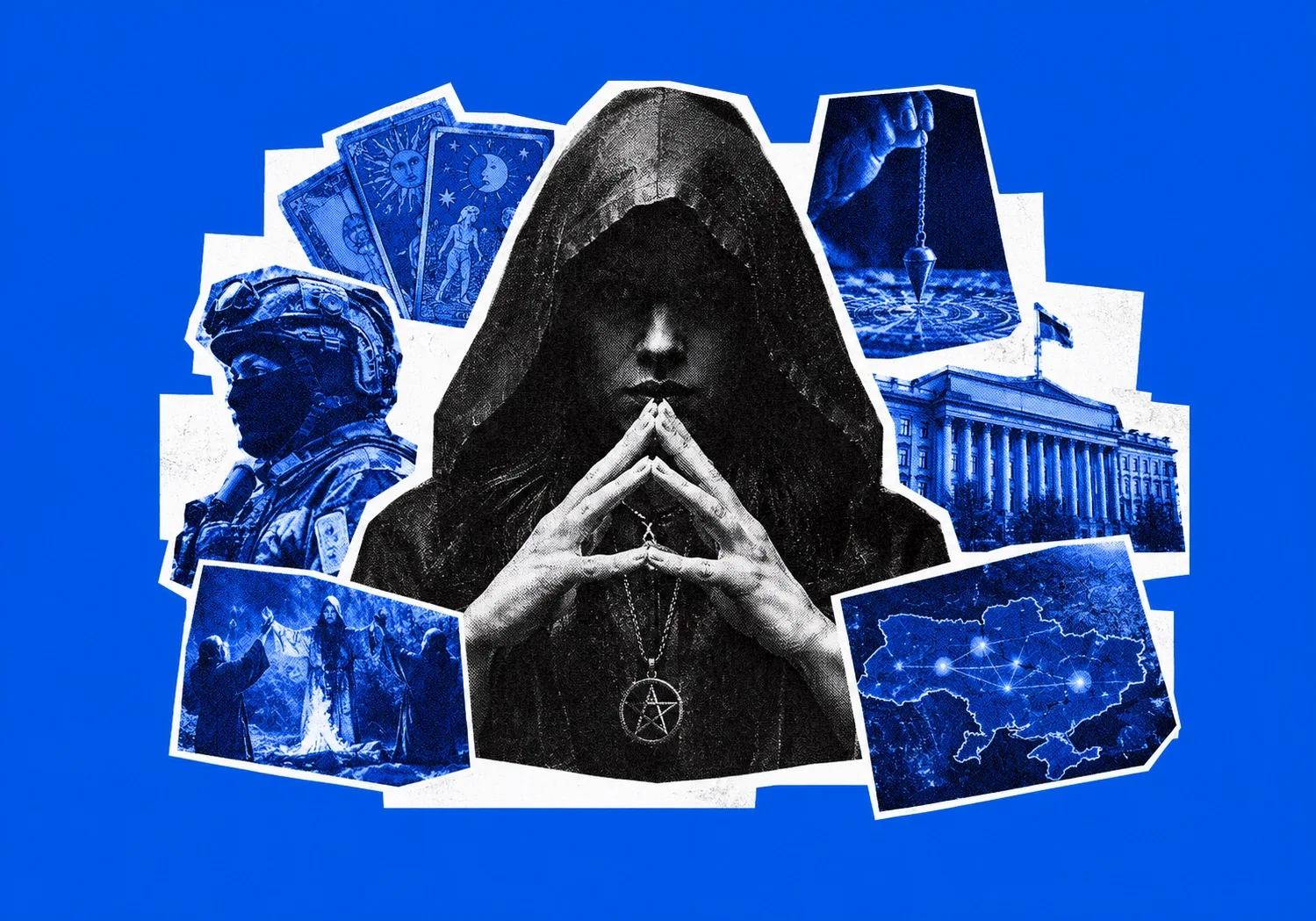
Security expert Aran Dharmeratnam explores how history's unorthodox intelligence tactics still shape the modern psychological battlefront
By Aran Dharmeratnam
Historically, it also focused on the physical and psychological conditioning of operatives in the field, as well as those operating from afar.
During the twentieth century, states allocated black budgets to clandestine units researching altered states of awareness, the use of hypnosis, and enhanced persuasion. Naturally, conventional tradecraft, such as exploiting human vices and material vulnerabilities, still played the leading role in influencing foreign targets.
Beyond the occult:
Mentioning esoteric operations often conjures images of the occult and psychic phenomena. That reputation has its roots in the Second World War, when Heinrich Himmler's Ahnenerbe Institute pursued dark occult and mystical theories within the SS. The Soviets took a different route, wrapping their unconventional research in the rigorous scientific language of bio-energetics and parapsychology.
Cold War rivalry soon accelerated this work. Both Moscow and Washington invested heavily in programmes assessing whether extrasensory perception could yield actionable intelligence. The craft became known as Remote Viewing. While viewed with scepticism across today's intelligence community, the US military and CIA formally established Project Stargate to track Soviet submarines, hidden bunkers, and secret facilities from afar.
Technological advances eventually rendered Remote Viewing obsolete, offering more reliable ways to gather data. Yet esoteric warfare was never solely about intelligence collection. At its core, it exploits psychological, cultural, and metaphysical levers to destabilise and disorient an adversary from within.
What occurs today in terms of the use of State-backed disinformation campaigns to foster division, instigate proxy attacks and usurp social harmony is very much in the playbook of the exponents of esoteric warfare. In modern security circles, they simply got rebranded as Psy-ops and cognitive warfare.
The advantages of understanding esoteric warfare:
Historically, British intelligence has shown an aptitude and curiosity that's proven helpful in understanding the cultures of foreign nations. Consider here T.E Lawrence's immersion in Arabic culture or members of Special Operations Executive (SOE) who had studied Classics or languages and would use this knowledge, during the war, to better integrate into foreign lands- whether fighting alongside the Greek resistance in Crete, or blending seamlessly into occupied France. This cultural awareness extended into the more esoteric terrain.
Exploiting esoteric beliefs for strategic advantage is an enduring British tradition. During the Second World War, naval intelligence officer Ian Fleming and propagandists within the Political Warfare Executive (PWE) mapped the astrological obsessions of senior Nazi leaders, feeding targeted deception into German command circles to paralyse decision-making.
That playbook stretched back to the seventeenth century. Under King James I, whose intense hostility to the occult was well documented, the Earl of Salisbury, Robert Cecil, ran the royal intelligence apparatus. As Secretary of State, this tenacious spy master routinely seized upon an adversary's suspected occult affiliations, using the stigma of the forbidden to discredit threats to the Crown.
Rabbit holes, training facilities and monasteries:
Years of study in combative disciplines and mind-body systems cultivated skills I'd later use in risk intelligence and investigations. Tapping into these unconventional realms offered a powerful way to enhance intuition, focus, and resilience, but they were grounded in more psycho-physical methods, rather than anything too obscure. You would still encounter those holding decidedly fringe beliefs, but these were balanced by interactions with figures possessing rare, inner-circle skills (esoterikos).
In 2004, with experience in the arts of the Far East, I headed to Moscow to research methods of Rukopashny Boy, the Russian methods of hand-to-hand combat, alongside internal training methods long concealed behind the Iron Curtain.
During the Soviet era, state security institutions dispatched specialists across the republics to study indigenous fighting styles and performance psychology. Soviet sports scientists distilled these findings to build mental and physical endurance across elite special units, blending rigorous laboratory data with the survival skills of wartime veterans and traditions that barely managed to survive the dark cultural purges of the Bolshevik Revolution.
In 2004, the old Cold War chill had briefly simmered down, but Moscow retained an edgy feel. State security forces were consumed by domestic counter-terrorism, still reeling from the Dubrovka theatre siege two years earlier and the horrific Beslan school siege that September. Against this tense backdrop, my exploration took me into gyms, training halls, and even Orthodox monasteries, where the instructors I encountered proved surprisingly generous in sharing their expertise.
One instructor who especially stood out was Mikhail Ryabko, a colonel who had served in a Russian special operations unit and was a master of Russian martial arts. Much of his operational work focused on counter terrorism and tackling organised crime. Ryabko had impressive fighting skills, but he also had phenomenal healing abilities. Combat veterans and security professionals would regularly seek his guidance not just for tactical insight but to treat physical trauma, joint injuries and psychological stress.
Ryabko, who passed away in 2023, based his approach on relaxation methods, subtle movement skills and specialised breath work. While observers often perceived his abilities as esoteric, he attributed his resilience and focus entirely to his deep roots in Eastern Orthodox Christianity rather than arcane traditions.
Years later, as tensions between Moscow and the West hardened into an era of renewed confrontation- Cold War X- another dimension of this psychological landscape opened up. It was a rabbit hole that began with an unexpected phone call.
Information warfare, strategic communications and Cossack mystics:
The call came from a client, a British aristocrat I'd coached in self-defence. Speaking in his characteristically understated manner, the gentleman mentioned having tea with a former Ukrainian diplomat. Apparently, she was familiar with some of my training experiences and wanted to meet.
The next day, discreetly, an attractive, athletic lady with flame-like hair and flame-like focus greeted me. Over a drink, she wasted no time, remarking: "You were in Moscow learning certain methods some years ago. Your journey is indeed fascinating, but I want to connect you with my teacher in Ukraine. You will have much in common, but there are other dimensions to this training." With the calm authority of a diplomat, she went on to describe her mentor: Denys Bohush.
 Bohush possesses a rare and intriguing blend of disciplines. An officer in the Ukrainian military, a neuropsychologist, and a martial arts expert, he specialises in strategic communications and information warfare. Alongside his modern operational work, he has delved deeply into the traditions of the Cossack Kharakternyks. Within Ukrainian folklore, these warrior-mystics were elite scouts renowned for remarkable physical endurance, sensory acuity, guile and elusive survival skills.\ The lore surrounding these Cossack scouts closely mirrors that of the Shinobi in feudal Japan or the Maharathis of the ancient Vedic epics. Far beyond pure folklore, these legends often served a functional purpose in psychological warfare. By cultivating reputations for near-supernatural feats, elite scout units projected a potent psychological presence and sowed panic across opposing forces long before a battle even commenced.
A spy of the paranormal variety:
My next meeting with the enigmatic Ukrainian lady takes place at a private members' club. Her demeanour is sterner this time, and her long dark dress somewhat emanates a lady hosting a séance in Victorian London. Her tone reflected the conflict's escalating gravity. She described an intensifying psychological struggle taking place on many levels between Ukraine and Russia, characterising it as an unyielding psychic battle of willpower, morale, and strategic intent.
Our conversation shifted into more curious terrain when she brought up Bohush's paternal grandfather, Denis Ivanovich Bohush. A senior intelligence and counter-intelligence officer within the Soviet clandestine apparatus during the Second World War, his work specifically focused on countering saboteurs and monitoring the Nazi occult programs, including the German SS Ahnenerbe Institute. Given our mutual interest in these shadowy chapters of intelligence history, she arranged an introduction, and I was soon in direct contact with Denys.
In time, Denys shared documentation, footage, and training methods with me, and I returned the gesture by sharing concepts from my own tactical system, Tri-Tier. Denys remains deeply engaged in the nuances of extreme human performance under combat conditions. While some of his conditioning drills closely mirrored the movement principles I had studied in Moscow, other areas proved far more esoteric. Among the recordings he sent, I watched him in traditional Cossack dress, skilfully wielding the curved shashka sabre, cutting through the mist with solemn focus. Studying these exercises for heightened insight and energy, my instinct was to engage with genuine interest, but also with professional caution.
Denys is clear about the modern application of this work: "These methods are being used to train Ukrainian soldiers in psychology, stress reduction and increased combat readiness." The Ukrainian Ministry of Defence has acknowledged these techniques, and they are now taught directly to Special Operations Forces. Alongside his active training role, Denys has also documented his family's clandestine history. He recently authored Secrets of an Intelligence Officer with Paranormal Influence, a biographical account of his grandfather based on declassified SBU (Security Service of Ukraine) files, personal archives, and first-hand testimony. Similar classified records gathered by Soviet intelligence in that era are said to be locked away in vaults across St Petersburg, though given the current climate, I hardly expect an invitation to access them any time soon.
Symbols, social engineering, and artefacts:
Bohush also recognises the broader reach of esoteric warfare across modern hybrid conflicts. As a strategist, he sees the need for robust counter-propaganda and remains acutely aware of how social engineering is deployed for mass influence. In our discussions, he highlighted the deep psychological power of symbols to rally populations. While ancient runes or Sanskrit icons can unify a culture, hostile forces regularly subvert them to twist their subconscious resonance. The Third Reich made use of this dark craft, but modern actors now deploy similar psychological levers at scale, through algorithmic feeds, tailored digital manipulation and psycho-technologies.
Historical artefacts such as relics, sacred icons, artwork and culturally significant architecture are regularly targeted or destroyed during asymmetric sabotage campaigns. Demolishing or looting these treasures serves a dual purpose: it strikes at the psychological heart of a nation while generating substantial revenue on the black market to fund further aggression.
In response to this threat, the British Army maintains a specialised unit to protect monuments, artwork, and historic sites. The Cultural Property Protection Unit (CPPU), staffed by reservist officers with expertise in heritage preservation and investigations, plays a vital role in countering illicit terror finance and defending cultural treasures in conflict zones.
The expanding psychological battlefront:
As conflict continues across Europe and the Middle East, hostile actors are intensifying unconventional operations at an alarming rate. The psychological battlefront is expanding well beyond traditional military lines. For the United Kingdom, building robust societal resilience is now paramount, along with a clear-eyed recognition that esoteric warfare is not a relic of the past, but an active, disruptive reality in the hybrid arena.
**Aran Dharmeratnam is an internationally known security consultant involved in risk intelligence and private investigations. He is also the founder of Tri-Tier - providing high profile figures and organisations with specialised self-protection and tactical training. His commentary and work have featured across numerous media publications.**
LBC Opinion provides a platform for diverse opinions on current affairs and matters of public interest.
The views expressed are those of the authors and do not necessarily reflect the official LBC position.
To contact us email [email protected]