
Inside Russia's Machinery of Torture

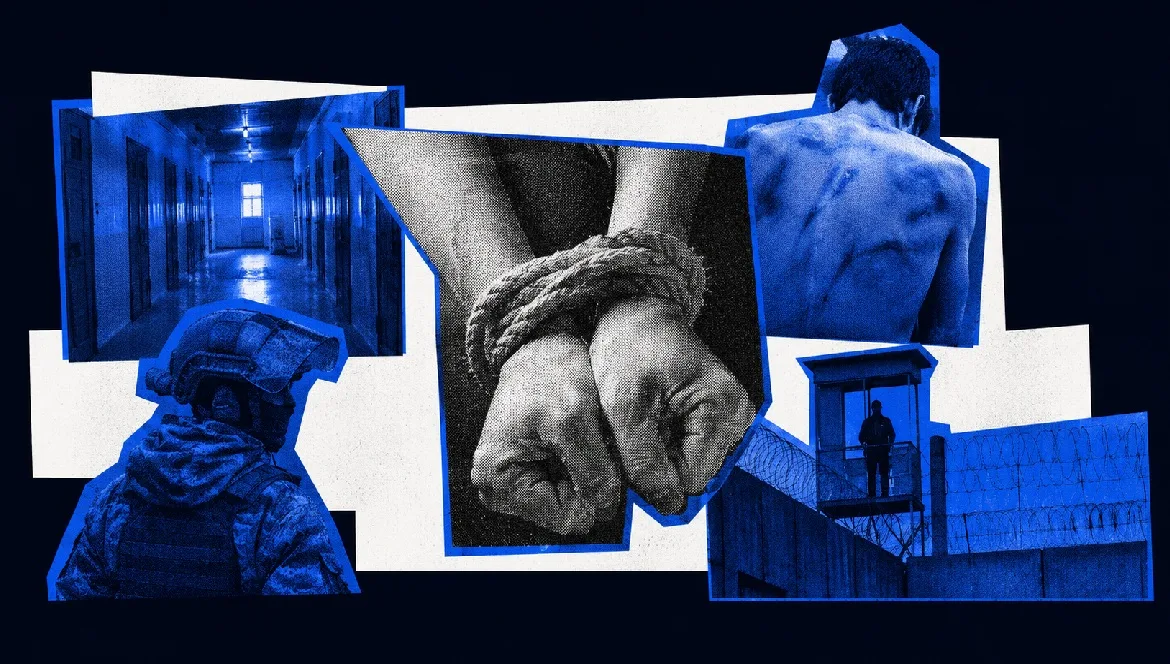
Every Ukrainian released from Russian captivity brings back a different story. Yet the methods they describe are strikingly similar. Investigations by the UN, human rights organisations and journalists increasingly point to the same conclusion: torture is not an exception inside Russia's detention system—it has become one of its defining features.
Every exchange of prisoners brings home people who were held in different places, captured under different circumstances and questioned by different officers. Some defended Mariupol, others fought in the Kharkiv or Donetsk regions. Some are civilians abducted from occupied towns, local officials, volunteers or journalists who never carried a weapon. Yet despite these vastly different experiences, their testimonies often sound as though they describe the very same prison.
Former detainees consistently recount a familiar sequence of abuse. The first hours after capture are frequently marked by what survivors refer to as a "reception"—systematic beatings intended to establish complete control over newly arrived prisoners. During interrogations, many describe being subjected to electric shocks delivered through military field telephones, suffocation, prolonged stress positions and repeated threats of execution. Others speak of being deprived of sleep for days, denied treatment for serious injuries and forced to remain standing for hours while guards beat anyone who collapsed from exhaustion. Psychological violence became just as routine. Prisoners were reportedly forbidden to speak Ukrainian, compelled to sing the Russian anthem or praise Vladimir Putin, and punished for even the smallest acts of defiance.

Over the past three years, these accounts have been documented independently by the UN Human Rights Monitoring Mission, Amnesty International, Human Rights Watch and Ukrainian human rights organisations. Their findings increasingly point to the same conclusion: torture inside Russian detention facilities is neither sporadic nor the result of individual cruelty. The consistency of testimonies collected from hundreds of former prisoners suggests an organised system in which violence has become an institutionalised part of Russia's treatment of both Ukrainian prisoners of war and civilian detainees.
Mariupol Was Only the Beginning
The defence of Mariupol was one of the first moments when the outside world began to understand the scale of abuse awaiting Ukrainians in Russian captivity. Soldiers released during later prisoner exchanges described almost identical experiences despite being transferred to different penal colonies and detention centres across occupied territories and Russia itself. Many recalled being beaten immediately after surrender, shocked with electricity during interrogations and denied even the most basic medical care despite severe injuries sustained in combat.

Months of systematic starvation left many prisoners dramatically underweight. Medical examinations conducted after exchanges documented untreated fractures, chronic infections, damaged teeth, severe vitamin deficiencies and neurological disorders associated with prolonged abuse. Former detainees also described being forced to stand motionless for hours, punished for speaking to one another and routinely beaten during inspections or transfers between facilities. Rather than isolated incidents, these practices emerged repeatedly in testimonies collected over several years.
One facility appears in survivors' accounts more frequently than almost any other: the pre-trial detention centre in Taganrog. A major investigation by Texty, based on interviews with former prisoners and leaked Russian documents, identified the prison as one of the central hubs in Russia's detention network. Survivors who had never met each other nevertheless described nearly identical procedures upon arrival, similar methods of interrogation and the routine use of electric shocks, beatings and humiliation. The investigation concluded that such consistency could hardly exist without institutional approval, pointing towards a system in which torture is embedded within the functioning of Russia's penitentiary service rather than carried out by rogue individuals.
Olenivka Became a Symbol of Impunity
If Mariupol exposed how Russia treated captured Ukrainian defenders, Olenivka showed how little protection prisoners of war could expect once they entered the Russian detention system.
On the night of 29 July 2022, an explosion tore through Barrack 200 at the Olenivka penal colony in occupied Donetsk region, where dozens of captured defenders of Azovstal had been transferred after surrendering. More than 50 Ukrainian prisoners of war were killed and over 130 wounded. Moscow immediately accused Ukraine of striking the prison with a HIMARS missile, a claim rejected by Kyiv and later challenged by multiple independent investigations.

Analyses by the United Nations, forensic experts and investigative journalists found no evidence supporting Russia's version of events. Instead, the available evidence pointed towards an explosion originating from inside the building rather than an external missile strike. Despite repeated international calls, independent investigators were never granted unrestricted access to the site, while Russia quickly demolished parts of the damaged barrack and failed to preserve evidence that could have helped establish responsibility.
For many former prisoners, Olenivka was not an isolated tragedy but the most visible manifestation of a detention system built around secrecy and violence. Survivors have described routine beatings, starvation, overcrowding and denial of medical care long before the explosion occurred. Families of those killed have now spent years seeking answers without access to an independent investigation, while Russia continues to block meaningful international scrutiny.
The legacy of Olenivka extends far beyond one night in July 2022. It demonstrated that once Ukrainian prisoners entered Russian custody, even the protections guaranteed by the Geneva Conventions could effectively disappear. The failure to establish accountability has also reinforced concerns raised by international organisations that abuses inside Russian detention facilities are not only systematic but are shielded by a structure designed to prevent outside oversight.
"You Have To Scream That Putin Is the President of the World"
The experience of Ukrainian serviceman Maksym Lapatin, who spent nearly two years in Russian captivity before returning to Ukraine, reflects many of the patterns documented by international investigators. Speaking after his release, he recalled that beatings began almost immediately after capture and continued throughout his detention. Interrogators used electric shocks, while guards demanded that prisoners publicly humiliate themselves by shouting pro-Russian slogans and praising Vladimir Putin. Refusing to comply often resulted in another round of violence.

Lapatin also described how access to food and medical care became tools of coercion. Prisoners suffering from broken bones, infected wounds or chronic illnesses were frequently denied treatment, while meagre food rations left many in a constant state of hunger. According to his testimony, the purpose of the abuse extended well beyond gathering intelligence. The relentless combination of physical violence, exhaustion and humiliation was designed to destroy a prisoner's sense of identity and control long before their body gave out. His account closely mirrors dozens of other testimonies gathered from released prisoners, reinforcing the conclusion that these methods are repeated deliberately across Russia's detention system.
Women Returned With the Same Stories
The experiences of women released from Russian captivity have further undermined the idea that torture is limited to soldiers captured on the battlefield. Investigations by The Telegraph and Radio Liberty document testimonies from civilians and servicewomen who describe many of the same methods of abuse reported by male prisoners: severe beatings, electric shocks, starvation, sleep deprivation and psychological intimidation. Alongside these practices, many women also recount systematic sexualised violence or constant threats of rape used to instil fear and maintain control.
One former detainee described being forced to undress during interrogations while guards threatened to hand her over to soldiers. Another recalled repeated threats against her children if she refused to cooperate. Several women said they were made to listen to the screams of prisoners being tortured in neighbouring cells, never knowing when it would be their turn. Even in cases where physical sexual violence did not occur, the persistent threat itself became a form of torture, leaving long-lasting psychological trauma.
Human rights organisations increasingly classify these abuses as conflict-related sexual violence rather than isolated criminal acts. The recurring nature of the testimonies, collected from women detained in different places and at different times, points to a pattern that extends far beyond the actions of individual perpetrators. Instead, investigators argue, sexualised violence has become another instrument through which Russian detention facilities seek to intimidate, degrade and break those held in captivity.
The Journalist Who Never Came Home
The death of Ukrainian journalist Viktoriia Roshchyna became one of the clearest symbols of what happens behind the walls of Russia's detention system. Roshchyna disappeared in August 2023 while reporting from Russian-occupied areas of the Zaporizhzhia region, where she was documenting the lives of civilians living under occupation. For months, neither her family nor colleagues knew where she was being held. Russia only later admitted that she was in custody, offering no meaningful information about her condition or the legal grounds for her detention.

In October 2024, Russian authorities informed Ukraine that Roshchyna had died in captivity. When her body was eventually returned, Ukrainian prosecutors reported signs consistent with prolonged abuse and torture. An international investigation led by Forbidden Stories later revealed testimonies from former detainees who had seen the journalist inside the detention centre in Taganrog. They described her as severely emaciated, too weak to stand without assistance and showing visible signs of physical abuse. According to witnesses, she had almost stopped eating after repeated interrogations and deteriorated rapidly in custody. Her case demonstrated that Russia's detention system targets not only soldiers but also civilians whose only "crime" is documenting the reality of occupation.
Roshchyna's story also exposed another recurring feature of Russian captivity: enforced disappearance. Families often spend months without knowing where their relatives are being held, whether they are alive or whether they have access to a lawyer or medical care. Human rights organisations argue that this uncertainty is itself part of the system, isolating detainees from outside scrutiny while placing enormous psychological pressure on their families.
Torture Continues Long After Release
Many former prisoners say that the deepest wounds are not always visible. Broken bones heal, though often without proper treatment. Weight can be regained. Psychological trauma, however, is far more difficult to overcome.

Journalist and human rights defender Maksym Butkevych, who spent more than two years in Russian captivity before being released in 2024, has spoken publicly about the constant uncertainty that shapes life inside detention. Prisoners never know when guards will enter their cell, whether they are being taken to another interrogation or whether another beating is about to begin. Every sound in the corridor becomes a source of fear. Former detainees describe losing any sense of time after months in isolation, surviving by memorising poems, silently counting days or inventing routines simply to preserve their sanity.
Doctors treating released prisoners increasingly report symptoms associated with prolonged torture: post-traumatic stress disorder, severe anxiety, chronic pain, hearing damage caused by repeated beatings, neurological disorders linked to electric shocks and the long-term effects of starvation. Rehabilitation often takes years, while some survivors admit that certain memories remain impossible to discuss even with their families.
The People Who Run the System
One of the most important findings of recent investigations is that responsibility does not rest solely with individual interrogators. The investigation by Texty, based on leaked Russian documents and dozens of survivor testimonies, shows that many torture sites operate inside official institutions managed by Russia's Federal Penitentiary Service (FSIN). Places such as the detention centre in Taganrog are not secret prisons run by rogue units but recognised state facilities with established command structures, medical staff and administrative oversight.

Former detainees consistently identify the same institutions despite being imprisoned at different times. They describe similar admission procedures, identical methods of interrogation and comparable forms of punishment for even minor violations. Investigators argue that such consistency would be impossible without approval—or at least tolerance—from higher levels of the Russian prison administration. The scale of abuse therefore points to institutional responsibility rather than isolated criminal acts committed by individual guards.
This conclusion is echoed by the UN Independent International Commission of Inquiry on Ukraine, which has repeatedly stated that torture committed by Russian authorities appears both widespread and systematic. The Commission has documented electric shocks, severe beatings, mock executions, sexual violence and prolonged incommunicado detention across multiple facilities and occupied territories, concluding that these practices may amount to crimes against humanity.
Violence Designed to Destroy Identity
The purpose of torture extends far beyond extracting military information. Former prisoners repeatedly say that interrogators were often uninterested in tactical details. Instead, they demanded declarations of loyalty to Russia, forced detainees to deny the existence of Ukraine or punished them simply for speaking Ukrainian. Guards reportedly destroyed letters from families, confiscated religious symbols and mocked prisoners' national identity throughout interrogations.

This pattern reflects a broader objective. Physical violence was accompanied by psychological pressure intended to strip prisoners of dignity, autonomy and identity. Survivors often describe captivity not as a succession of interrogations but as a continuous process of humiliation, where every aspect of daily life—from eating and sleeping to speaking and praying—was controlled by their captors. Human rights experts argue that this combination of physical and psychological abuse was designed to inflict long-term trauma that would continue long after prisoners were released.
More Than a Humanitarian Issue
For Europe, Russia's network of torture prisons is no longer solely a humanitarian concern. It has become a test of whether systematic abuse committed during an ongoing war can be documented, investigated and ultimately prosecuted while the conflict is still unfolding. Every prisoner exchange brings home new witnesses whose testimonies reinforce accounts collected months or even years earlier. Rather than revealing isolated incidents, they continue to expose the same methods, the same institutions and the same patterns of violence.
The significance of these testimonies lies precisely in their consistency. A marine captured in Mariupol, a journalist abducted in the Zaporizhzhia region, a civilian detained in the Kherson region and a volunteer abducted in the Kharkiv region should not all describe nearly identical methods of torture if those crimes were merely the result of individual cruelty. Yet that is exactly what investigators continue to document.
That consistency is why international organisations increasingly avoid describing torture in Russian captivity as a collection of separate war crimes. Instead, they describe it as a state-run system that uses violence not simply to obtain information, but to punish, intimidate and erase those who resist Russian occupation. Hundreds of survivor testimonies have transformed individual accounts of suffering into evidence of one of the most extensively documented systems of wartime torture in twenty-first-century Europe.
Sources: UN Human Rights Monitoring Mission in Ukraine, Office of the UN High Commissioner for Human Rights (OHCHR), Human Rights Watch, Texty.org.ua, Forbidden Stories, BBC News Ukraine, The Telegraph, Radio Liberty, Suspilne, ArmyInform