
Hungary Turns to Renewables to Cut Energy Costs and Import Dependence

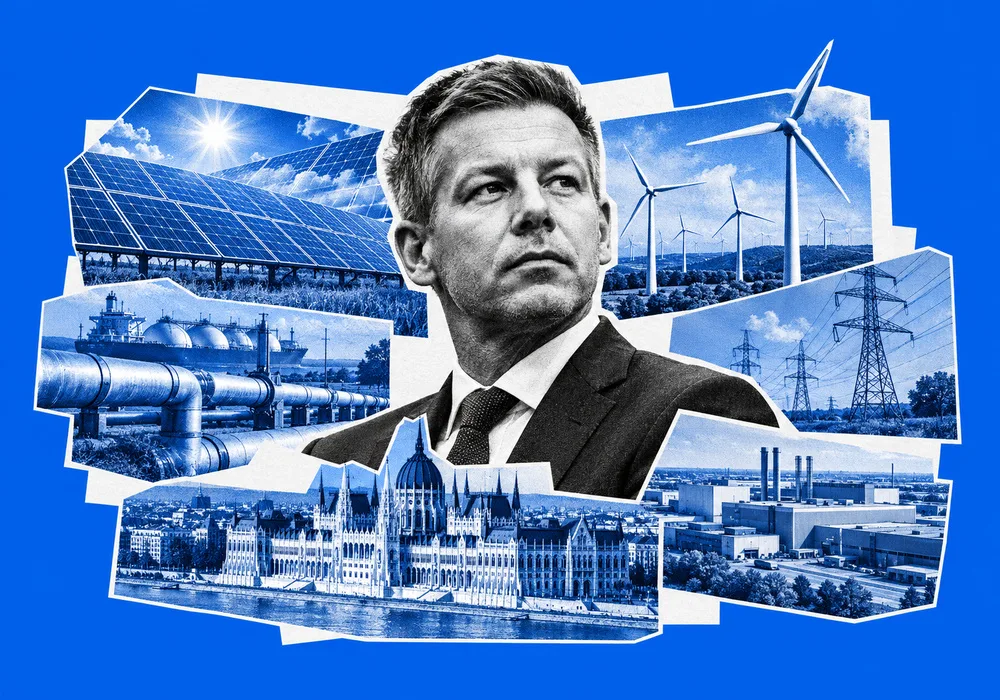
Hungary is launching a major renewable energy push aimed at lowering electricity costs and reducing its dependence on imported energy. The strategy combines rapid expansion of wind and solar with energy storage, grid modernisation and geothermal projects, while nuclear power remains a core part of the system.
Hungary is preparing a major shift in its energy policy, with the new government seeking to expand renewable generation, strengthen electricity infrastructure and reduce the country’s exposure to imported energy. The strategy marks a significant departure from the previous model, which relied heavily on Russian energy supplies and nuclear power while giving priority to solar generation.
The government argues that reducing import dependence is becoming both an economic and geopolitical necessity. Hungary currently imports more than 80% of the energy it consumes, leaving businesses and households exposed to international prices and external supply risks. The new approach is intended to make electricity cheaper and the national energy system more resilient.
From solar boom to a broader renewable system
Hungary has already built a substantial solar sector. The country now has close to 9 GW of installed solar capacity, making photovoltaics one of the fastest-growing parts of its electricity system. But the rapid expansion of solar has also exposed weaknesses in the grid, particularly when large amounts of electricity are generated at the same time and cannot immediately be consumed.
That is pushing Budapest towards a broader strategy based on a combination of renewables, storage and grid investment. The government has already launched programmes supporting household energy storage and aims to expand storage capacity dramatically. In January, it announced a 100 billion-forint programme for household batteries, with the stated goal of making better use of electricity generated by existing solar installations.
The European Commission's current framework also lists Hungary among the EU countries planning substantial additional storage capacity, with a target of 700 MW and 1,000 MWh during 2026–2028.
Wind power returns to Hungary
The most visible change is the renewed push for wind energy. Hungary has historically had a relatively small wind sector, but the government is now opening the way for new projects after years in which development was heavily restricted.
An initial tender covers at least 700 MW of new wind capacity. Budapest wants to add around 4 GW over the next four years, with total wind capacity potentially exceeding 6 GW by 2040. The government says the objective is to increase domestic electricity production while making the system more stable and less dependent on imports.
The strategy also includes investment in geothermal energy and electricity networks. In August, the Hungarian government approved a broader energy development plan focused on storage, grid modernisation, wind power and geothermal projects, with financing expected to come from domestic and EU sources as well as private capital.
Energy security is becoming an economic issue
For Hungary, the renewable push is not simply a climate policy. It is increasingly tied to the country's economic competitiveness.
High and volatile electricity prices have put pressure on energy-intensive industries across Central Europe. Increasing domestic generation could reduce the amount of electricity Hungary needs to purchase from neighbouring markets while also limiting exposure to fluctuations in imported fuel prices.
The European Commission similarly identifies reducing energy import dependence and ensuring affordable energy as central objectives of Hungary's energy transition. Its assessment of the country's recovery plan links renewable investment directly to energy security and energy sovereignty.
This is particularly important for a country whose energy relationship with Russia has remained unusually deep within the EU. Hungary continues to depend on Russian supplies for parts of its oil, gas and nuclear-fuel needs, meaning that expanding domestic electricity generation can provide a degree of insulation even if it does not immediately eliminate dependence on Russian hydrocarbons.
Paks remains part of the equation
The renewable expansion does not mean Hungary is abandoning nuclear power. The government still intends to maintain the role of the Paks nuclear plant, whose two existing reactors have a combined capacity of around 2 GW.
That reflects a broader European reality: renewable generation alone cannot guarantee electricity supply around the clock. Hungary's strategy is therefore increasingly based on diversification rather than replacing one source with another — combining solar and wind with storage, nuclear power, geothermal generation and a stronger electricity grid.
The vulnerability of the existing system was highlighted during this year's severe drought, when extremely low Danube water levels threatened the operation of power infrastructure around Paks. The episode demonstrated how climate-related disruptions can affect even established low-carbon generation and reinforced the need for a more diversified electricity system.
A wider European shift
Hungary's policy reflects a broader change taking place across Europe. Renewable energy is increasingly being treated not only as a decarbonisation tool but as infrastructure for economic and geopolitical resilience.
The EU generated 30% of its electricity from wind and solar in 2025, allowing these sources to overtake fossil fuels for the first time. Fourteen EU member states produced more electricity from wind and solar than from fossil fuels during the year.
The strategic objective is therefore moving beyond simply building renewable capacity. Europe needs grids, batteries and other forms of flexibility capable of absorbing intermittent generation, while reducing exposure to imported fossil fuels. The European Council on Foreign Relations has similarly argued that the bloc's remaining dependence on imported energy continues to represent a geopolitical vulnerability.
For Hungary, the shift is particularly significant because it combines two objectives that have often been treated separately: lowering energy costs and reducing strategic dependence on foreign suppliers. If Budapest can translate its plans for wind, storage and grid investment into actual capacity, the country's energy model could become considerably less exposed to external price shocks — while gradually reducing one of the structural vulnerabilities created by its dependence on imported energy.
Sources: Hungarian Government, European Commission