
How Instagram Reels and TikTok Are Changing Real-Life Conversation

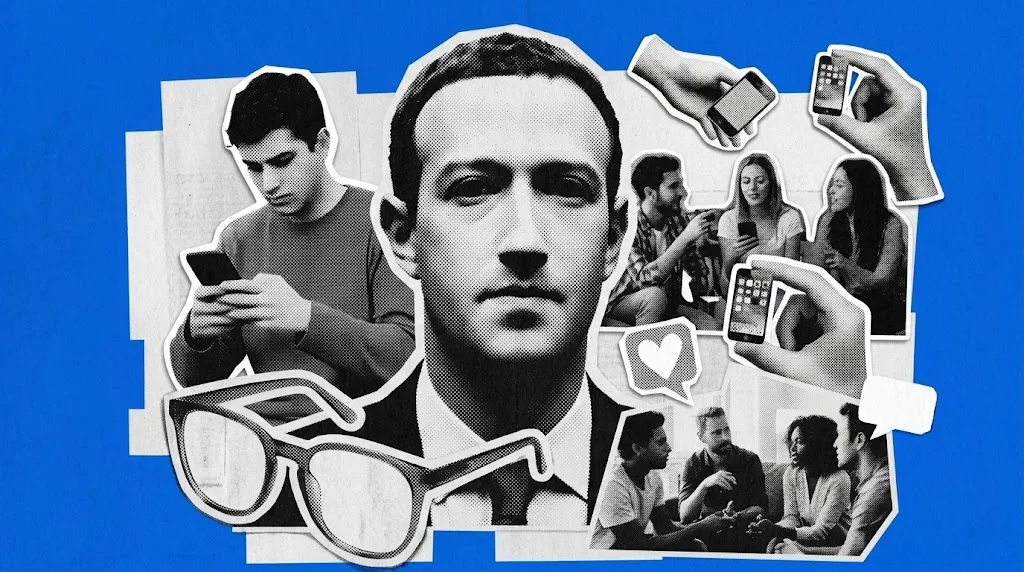
Compulsive consumption of short-form video is no longer just a digital habit - it is actively reshaping how people hold real-world conversations. As remote work blurs the boundary between professional tasks and algorithmic scrolling, new research shows that heavy exposure to Instagram Reels and TikTok erodes executive attention, leaving users increasingly impatient with live dialogue.
The real-world consequences of this shift were recently outlined by freelance journalist Hannah Ewens in a Guardian column. After moving to full-time remote work, she began noticing that friends seemed to take too long to get to the point, interviewees wandered, and stories that once held her attention felt irritatingly slow. What makes her experience significant is not the familiar confession of screen addiction, but the demonstration of how habits developed inside a personalised video feed directly migrate into work, conversation, and social life.
The emerging research does not justify saying that short-form video makes people less intelligent. It does point to a more specific problem: heavy, compulsive consumption is consistently associated with weaker performance in several forms of attention and executive control. The harder question is whether the technology is changing those capacities, or whether people who already struggle with them are simply more attracted to rapid, highly stimulating content.
That distinction matters because the effects are no longer confined to the screen.
The conversation becomes the inconvenient format
Human conversation is full of inefficiencies. People pause to think. They tell stories before reaching the relevant detail. They change direction, remember something halfway through a sentence and add context that seemed unnecessary until the final point becomes clear.
An algorithmic video feed is almost the opposite.
Reels, TikTok and YouTube Shorts continuously offer new material, with recommendation systems responding to tiny behavioural signals such as viewing duration, rewatches, skips, likes and shares. Infinite scrolling and automatic progression remove obvious stopping points. The user does not have to decide what comes next; the system does it.
That environment rewards rapid evaluation. Is this interesting? Is it relevant? If not, swipe.
Over time, that creates an awkward mismatch with live communication. There is no swipe function in a conversation. A listener cannot remove the irrelevant anecdote and instantly replace it with something more stimulating.
Ewens described experiencing this friction precisely. She found herself becoming impatient with tangents in conversations and losing concentration during interviews, while expecting people around her to communicate with something approaching the pace and immediate relevance of short-form content.
A 2023 study by user-experience researcher Francesco Chiossi provides a possible explanation. Its focus was not conversational etiquette but the ability to retain an intention after an interruption, a basic component of executive functioning. When that capacity is compromised, the consequences in conversation are familiar: losing track of what one intended to say, switching topics prematurely, interrupting or assuming that a speaker's point has already been understood.
The social effect can therefore look like impatience, even when the underlying problem is attention.
The evidence is stronger than the headlines, but narrower
Research published during 2025 and 2026 has expanded considerably around these questions. A large meta-analysis covering 71 quantitative studies found a moderate negative association between heavy short-form video consumption and overall cognitive performance. Attention and inhibitory control showed particularly notable associations, alongside measures involving working memory, prospective memory and executive function.
A separate 2026 systematic review focused on young people and reached broadly similar conclusions, linking problematic short-form video use with poorer self-regulation and working-memory outcomes as well as measures of impulsivity and psychological distress.
The pattern is important. So is what it does not prove.
The overwhelming majority of the available studies are cross-sectional: 88 per cent, according to the material reviewed for this analysis. Such research can identify relationships between behaviours and cognitive measures, but it cannot establish which came first.
That leaves two competing possibilities. Intensive exposure to rapid, personalised stimulation may contribute to changes in attention and impulse control. Or people with existing difficulties in those areas may be especially likely to seek environments offering constant novelty and minimal cognitive friction.
Neither explanation can currently be dismissed.
The same caution applies to claims about permanence. Early evidence from interventions such as application limits and digital detoxes indicates that some functional aspects of attention can recover when behaviour changes, but findings on full cognitive reversibility remain mixed. There is not yet enough evidence to describe the process as permanent neurological damage.
That is a much less dramatic claim than “social media is making people stupid”. It is also more useful.
The feed is designed around the reward system
The technology becomes more consequential when viewed not simply as a library of short videos, but as a system optimised around individual behaviour.
Neuroimaging research published in NeuroImage has found greater activation in several brain networks when users engage with personalised TikTok-style feeds than with non-personalised content. Among the areas implicated are the ventral tegmental area, associated with reward processing, and the default mode network, alongside the medial prefrontal cortex, thalamus and cerebellum.
EEG research adds another piece of the picture. High levels of short-form video dependency have been associated with reduced P300 amplitudes, a signal linked to the allocation of attentional resources during cognitive tasks.
None of this means that a video app is directly “rewiring” the brain simply or irreversibly. The findings instead help explain why personalised feeds can be unusually effective at sustaining engagement. Each swipe produces another opportunity for novelty, while the recommendation system continuously adjusts what appears next.
The business model and the cognitive mechanism point in the same direction: keep the user moving.
The consequence for the user is that attention is repeatedly trained in an environment where disengagement is unnecessary, and boredom is immediately avoidable.
Remote work removes the barriers that once interrupted the cycle
The workplace adds another dimension.
For many remote workers, the boundary between professional concentration and personal consumption is no longer physical. A difficult task, an awkward email, or a few minutes of boredom can be followed by a quick visit to a video application. What looks like a short break has no natural endpoint.
This is the logic of cyberloafing in its most frictionless form. Returning to a complicated task requires effort. Opening an algorithmic feed does not.
The problem is not simply lost minutes. Fragmentation itself has a cost when work depends on sustained reasoning, memory and synthesis. Knowledge workers are often required to hold several pieces of information in mind while constructing an argument, conducting an interview or making a judgement. Those tasks cannot be completed by consuming one isolated burst of information after another.
Remote work can therefore create an unusually permissive environment for a behavioural loop that would once have been interrupted by commuting, office routines or physical separation between work and leisure.
The distinction between professional and private screen use becomes increasingly difficult to maintain.
The deeper shift is cultural, not merely neurological
There is also a broader change in what people may come to regard as normal communication.
If digital content is consistently delivered in compressed, highly relevant fragments, ordinary conversation begins to look inefficient by comparison. A friend who takes two minutes to reach the point can feel unusually slow. A complex interview can seem frustrating. A long article demands a level of attentional commitment that a personalised feed never asks the user to make.
That creates a feedback loop.
The less comfortable people become with sustained attention, the more attractive highly condensed information becomes. As demand for condensed information grows, platforms have stronger incentives to optimise for speed, novelty and immediate engagement. Long-form media, investigative journalism and other forms of complex communication then face a more difficult environment in which to retain attention.
The stakes extend beyond individual productivity. Democratic societies, professional institutions and personal relationships all depend on the ability to tolerate information that is incomplete, ambiguous or inconveniently slow.
Dr Marissa Fond, a sociolinguistics professor at Georgetown University consulted by Ewens, has suggested practical responses centred on intentional slowing, recognising impatience and deliberately recovering curiosity in conversation.
That approach is revealing because it treats attention not as a fixed personal characteristic but as something that can be practised.
The unresolved issue is whether individual discipline can keep pace with systems designed to defeat it. A person can decide to put down a phone. The feed, meanwhile, has already learned what is most likely to make the next decision difficult.
And the longer that competition takes place inside the boundaries of a workday, the less clear it becomes where the algorithm ends and ordinary human attention begins.
Sources: The Guardian, Griffith, European Child & Adolescent Psychiatry, NIH