
How a Lonely Arctic Outpost is Becoming Washington’s Newest Base in Greenland

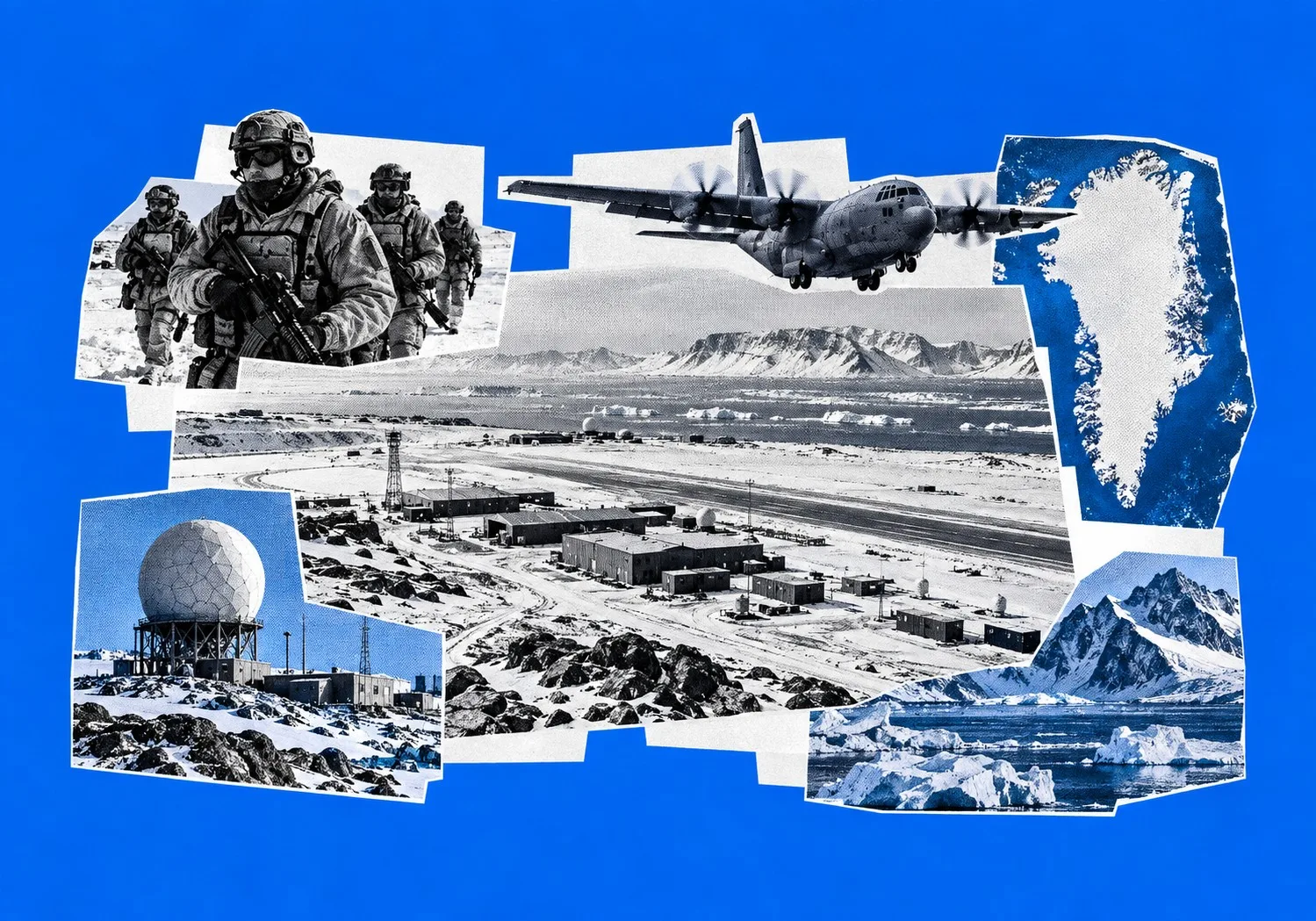
The windswept strip at Mestersvig will host US troops under a new trilateral defence deal, transforming a desolate weather station into a strategic fortress in the High North.
At a gravel airstrip on the eastern coast of Greenland, three Danish soldiers spend their winters shifting up to five metres of snow.
Mestersvig is as lonely as the Arctic gets: 240 kilometres from a human settlement of barely three hundred people, wrapped in months of polar darkness, with temperatures routinely dropping below minus ten.
For decades, its main claim to relevance was as an isolated fuel depot for the Sirius Dog Sled Patrol.

It is now about to host the United States Armed Forces.
Under a pact signed on Tuesday on the margins of the UN General Assembly in New York, the US, Denmark and Greenland have approved a major expansion of the American military presence across the world’s largest island.
The deal, bearing the signatures of Donald Trump, Mette Frederiksen and Jens-Frederik Nielsen, authorises Washington to establish new military 'defence areas' at Mestersvig and at Narsarsuaq in the south, while handing the Pentagon sweeping rights to expand operations at Pituffik Space Base in the far north-west.
On paper, this is the diplomatic resolution to a messy row. For months, President Trump’s threats to buy Greenland outright – punctuated by hints of trade sanctions or military coercion – rattled European capitals and infuriated the island’s 57,000 inhabitants.
By swapping territorial acquisition for operational rights, diplomats in Copenhagen and Nuuk have given the White House the military posture it wanted without surrendering legal sovereignty over the land.
Yet the official talk of alliance harmony conceals a far harsher reality.
What happened in New York was the formal end of Arctic exceptionalism. The idea of the High North as a tranquil, low-tension zone governed by regional consensus is dead. In its place sits a strategy of permanent military containment.
Watching the GIUK Gap
The choice of Mestersvig is pure military realism.
The airstrip sits opposite the maritime corridor between Greenland, Iceland and the United Kingdom – the GIUK gap.
For NATO, this stretch of water is the ultimate choke point. Any Russian submarine or surface warship leaving the Kola Peninsula must cross it to reach the North Atlantic.

During the Cold War, the Americans ran 17 bases in Greenland with more than 10,000 troops under a 1951 defence deal with Copenhagen. That footprint was quietly erased over the following decades, leaving only Pituffik’s radar domes in the far north-west.
Tuesday’s agreement reverses forty years of strategic retreat.
With broad overflight rights, landing privileges and undersea transit access, American forces are moving back into the North Atlantic in force.
Reopening Narsarsuaq in the south – a former second world war airfield known as Bluie West One – bridges the operational gap between North American air defences and European maritime approaches.
Crucially, the pact integrates Greenland into the planned American 'Golden Dome' air and missile defence network. By anchoring early-warning hardware directly on Greenlandic soil, Washington extends its shield across polar missile trajectories. Mark Rutte, the NATO Secretary General, gave the arrangement his immediate blessing, framing the expansion as an essential step for North Atlantic stability.

Locking Out Foreign Capital
The military footprint is only half the story. The treaty’s real sting lies in its economic clauses, which read like a targeted blockade of non-Western capital.
The text bars non-NATO states from establishing any military presence on the island, manned or otherwise. More aggressively, it introduces a statutory security veto over foreign commercial investment. Investors from outside NATO and the European Union are explicitly banned from taking controlling stakes, strategic influence or privileged data access in Greenland’s energy, mining and infrastructure sectors.
This is a direct response to years of quiet maneuvering by foreign state-backed firms. As global warming exposes Greenland’s vast mineral deposits, the island has become critical ground for rare earths and defence metals. Barely 20 kilometres from the Mestersvig runway, an EU-backed project is preparing to extract molybdenum – a critical element in aerospace alloys. Just to the south, Texas-based Greenland Energy holds rights to drill an untested offshore basin first surveyed by ARCO in the 1970s.
When Chinese state firms previously attempted to fund airport expansions and mining concessions in Nuuk, Washington made its displeasure uncomfortably clear. The new agreement closes that door permanently. National security concerns are now a formal legal barrier to foreign investment.
For local politicians, the promise of American infrastructure spending is difficult to turn down. Justus Hansen, a Greenlandic MP representing the east coast, welcomed the investment for a region desperate for transport links and capital. But the price of that money is clear: Greenland's economic development will henceforth be screened in Washington.
The Sovereignty Trap
In Copenhagen and Nuuk, politicians have spent the week reassuring voters that their constitutional prerogatives remain intact. Prime Minister Frederiksen stressed that bringing the agreement under a NATO framework prevents Arctic security from becoming a purely bilateral transaction with Washington. Her Greenlandic counterpart, Mr Nielsen, described the outcome as a 'win-win-win' that secures Nuuk’s place in the Western alliance while protecting its constitutional path toward self-determination.
That interpretation requires a generous reading of the text. The agreement has no expiration date and can only be altered by mutual consent.
More importantly, it includes a clause that quietly constrains Greenland’s political future. Under the 2009 Self-Government Act, Greenlanders hold the legal right to vote for full independence from Denmark. But the new treaty specifies that should Greenland ever choose to break away from Copenhagen, both Denmark and Greenland are legally bound to ensure the new sovereign state immediately joins NATO and accepts every term of the 2026 defence pact.
In effect, a future independent Greenland has been pre-committed. Nuuk may one day cut its ties with Denmark, but it will have no legal freedom to choose neutrality, pursue non-alignment, or ask American forces to leave.
Speaking after the signing ceremony, Mr Trump noted dryly that the deal gives the US permanent control over Greenland’s security, adding that military construction teams would move in without delay. Danish and Greenlandic leaders may insist they preserved their dignity at the negotiating table. But as American military transport planes prepare to land on the gravel at Mestersvig, the reality is plain enough: Washington wanted a permanent fortress in the High North, and it got one.