
Google’s Constellation Deal Signals a Shift: How AI Demand Is Turning Big Tech Into Energy Infrastructure Developers

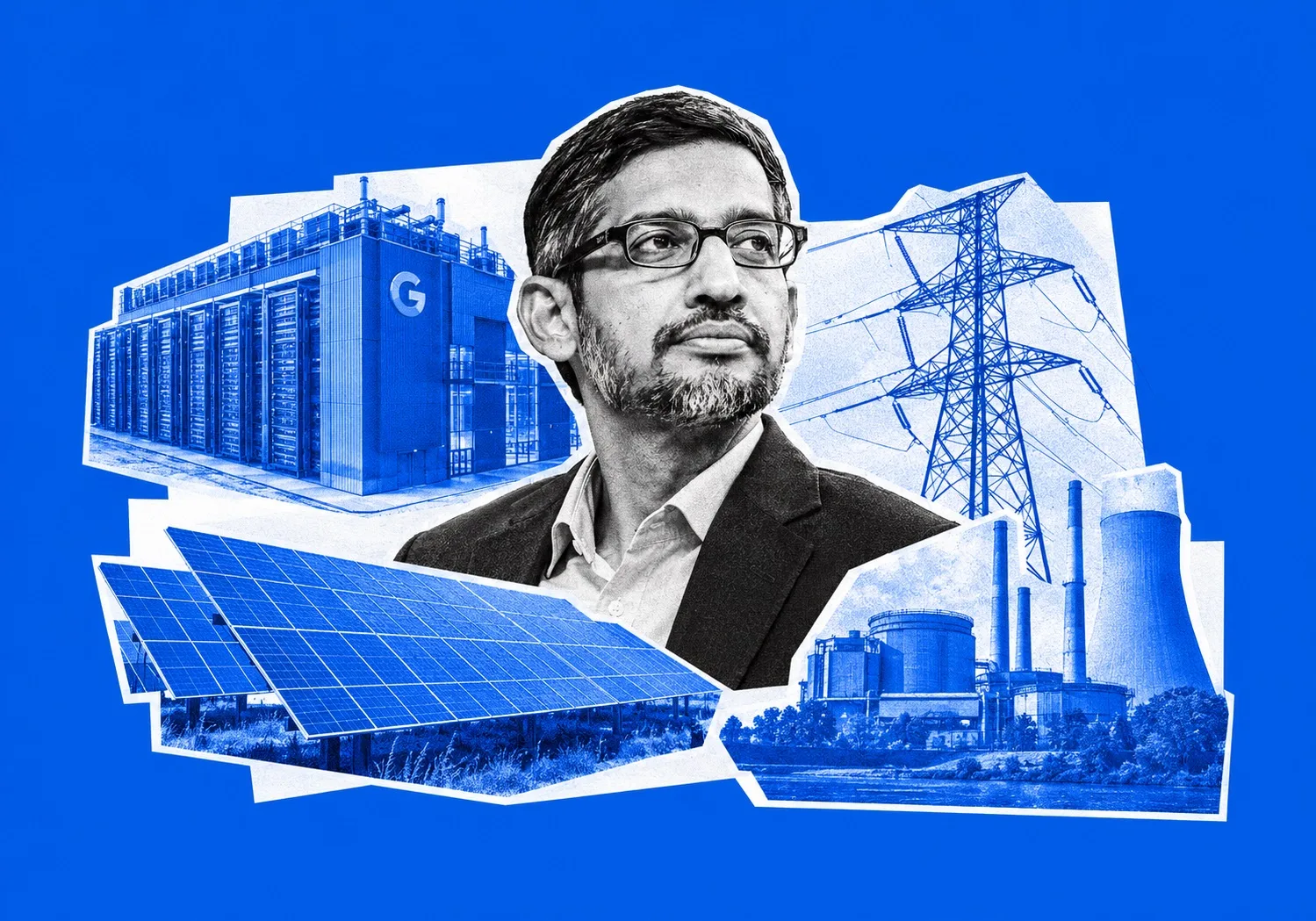
Google’s 20-year agreement with Constellation Energy to add 890 megawatts of nuclear capacity to the PJM grid highlights how AI power demand is reshaping utility markets. Beyond procuring electricity, hyperscalers are now directly financing baseline grid expansion and embedding cloud software into nuclear operations - a corporate energy model with direct implications for Europe’s tight power markets.
For technology companies seeking large quantities of round-the-clock, carbon-free electricity, the attraction of an uprate is straightforward.
Building a new nuclear plant, whether a conventional reactor or an emerging small modular reactor, involves years of licensing, construction, and grid development. An existing reactor has already cleared much of that regulatory and physical hurdle. Its output can instead be increased through upgrades to turbines, feedwater systems, generators and digital controls.
The Constellation agreement therefore targets an awkward problem in the American power market: there may be plenty of proposed clean generation on paper, but getting new projects connected to the grid can take years.
The 890MW programme is designed to produce additional capacity between 2028 and the end of 2032. Constellation plans to invest more than $4.3bn in the upgrades, while Google's long-term commitment provides the commercial certainty behind that capital expenditure.
For a data-centre operator, speed is not a secondary consideration. AI infrastructure requires power when the computing workload requires it, rather than when wind or solar generation happens to be available.
That is changing the value of nuclear assets.
Reactors that were once viewed primarily through the lens of retirement dates, maintenance costs, and uncertain wholesale revenues can now become strategic infrastructure for technology companies prepared to sign contracts extending 15 or 20 years.
Microsoft's agreement with Constellation to restart the Crane Clean Energy Center, Amazon's nuclear procurement from Constellation and Talen, and Meta's purchases from Vistra all point in the same direction. Google's agreement with Fortum in Finland, covering up to half of the output of the Loviisa nuclear plant for 22 years, shows that the shift is not confined to the US.
The 2,700MW question
The structure of the Google-Constellation agreement is as important as its headline figure.
The 890MW uprate programme creates new capacity. The separate 2,700MW agreement does not. It gives Constellation a long-term commercial buyer for power that its reactors already produce.
For Google, the combination solves two different problems. The existing-capacity contract provides a dependable electricity supply, while the uprates increase the amount of firm generation available to the system.
For Constellation, it creates something equally valuable: visibility.
Nuclear plants are capital-intensive assets whose economics can be difficult when wholesale prices are volatile. A long-term corporate buyer can support investment in equipment and operating infrastructure that might otherwise be harder to justify.
The result is a commercial model in which the largest electricity consumers increasingly behave like infrastructure partners rather than ordinary customers.
That is where PJM's "Bring Your Own Power" approach becomes significant.
When the customer has to bring the electricity
PJM serves 67mn people across 13 states and Washington, DC, and has been under growing pressure from data-centre demand while older fossil-fuel generation retires. Capacity auction clearing prices surged by more than eight times in 2024.
The traditional model assumes that utilities and grid operators expand infrastructure to accommodate rising demand, with costs ultimately distributed through the electricity system.
The new model is different. Under "Bring Your Own Power", very large electricity users are encouraged to arrive with matching generation capacity and to take greater responsibility for the infrastructure required to support their consumption.
That changes the relationship between a data-centre company and the power market.
Google is effectively helping to finance the supply needed for its own expanding electricity footprint rather than waiting for conventional utility investment to catch up. The White House Ratepayer Protection Pledge reinforces the principle that the cost of this expansion should not simply be transferred to household electricity bills.
There is still a distinction between direct and indirect costs. The agreement is structured so that the $4.3bn investment in the nuclear upgrades comes from private capital, but dense concentrations of data centres can still create transmission and distribution pressures in the regions where they are built.
For other industrial consumers, the consequences may be less comfortable.
Big Tech is competing for the same reactors
The nuclear fleet is finite. Long-term contracts with hyperscalers can give operators revenue certainty and justify investment in extending the lives of existing plants. But the same contracts can remove firm generation from the pool available to manufacturers and other large commercial customers.
That creates a new competition for electricity that is not simply about price.
A factory may be willing to pay for reliable power, but a technology company building a large AI data centre can make a multi-decade commitment tied directly to its infrastructure strategy. Nuclear operators gain a powerful new class of customers, while traditional industrial consumers face greater competition for firm supply.
The effect on renewable developers is different again. Wind and solar remain important sources of new generation, but intermittent output is harder to match with computing loads that run continuously. Without storage or another firm source, renewable generation does not solve the same problem as nuclear capacity.
For hyperscalers pursuing 24/7 carbon-free power, the commercial premium is increasingly attached to reliability as much as to emissions.
The cloud is moving inside the power plant
The most consequential part of the agreement may ultimately be the least visible.
Alongside the electricity contracts, Google and Constellation have signed a five-year technology alliance that will bring Google Cloud and Gemini Enterprise AI tools into energy operations.
The applications include modelling for site selection, permitting and grid interconnection; predictive monitoring of plant assets and maintenance; and cybersecurity for air-gapped operational technology networks connected to the bulk electricity system.
This creates a new form of industrial integration. The company buying electricity is also providing software intended to help manage the infrastructure producing it.
There is an obvious efficiency argument. Better modelling could accelerate planning. Predictive maintenance could identify equipment problems before they become failures. More sophisticated monitoring could help nuclear operators manage complex maintenance schedules.
But putting increasingly capable AI systems closer to critical operational technology introduces a different category of risk.
Nuclear plants are not ordinary cloud environments. Their control systems are designed around security, reliability, and strict operational boundaries. The attraction of AI is that it can process enormous quantities of information and identify patterns that conventional monitoring might miss. The concern is that the more deeply such systems become embedded in critical workflows, the greater the consequences of a software failure, flawed recommendation, or cybersecurity breach.
The Google-Constellation agreement therefore represents more than a procurement deal. It brings two infrastructures with very different risk profiles into the same commercial relationship.
A new model for infrastructure finance
The broader significance lies in who is now willing to pay for electricity infrastructure.
For decades, large generation projects were principally the domain of utilities, governments and regulated investors. The AI build-out is creating customers with such enormous and predictable power requirements that they can increasingly anchor projects themselves.
That is attractive to nuclear operators. It also changes the politics of grid expansion.
In the US, the emerging model is built around private balance sheets, long-term contracts, and large consumers assuming more responsibility for the generation needed to support their growth. Europe has tighter regulatory frameworks and more constrained capacity, making the same model harder to reproduce at scale.
The unresolved issue is whether this creates a two-tier electricity market.
Hyperscalers can secure the firm, carbon-free generation they need by signing contracts that last for decades. Other industrial users must then compete for what remains. The nuclear renaissance could therefore be accelerated by AI while simultaneously making dependable electricity more commercially exclusive.
The decisive shift is not that Google has bought 890MW of nuclear power. It is that a technology company whose core business once depended on the electricity system is now helping determine what that system builds, how it is financed and, increasingly, how parts of it are operated.
Sources: Constellation, Daily Caller, CNBC, Blog Google