
Germany’s Record €110bn Defence Budget Shifts Europe’s Balance of Power

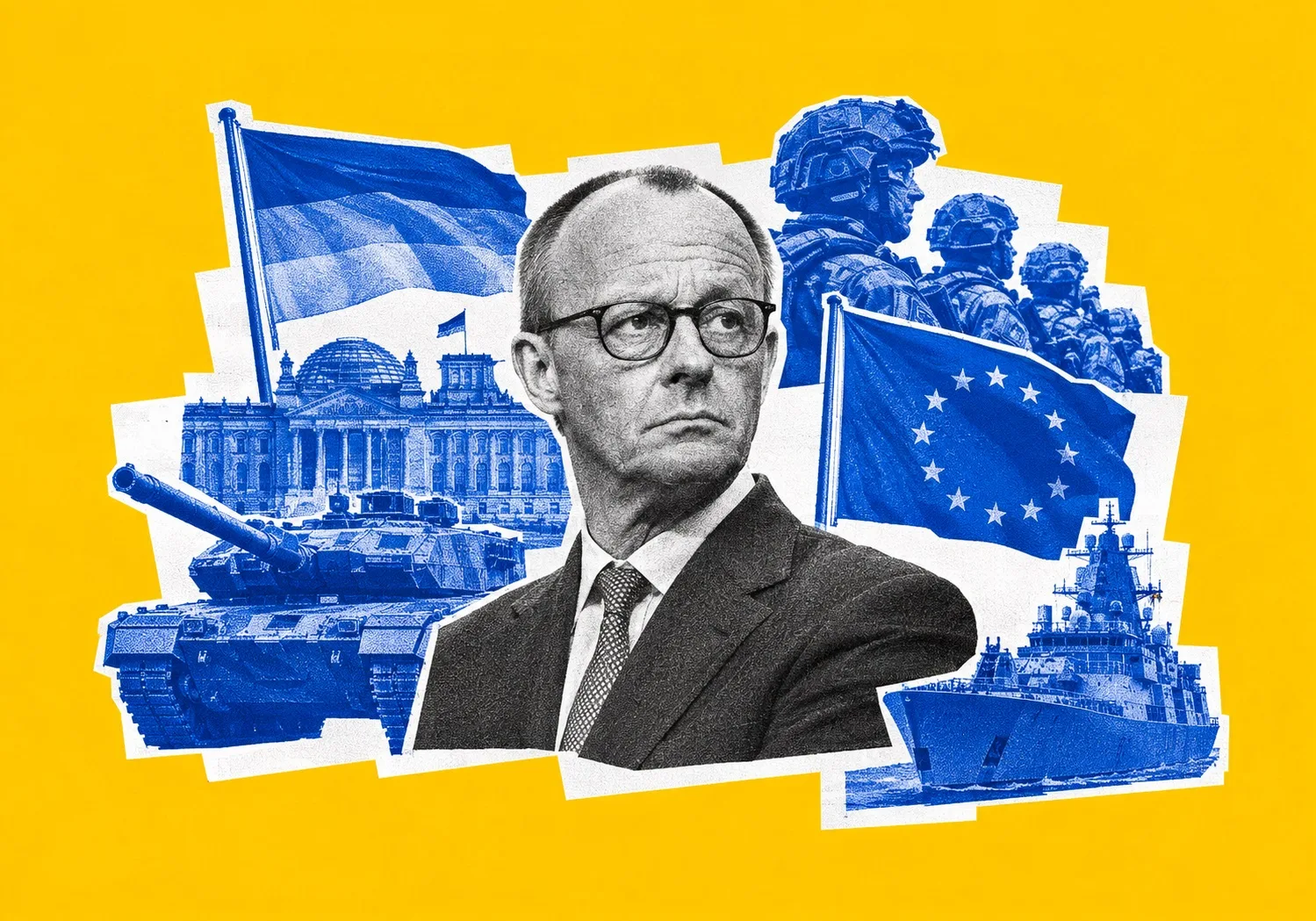
Berlin has approved a record €109.7bn defence budget for 2027 — a 33% increase that signals Europe’s biggest rearmament campaign since the Cold War. As Germany targets 3.5% of GDP for military spending and converts car factories for defence production, its rapid rise is straining relations with France and reviving security concerns in Warsaw.
That combination is altering the balance inside Europe.
From fiscal restraint to permanent rearmament
The scale of Berlin's commitment is striking partly because it required Germany to move around one of the central constraints of its post-Cold War economic model.
The constitutional debt brake has traditionally limited federal borrowing, including the scope for sustained increases in public investment. In 2026, however, defence borrowing was exempted from those constraints. The result is a funding mechanism capable of supporting a long-term expansion rather than a temporary increase in military expenditure.
Germany's defence spending rose to €86.5 billion in 2025, including its core budget and special fund, after €19.1 billion was spent on procurement in 2024. The 2027 figure now represents another major step upwards, with €55.8 billion earmarked directly for procurement. By 2029, Berlin is targeting €162.9 billion a year.
The political decision is therefore not simply about replacing ageing equipment. It creates a sustained state-backed market for German military production.
That is already changing the industrial landscape.
The factory floor is becoming part of defence policy
Volkswagen's decision to sell its Osnabrück plant for conversion into a defence facility is perhaps the clearest symbol of the shift. The site is intended to produce air-defence components, including components for the Iron Dome system.
For decades, German industrial strength was associated with civilian manufacturing: cars, machinery and other high-value exports. Now some of that capacity is being redirected towards military production.

The move comes as Germany's automotive industry faces structural pressure of its own. Defence offers manufacturers an alternative source of long-term, state-backed demand at a time when traditional industrial models are under strain.
Mercedes-Benz chief executive Ola Källenius said in May that the company was prepared to enter arms production if the economics made sense. By September, Volkswagen had moved from the possibility of military production to an actual industrial conversion.
Rheinmetall's expansion points in the same direction. Its Arminius programme envisages up to 5,500 Boxer armoured personnel carriers, with €12.4 billion in firm allocations expected through the end of 2026 and potential spending reaching €77 billion by 2040.
The numbers indicate that Germany's rearmament is becoming an industrial strategy as well as a military one.
Around two-thirds of German defence contracts in 2025–26 went to domestic companies. A further share supports domestic licensed production of foreign systems, while roughly 10 per cent of spending went directly outside Europe. Procurement is therefore strengthening German manufacturing even when the underlying technology is not European.
That creates an important tension: Berlin is building European military capacity, but not necessarily through European industrial cooperation.
The Franco-German model breaks down
The clearest evidence of that tension came in June, when Germany formally abandoned the Future Combat Air System after nine years of negotiations with France and Spain.
FCAS was meant to become one of Europe's defining defence-industrial projects: a next-generation combat system intended to replace the Rafale and Eurofighter from 2040. Instead, disagreements between Dassault Aviation and Airbus over industrial leadership, intellectual property and work allocation proved impossible to resolve. Military requirements also diverged, with France prioritising carrier-based and nuclear-related capabilities while Germany focused on conventional land-based operations. A separate dispute divided engine manufacturers Safran and MTU Aero Engines.
The collapse matters because FCAS was more than a fighter programme.
For years, Franco-German cooperation offered a model in which Europe's two largest continental powers could combine French military and diplomatic weight with German economic and industrial strength. Defence cooperation was one of the mechanisms intended to turn that relationship into a broader European strategic capability.
FCAS exposed how difficult that model becomes when both countries are simultaneously trying to protect national industrial interests and define their own military priorities.
Germany is now pursuing procurement at a speed that makes national solutions more attractive. Its purchases include US-made F-35A aircraft and CH-47F Chinook helicopters, as well as Israel's Arrow 3 missile-defence system. These systems offer established capabilities without waiting for a European development programme to settle its industrial and political disputes.
For Berlin, that can fit a strategy centred on rebuilding military capacity quickly.
For Paris, it raises a different question: what is left of European strategic autonomy if Europe's largest military spenders increasingly buy critical capabilities from outside the EU?
Paris and Warsaw are responding differently
France has already begun adjusting to the new landscape. Following the FCAS collapse, Paris accelerated work on the Rafale F5 and opened talks with Sweden on next-generation fighter cooperation involving Safran.
French criticism of Germany's procurement choices is not confined to industrial competition. Officials have expressed concern that dependence on US and Israeli systems weakens Europe's ability to develop an autonomous defence industry.
The underlying dispute is therefore about the shape of European power. Germany is placing greater emphasis on rapidly available capabilities, NATO alignment and national procurement. France has stronger incentives to preserve European-controlled industrial capacity and strategic autonomy.
Warsaw faces a different calculation.
Poland supports a strong German defence role under a democratic government, according to Foreign Minister Radosław Sikorski, but has also warned about the implications of a rearmed Germany if the AfD gains greater political influence. President Karol Nawrocki has simultaneously revived Poland's demand for more than €1.3 trillion in Second World War reparations and called for the money to be directed towards the Polish armed forces and domestic defence industry.
Those positions bring history into a debate that Germany's military expansion might otherwise have been treated as purely strategic.
The concern in neighbouring states is not necessarily about German military power in isolation. It is about who will control that power over the longer term, and what political direction Germany itself may take.
The AfD's rising polling figures have intensified that question because the party advocates ending Germany's post-war culture of guilt and maintains a pro-Moscow foreign policy position. The more Germany invests in military capacity, the more consequential the question of future political control becomes.
Europe is gaining military capacity while losing industrial coherence
The paradox at the centre of Germany's rearmament is that it could strengthen Europe's ability to defend itself while simultaneously making common European defence policy harder to construct.
Berlin's spending surge gives the Bundeswehr resources on a scale unavailable during the years of fiscal restraint. German companies gain a substantial pipeline of defence contracts. Civilian industrial infrastructure is being adapted to military production.
Yet the collapse of FCAS shows the limits of turning national strength into shared European capability.
If France, Germany and other states increasingly prioritise separate procurement, Europe may end up with more weapons but fewer common programmes, fragmented industrial supply chains and competing national priorities. The alternative is not straightforward either: the FCAS experience demonstrates how difficult joint projects become when governments and companies cannot agree on industrial leadership, intellectual property or operational requirements.
Germany's reliance on American and Israeli systems adds another layer to the problem. These purchases can accelerate the rebuilding of military capability, while also weakening the economic case for developing equivalent European systems.
That leaves Europe facing a strategic contradiction. Its largest industrial economy is finally willing to spend at a level commensurate with the security environment, but the mechanisms through which that power was supposed to be integrated with its neighbours are becoming less reliable.
The most consequential change may therefore not be the €109.7 billion in Berlin's 2027 budget. It is the emergence of a German defence policy increasingly organised around national industrial capacity, national procurement and sovereign military planning - while France, Poland and other European states work out what that means for the balance of power around them.
Sources: WSJ, Poland News, Charter97