
France Accuses Elon Musk of Seeking to Influence European Democracy Ahead of 2027 Election

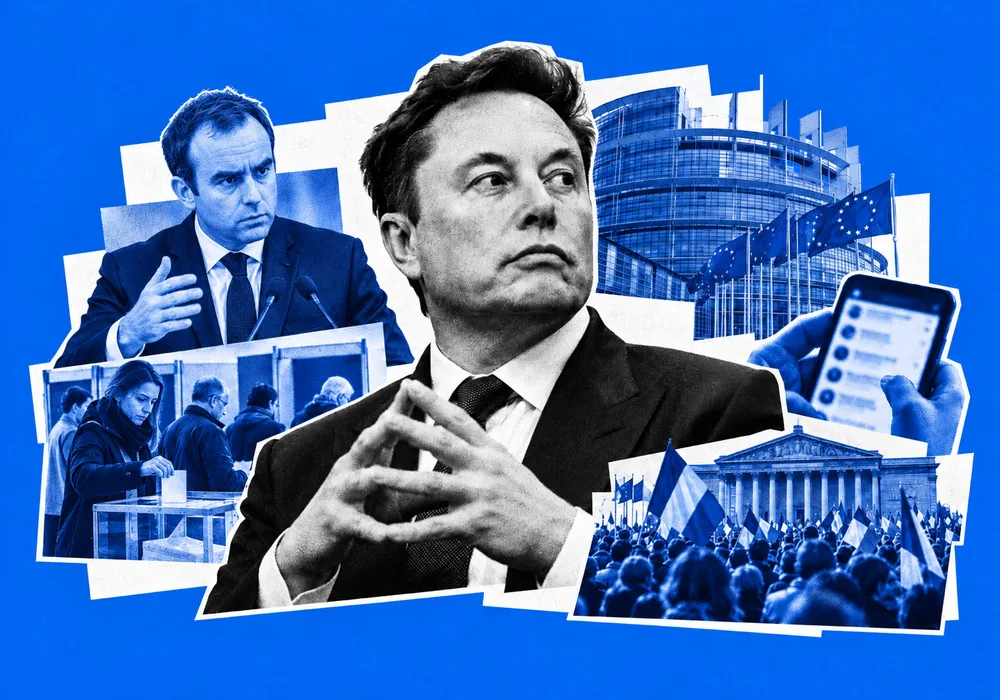
France’s foreign minister Jean-Noël Barrot has accused Elon Musk of using X to fuel online harassment and influence political debate across Europe. With France preparing for its 2027 presidential election, the allegations highlight growing concerns about foreign interference, disinformation and the political power of global technology platforms.
France has accused Elon Musk, the owner of social media platform X, of using its reach to influence political debate and undermine European democratic institutions ahead of the country’s 2027 presidential election. Foreign Minister Jean-Noël Barrot made the allegations during a conference organised by the Organisation for Economic Co-operation and Development (OECD), warning that online campaigns and polarising narratives were becoming increasingly powerful instruments of political influence.
Barrot accused Musk of launching what he described as massive online harassment campaigns against European leaders, arguing that the viral reach of X could be exploited to shape national debates. Musk had not responded to a request for comment at the time of publication. The allegations add to an increasingly contentious European debate over whether privately controlled digital platforms have acquired political influence that extends beyond the boundaries of individual countries.
The French minister placed the issue within a broader pattern of efforts to exploit divisions in democratic societies. He identified immigration, secularism and the Israeli-Palestinian conflict as issues used to intensify social tensions and deepen political polarisation. Barrot also pointed to alleged foreign influence operations involving Russia, China, Iran and supporters of the US Make America Great Again (MAGA) movement.
For Paris, the concern is not limited to the circulation of false information. The wider challenge is the ability of external actors to influence which issues dominate public debate, how political events are interpreted and which groups are portrayed as threats. When inflammatory narratives spread rapidly across social networks, they can shift the terms of political discussion even without changing the underlying facts.
France’s Election Becomes a Test of Digital Sovereignty
The accusations come as France enters an increasingly active period of political positioning ahead of the presidential election scheduled for 2027. President Emmanuel Macron cannot seek another consecutive term, leaving the country’s political parties to compete over his succession amid disputes over immigration, public services, national identity and France’s role in Europe. Far-right leader Marine Le Pen is among the central figures in the emerging contest, while the broader political landscape remains fragmented.
Musk has intervened in French political debates through his public statements. He recently commented on student protests in France, framing the unrest as a consequence of immigration rather than focusing on the protesters’ complaints about school conditions. US President Donald Trump also weighed in, describing the situation as the result of uncontrolled mass immigration and linking it to Islam. These interventions brought domestic French disputes into a wider transatlantic political confrontation.
Barrot also cited other alleged interference operations, including the creation of fake French social media accounts by an Israeli company to amplify divisions over the Israeli-Palestinian conflict, and activities attributed to Azerbaijani actors in New Caledonia. He warned that hostile narratives from Russia, China and Iran, as well as from sections of the MAGA movement, had exploited recent protests. These claims formed part of his broader argument that different actors can pursue similar destabilising effects even when their motivations and methods differ.
The French government’s position is that the country should not accept external pressure on its democratic debate, regardless of its origin. Barrot described the issue as a matter of national sovereignty, arguing that digital platforms and paid or commissioned influencers can provide outside actors with a means of amplifying political messages far beyond their original audiences.
A Wider European Problem
France’s concerns reflect a broader European struggle to establish how democratic institutions should respond to political manipulation online. The challenge is not confined to anonymous accounts or fabricated news stories. It also concerns the influence of prominent individuals who own major communication platforms, have substantial personal audiences and can use their accounts to promote particular political narratives.
The distinction between political expression and foreign interference is central to this debate. Public criticism of a government, support for a candidate or commentary on domestic protests does not in itself demonstrate an attempt to manipulate an election. Establishing interference requires evidence about the methods used, the actors involved and the nature of the operation. Barrot’s allegations against Musk are politically significant, but they should not be treated as an independently established finding that Musk has illegally interfered in an election.
France has also faced more conventional forms of suspected digital interference. In August, French authorities attributed disinformation operations targeting several prospective presidential candidates, including Gabriel Attal, Édouard Philippe and Raphaël Glucksmann, to pro-Russian networks. The campaigns involved fabricated reports, videos and material designed to resemble the output of established French media organisations. The incidents demonstrated how online operations can exploit public trust in journalism to give false claims the appearance of credible reporting.
The French government has been working on tougher measures against electoral interference. Proposals discussed in the summer included stricter penalties for disseminating fabricated content during election periods and improved coordination between political parties and the authorities responsible for detecting foreign digital operations. Turning these proposals into effective safeguards will require a balance between protecting elections and preserving freedom of expression.
The European Union faces a related regulatory question: how to ensure that digital platforms comply with rules intended to limit systemic risks, including the manipulation of public debate, without allowing governments to use the fight against disinformation as a pretext to suppress legitimate criticism. Enforcement must be based on transparent standards and evidence, rather than political disagreement with the views expressed on a platform.
The Limits of Countering Online Influence
The French case illustrates the difficulty of responding to online manipulation without inadvertently increasing its reach. Public accusations can expose suspicious activity and warn audiences about deceptive campaigns. At the same time, repeating inflammatory claims can give them a larger audience, including people who would otherwise never have encountered them.
Platforms such as X occupy an important position in this environment because they are used by politicians, journalists, public institutions and citizens to distribute information rapidly. Their influence does not mean that every controversial post represents coordinated interference, but it does make questions of platform governance and accountability increasingly consequential for democratic states.
For European governments, the task is twofold: identify and disrupt demonstrable foreign operations while maintaining the openness of political debate. That requires effective monitoring, transparent investigations, cooperation between national authorities and technology companies, and public access to reliable information. It also requires political leaders to distinguish documented manipulation from ordinary disagreement.
France’s approach ahead of the 2027 election could become an important test of how European democracies respond to these competing demands. The outcome will matter beyond the country itself, as governments across Europe confront the same problem: elections are national democratic processes, but the information environments in which voters make decisions are increasingly shaped by global platforms, cross-border networks and influential individuals operating outside national political systems.
Sources: French Ministry for Europe and Foreign Affairs, The Guardian