
Flydubai Pilots Brawl Mid-Air: Why Flight FZ1073 Diverted to Saudi Arabia

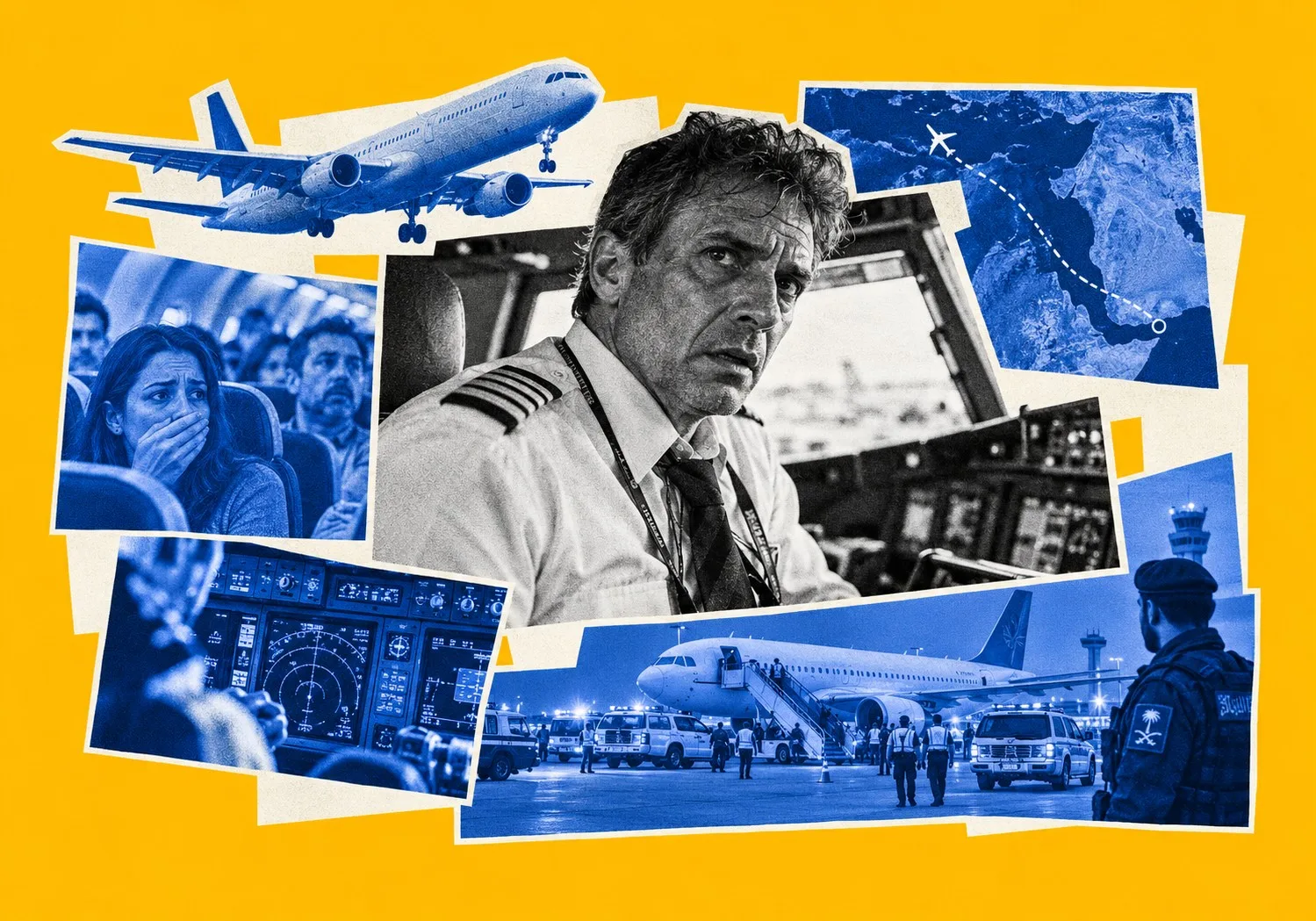
The captain and first officer on the Flydubai plane sustained injuries and were taken to the hospital, - the company that owns Tabuk airport in Saudi Arabia where the plane was diverted said on a statement. It does not state the cause of the injuries. The airport's air traffic control centre received a distress call from the Flydubai plane at 08:44 local time, the statement says.
When Flydubai Flight FZ1073 from Dubai to Tel Aviv suddenly diverted to Saudi Arabia on 30 September, military air defence systems across the Middle East went on high alert. The Boeing 737, carrying 170 passengers, had veered off course near Jordan and began broadcasting transponder code 7500—the emergency signal for an airborne hijacking.
Israeli fighter jets scrambled immediately and emergency cabinet meetings were convened in Tel Aviv by Prime Minister Benjamin Netanyahu and Chief of General Staff Eyal Zamir.
An Israeli official said, is that one of pilots wanted to hijack the aircraft.

The crisis was caused by a violent cockpit brawl between the aircraft's captain and first officer. Screams, blood on the flight controls, reports of a pocketknife, and a sharp altitude drop followed before off-duty pilots and passengers managed to barge in, restrain the crew, and force an emergency landing at Tabuk Airport.
For decades, commercial aviation operated on the comfortable assumption that strict operational protocols, flight-deck keypads, and basic workplace professionalism would keep personal disputes out of the cockpit. That assumption is dead.
What happened over the Jordanian desert shows how quickly an unmanaged internal conflict between flight crew members can dismantle post-9/11 safety tech, turn a routine passenger flight into a mid-air nightmare, and nearly trick national militaries into shooting down a commercial airliner carrying 170 civilians.
Chaos in Jordanian Airspace
It started as a routine late-afternoon run over the border zone where Jordan, Saudi Arabia, and Israel meet — a notoriously crowded stretch of sky. Flight FZ1073 was cruising comfortably on its standard scheduled route from Dubai International to Ben Gurion Airport when things inside the cockpit went downhill fast.
What actually triggered the argument between the two crew members remains under official investigation, but the dispute escalated into a full-scale physical fight that breached the flight deck door and left one of the pilots unconscious.
As the two men fought over the flight controls, the aircraft underwent sudden, chaotic altitude changes, plunging several thousand feet before the 170 passengers in the cabin realized what was actually happening behind the closed door.
False Hijack Alert Over the Levant
During the physical struggle across the central console, someone hit the aircraft’s transponder switches. First came code 7700, the standard ping for a general airframe or medical emergency.
Moments later, the transponder toggled to code 7500—the universal aviation distress signal for unlawful interference and hijacking—before flipping back to 7700.
If you are an air traffic controller or an air defence officer monitoring radar screens in Tel Aviv or Amman, code 7500 is the ultimate red line. It means hostile actors have taken control of a commercial jetliner by force. Naturally, military alarms sounded instantly.
In-Flight Restraint and Emergency Descent
The Israeli Air Force scrambled fighter interceptors to head off the approaching Boeing 737, preparing for a worst-case counter-terrorism scenario over Israeli territory — or at least, that is how commanders in Tel Aviv were reading the radar telemetry at five o'clock that afternoon.
Meanwhile, inside the cabin of FZ1073, the situation was only brought under control because two off-duty commercial pilots travelling as regular passengers in civilian clothes noticed the erratic movements, teamed up with the cabin crew, and forced their way into the cockpit to pin down the combative crew members.
With one pilot unconscious and the other restrained, the off-duty aviators stabilized the controls and initiated an emergency descent toward the nearest viable runway across the border in Saudi Arabia.
The Failure of Automated Crew Pairing
Forget about mechanical failure or a breach of airport perimeter security for a moment; the collapse happened in the HR office long before the plane ever left the gate in Dubai.
Gulf carriers like Flydubai rely massively on international flight crews, recruiting thousands of pilots from around the world to sustain their massive post-pandemic route expansions.
In most modern airlines, crew pairing is handled almost entirely by automated rostering algorithms. These software systems match captains and first officers based on strict regulatory parameters: legally mandated rest hours, monthly flight-time limits, simulator currency checks, and aircraft type ratings.
Algorithms do not monitor interpersonal dynamics or underlying workplace psychological tensions. The global aviation industry simply assumed that professional discipline, strict standard operating procedures, and corporate codes of conduct would act as an impenetrable firewall against workplace disputes or personal breakdowns. Truth be told, that logic looks remarkably naive today.
The Flaw in Post-9/11 Cockpit Security
The entire post-9/11 safety setup — armored Kevlar doors, biometric keypads, strict cabin-access rules, and deadbolts — was installed worldwide to stop passengers or terrorists from entering the flight deck.
Flight FZ1073 flipped that security logic on its head. When the active threat is sitting inside the captain's seat, those same heavy armoured doors suddenly become a deadly barrier that prevents cabin crew and off-duty staff from stepping in to save the aircraft before it hits the ground.
It is an operational nightmare that nobody in the C-suite at major airlines really wanted to talk about until blood was literally splattered across a control yoke over Jordan.
Pragmatism at Tabuk Airport
Curiously, while the crisis in the air highlighted terrifying gaps in airline crew management, the emergency response on the ground at Tabuk Airport revealed a surprisingly pragmatic dynamic.
Saudi Arabia and Israel do not share formal diplomatic relations — mind you, they don't even have official embassies. Yet, ever since the 2020 Abraham Accords opened up regional overflight rights, commercial flights connecting Israel with the UAE have used Saudi air corridors as a matter of daily routine.
Landing an aircraft carrying 170 passengers, mostly Israeli citizens, on Saudi soil during an active regional crisis had all the ingredients for a massive diplomatic gridlock. Had bureaucracy taken over, passengers could have been stuck in an administrative limbo for days while diplomats squabbled over clearance permits.
Instead, Saudi civil aviation officials, regional security teams, and airport authorities at Tabuk handled the incoming emergency landing with quiet, clinical professionalism.
Cross-Border Crisis Coordination
They secured the Boeing 737 on the tarmac, immediately removed both wounded pilots into custody for medical treatment and formal interrogation, and kept the passengers safely accommodated inside the aircraft.
In Tel Aviv, the Prime Minister’s Office issued a rapid public statement clarifying that the diversion was an internal crew incident rather than a hostile hijacking, while Flydubai dispatched a replacement aircraft from Dubai to Tabuk to pick up the stranded passengers and complete their journey to Ben Gurion Airport.
Practical civil aviation infrastructure simply overruled diplomatic posturing when it mattered most.
Overhauling Crew Oversight and Cockpit Protocols
This incident will force the International Civil Aviation Organization, national aviation authorities, and international carriers to address deeply uncomfortable questions about how airlines vet and manage their human assets.
Flydubai and its regional competitors face immediate regulatory pressure to overhaul their human resources screening, psychological health monitoring, and crew-pairing protocols. It is no longer enough to check if a pilot has passed an annual physical exam and flight simulator check.
Airlines will almost certainly have to introduce stricter psychological and interpersonal compatibility evaluations into their scheduling systems to ensure high-stress cockpits maintain absolute operational harmony.
Furthermore, regulators must address the dangerous vulnerability of transponder misuse, where a physical struggle inside the cockpit can accidentally trigger national air defence scrambles.
As air accident investigators in Tabuk and Dubai finish collecting telemetry data and cabin voice recordings from Flight FZ1073, the broader lesson for global commercial aviation is obvious enough: workplace security protocols can no longer ignore the psychological risks sitting directly behind the flight controls.
Sources: BBC, France24, Euronews, The Jerusalem Post