
Europe Tests Integrated Technology to Destroy Persistent PFAS Contamination

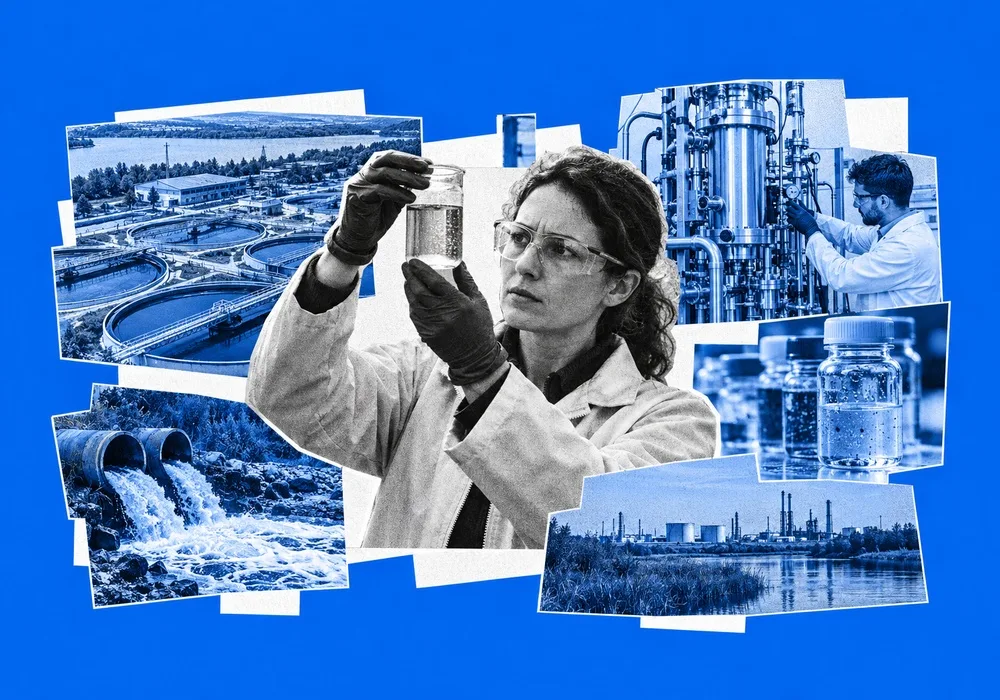
A new EU-backed project led by IBA will test an integrated approach to destroying persistent PFAS contamination in wastewater, soil and industrial waste, combining electron-beam, thermal and biological technologies with the aim of developing a scalable treatment model in Belgium.
A Belgian-led European project will test an integrated approach to treating so-called “forever chemicals”, bringing together technologies designed to concentrate, destroy and neutralise PFAS in contaminated water, soil and industrial waste.
The four-year LIFEDESTINY project, coordinated by Belgian particle accelerator specialist IBA, received EU support under the LIFE programme. It will run from September 2026 to August 2030, with total eligible costs of €4.43 million and a maximum EU grant of €2.65 million, covering 60% of the project budget.
Moving beyond containment
Per- and polyfluoroalkyl substances (PFAS) are a large group of highly persistent chemicals used in numerous industrial and consumer applications. Their resistance to degradation allows them to remain in soil, water and ecosystems for long periods, creating a growing remediation challenge for European industry and public authorities.
Existing approaches frequently rely on containing contaminated material, sending it to landfill or using high-temperature treatment. LIFEDESTINY is instead designed around a complete treatment chain intended to separate PFAS from contaminated materials, concentrate them, destroy the compounds, validate the treatment results and neutralise remaining residues.
The project will work with several types of contaminated material, including industrial wastewater, polluted soil, sludge and spent granular activated carbon. The consortium will test whether different technologies can be combined into a process that is scalable and less dependent on long-term containment or disposal.
Electron beams and thermal treatment
IBA will contribute electron-beam technology based on its Rhodotron accelerator. The company will investigate the use of high-power electron beams to destroy PFAS in contaminated liquid and solid waste streams, extending technology traditionally associated with particle acceleration and industrial applications into environmental remediation.
The project will combine this approach with several other technologies. Haemers Technologies will use its Krysalis thermal-desorption process to treat contaminated soils and sludges, while Novobiom will develop biosurfactant-based methods to extract and concentrate PFAS before destruction.
CEBEDEAU will work on concentrating PFAS from industrial wastewater and validating treatment performance and the safety of resulting residues. Carmeuse Europe will focus on neutralising fluoride-containing effluents and examining whether treated by-products can be reused.
DEME Environnement and BESIX Environment will contribute contaminated waste streams, remediation expertise and process-integration capabilities, including work needed to move the technologies towards larger-scale operation. District Cleantech will support stakeholder engagement and dissemination as the project develops its pathway towards potential industrial deployment.
From demonstration to industrial deployment
The significance of LIFEDESTINY lies in its attempt to connect technologies that are often developed or deployed separately. Rather than focusing only on removing PFAS from one environmental medium, the consortium is testing a chain that begins with contaminated material and ends with destruction, residue treatment and potential reuse.
The project is intended to assess whether the combined system can reduce energy consumption, carbon emissions and hazardous residues compared with conventional treatment routes. These claims will need to be demonstrated during the project rather than assumed from the individual technologies.
The longer-term objective is to establish the technical and operational basis for a full-scale PFAS treatment centre or hub in Belgium. If the demonstration phase is successful, such infrastructure could provide a model for treating different categories of contaminated material within a single industrial system.
Part of a wider European PFAS research effort
LIFEDESTINY is also part of a broader expansion of European research into PFAS removal and destruction. Earlier in September, IBA joined PFAROS, a European initiative involving 91 partners from industry, academia, healthcare, regulators and civil society. That project focuses specifically on reducing PFAS emissions and exposure across healthcare and pharmaceutical value chains, including waste management.
Another EU-backed project, REMEDYOS, launched in June 2026, is exploring biological and nature-based approaches to PFAS-contaminated sites, combining microbial remediation, phytoremediation and digital tools. The European Commission’s project database describes PFAS and other persistent pollutants as major environmental challenges and notes the difficulty of addressing complex contaminated sites with conventional remediation technologies.
Together, these initiatives indicate a broader shift in European environmental technology: from managing persistent contamination after it occurs towards developing methods capable of removing and permanently degrading pollutants.
For LIFEDESTINY, the immediate objective is narrower — demonstrating whether its combination of concentration, destruction and residue treatment technologies works under practical conditions. Its longer-term relevance will depend on whether the approach can be scaled economically while meeting environmental and regulatory requirements.
Sources: The Manila Times, IBA