
EU Urges US to Lift Palestinian Visa Ban

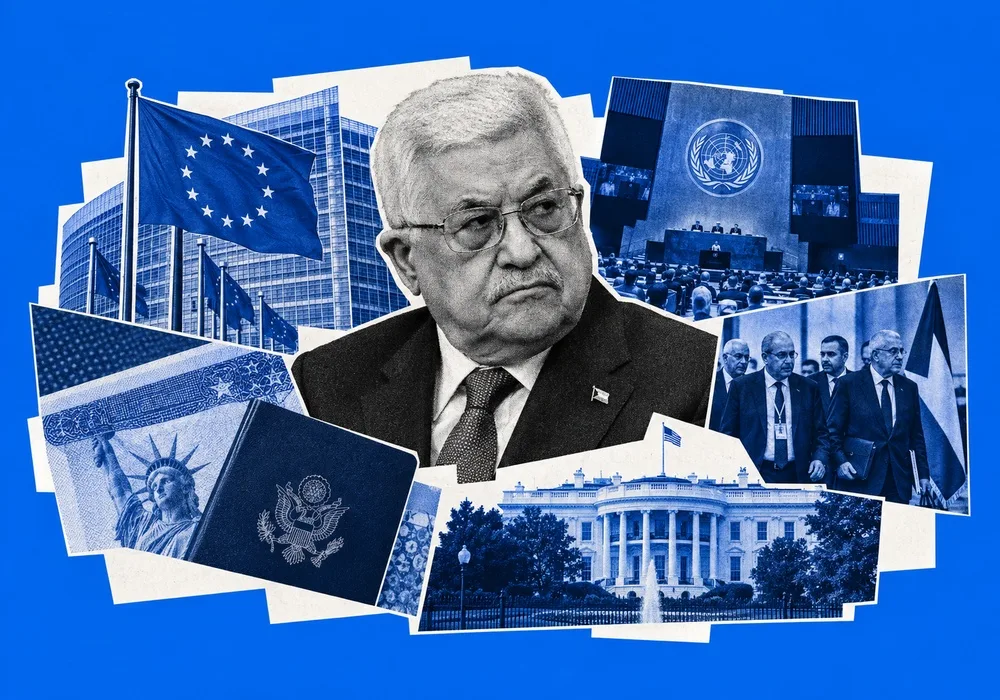
The EU has urged the US to reconsider its decision to deny visas to Palestinian officials ahead of the 81st UN General Assembly. Washington has extended the restrictions for a second year, while the UN has created a mechanism allowing Mahmoud Abbas to address the assembly by pre-recorded video.
The European Union has urged the United States to reconsider its decision to deny entry visas to members of the Palestinian delegation seeking to attend the 81st session of the UN General Assembly in New York. The EU said it regretted the extension of the restrictions for a second consecutive year and pointed to the United States’ obligations as the host country of the UN headquarters.
The dispute comes days before the high-level general debate of the General Assembly begins on 22 September. The US decision means that Palestinian President Mahmoud Abbas and other senior Palestinian officials will not be able to travel to New York for the session in person, although the UN has established an alternative format allowing Abbas to address the assembly by pre-recorded video.
Washington extends restrictions for a second year
The US State Department announced on 17 September that it was extending visa restrictions affecting members of the Palestine Liberation Organization and officials of the Palestinian Authority. Abbas is among those barred from travelling to the United States for the UN gathering. The decision effectively extends measures already imposed ahead of last year’s General Assembly.
Washington has justified the restrictions by arguing that the Palestinian leadership has failed to meet commitments required under US law and has continued actions that the administration considers inconsistent with the peace process. The State Department specifically cited Palestinian efforts to internationalise the Israeli-Palestinian issue through international institutions, including the International Criminal Court and the International Court of Justice.
The US has also criticised policies and actions by the Palestinian leadership that it says undermine the prospects for a negotiated settlement. The restrictions therefore form part of a broader US approach in which access to American territory is being used as a foreign-policy instrument in relation to the Palestinian leadership.
For Washington, the issue is not simply attendance at the UN General Assembly. The administration has framed the restrictions as a response to what it regards as Palestinian actions that undermine US diplomatic objectives and the prospects for a negotiated Israeli-Palestinian settlement.
EU points to US obligations as UN host
The European response focuses on a different aspect of the dispute. In its statement on 19 September, the EU said it regretted the decision to extend the visa denial for a second year and urged Washington to reconsider it. The EU also referred to the United States’ obligations as the host country of the UN headquarters.
The issue is linked to the 1947 Headquarters Agreement between the United Nations and the United States, which establishes the legal framework governing the organisation’s headquarters in New York and access to it by representatives participating in UN activities.
This creates a tension between two sets of considerations. The US maintains that it has sovereign authority over entry into its territory and can impose immigration restrictions based on foreign-policy and security considerations. The UN and countries challenging the decision emphasise the need to ensure that representatives entitled to participate in UN proceedings can reach the organisation’s headquarters.
The disagreement is therefore broader than the bilateral relationship between Washington and the Palestinian Authority. It raises questions about how the host country’s immigration powers interact with its obligations towards the UN and its member and observer delegations.
UN creates alternative route for Abbas
The visa restrictions did not prevent the Palestinian leadership from participating in the General Assembly altogether. On 17 September, the General Assembly adopted a decision allowing Abbas to address the upcoming high-level debate through a pre-recorded video message.
The measure was approved by 152 countries, while three voted against and four abstained. It also provides a mechanism for other senior Palestinian officials to participate remotely in relevant UN meetings when they cannot travel to New York because of the US restrictions.
The arrangement is significant because it was created specifically in response to the inability of the Palestinian leadership to participate in person. Rather than excluding the Palestinian delegation from the proceedings, the General Assembly has sought to preserve its participation through remote formats.
At the same time, the arrangement does not remove the underlying dispute. Physical participation in UN diplomacy remains materially different from delivering a pre-recorded address, particularly during a week when heads of state, government ministers and senior diplomats hold bilateral meetings and negotiations on the margins of the General Assembly.
The dispute repeats last year’s confrontation
The current controversy follows an almost identical dispute in 2025. The US also prevented Abbas and other Palestinian officials from travelling to New York for the General Assembly, prompting the UN to create an alternative mechanism for his participation.
The repetition is significant because the issue has now moved from an exceptional diplomatic confrontation to a recurring problem surrounding the annual UN gathering. Palestinian officials are again unable to attend in person while the General Assembly has once again been required to establish a workaround.
The precedent also means that the disagreement is becoming institutionalised. Each year, the US decision on Palestinian visas has the potential to become a separate dispute between Washington, the UN and governments supporting Palestinian participation.
Guterres also objects to the restrictions
UN Secretary-General António Guterres has expressed deep concern over the US decision and called for Washington to fulfil its obligations as the host country of the UN headquarters. The UN chief’s position broadly aligns with the European argument that the Palestinian delegation should be able to participate fully in the General Assembly.
The dispute is particularly sensitive because the General Assembly remains one of the main international platforms where the Palestinian leadership can address governments from around the world. Preventing senior Palestinian officials from attending in person therefore affects not only their physical presence in New York but also their ability to conduct diplomacy on the margins of the UN session.
The restrictions do not, however, prevent the existing Palestinian mission to the UN from continuing its work in New York. The immediate issue concerns senior officials who require permission to enter the United States in order to attend the high-level meetings.
The decision comes amid an intense diplomatic week
The timing of the dispute puts it directly into the broader diplomatic agenda of the 81st General Assembly. The Palestinian question is expected to remain one of the prominent issues during the high-level week, alongside wider discussions on the Middle East, international law and the future of the multilateral system.
The EU is preparing an extensive diplomatic programme in New York. EU foreign policy chief Kaja Kallas is due to participate in discussions surrounding the UN General Assembly, while the bloc is also working with international partners on initiatives linked to the implementation of a two-state solution.
This fits into a broader European effort to reinforce multilateral institutions. Earlier this month, EU foreign ministers adopted a declaration reaffirming support for effective multilateralism and a stronger United Nations, while the EU delegation in New York has repeatedly stressed the importance of the UN Charter and international law.
The Palestinian visa dispute therefore arrives at a moment when Brussels is attempting to preserve a stronger European role within the multilateral system while managing increasingly visible differences with Washington over international institutions.
A wider US-European divergence
The disagreement highlights a broader difference between the US and European approaches to the Palestinian issue and to international institutions.
Washington has used visa restrictions to put pressure on the Palestinian leadership over policies and international legal initiatives that the US considers incompatible with its diplomatic objectives. The European position instead emphasises continued participation in UN processes and the functioning of international institutions.
This does not mean that EU governments share identical positions on every aspect of the Israeli-Palestinian issue. However, the bloc's collective response to the visa decision reflects its stated support for multilateral diplomacy and the ability of representatives to participate in UN proceedings.
The contrast could become more visible during the General Assembly, where European governments will have to navigate relations with both Washington and the wider group of countries supporting Palestinian participation.
For the Palestinians, the immediate consequence is a diplomatic downgrade from physical participation by senior officials to remote representation. For the UN, the episode raises recurring questions about the relationship between the organisation's host country and the rights of delegations seeking to participate in its work.
For the EU, the dispute provides another test of its ability to defend multilateral institutions while maintaining cooperation with the United States. The immediate question of whether Washington will reconsider the visa decision remains unresolved, while the General Assembly is preparing to proceed with a Palestinian delegation whose most senior representatives will participate remotely.
Sources: European External Action Service, EEAS