
EU Unlocks €710 Million for Africa and Other Crisis Regions

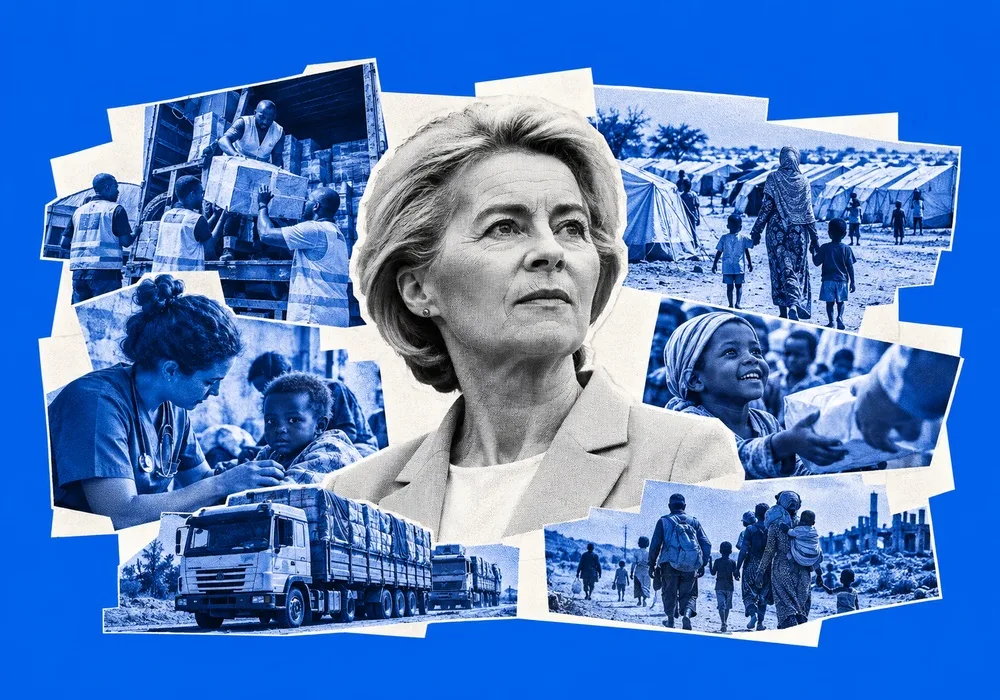
The European Union has announced almost €710 million in additional humanitarian support, with the largest share directed to Sub-Saharan Africa as Brussels expands assistance amid conflict, displacement, food insecurity and climate shocks.
The European Union has announced almost €710 million in additional humanitarian assistance for people affected by conflicts, natural disasters and other crises, with a significant share of the funding directed towards Sub-Saharan Africa. The package was announced by European Commission President Ursula von der Leyen during the UN General Assembly week in New York. It comes as humanitarian needs continue to expand while international aid budgets face increasing pressure.
Around €380 million of the new funding will support migration-related measures in Sub-Saharan Africa. The money is intended to assist vulnerable migrants, people affected by displacement and communities hosting displaced populations, as well as support voluntary return and reintegration programmes. A further €97 million will address humanitarian needs linked to conflict, food insecurity, malnutrition and climate-related shocks across several African regions.
The Sahel remains one of the main areas of concern for European humanitarian policy. Millions of people across Burkina Faso, Chad, Mali, Mauritania and Niger require humanitarian assistance, while prolonged insecurity has forced millions from their homes. The EU has allocated more than €150 million in humanitarian funding to the Sahel in 2026, alongside broader European programmes addressing food security, resilience and regional stability.
Sudan represents another major component of the humanitarian crisis in Africa. The war has generated mass internal displacement and a large refugee population in neighbouring countries, placing additional pressure on states already struggling with limited resources. The EU has allocated more than €160 million in direct humanitarian assistance to Sudan for 2026, while its wider regional contribution exceeds €270 million.
The package also includes funding for health emergencies. The EU is supporting the response to the Ebola outbreak in the Democratic Republic of the Congo and neighbouring countries, as well as measures aimed at strengthening preparedness and healthcare capacity. Additional resources will be directed towards peace and stability initiatives in the Great Lakes region, where conflict, displacement and weak public services continue to reinforce one another.
The new funding is not limited to Africa. The Palestinian territories and Lebanon are set to receive €103 million in emergency humanitarian assistance, while Ukraine will receive €52 million for humanitarian support and emergency preparedness. These allocations come on top of the European Commission's initial €1.9 billion humanitarian aid budget for 2026, which already included substantial funding for Africa, the Middle East and Ukraine.
The European Commission's humanitarian operations cover emergency food and shelter, healthcare, protection, education and disaster preparedness. Funding is channelled through UN agencies, international organisations, NGOs and specialised humanitarian partners, allowing the EU to respond to crises where national authorities and local organisations lack sufficient capacity. Brussels has also increasingly linked emergency assistance with longer-term investments in health systems, food security and resilience.
The expansion comes against a wider deterioration in the global humanitarian financing environment. Conflicts, extreme weather, displacement and food insecurity are increasingly occurring simultaneously, creating crises that require sustained rather than short-term assistance. Africa is particularly exposed to this combination of pressures, with humanitarian emergencies in the Sahel, Sudan, the Great Lakes region and other parts of the continent continuing for years rather than months.
For the EU, humanitarian assistance is increasingly connected to its broader external engagement. Alongside emergency funding, Brussels is using programmes such as Global Gateway to strengthen healthcare, infrastructure and economic capacity in partner countries. The combination of humanitarian aid, migration-related support, health investment and assistance to displaced communities is becoming an increasingly important element of the EU's relationship with countries across Africa and its wider neighbourhood.
The new package therefore reinforces the EU's role as one of the main humanitarian donors at a time when demand for international assistance is rising across several regions simultaneously. Its distribution also illustrates how Brussels is balancing crises in Africa and the Middle East with continuing humanitarian needs in Ukraine and other parts of Europe's neighbourhood.
Sources: European Commission, EEAS