
EU Extends Russia Sanctions for Three Years While Dropping Billionaires Usmanov and Fridman

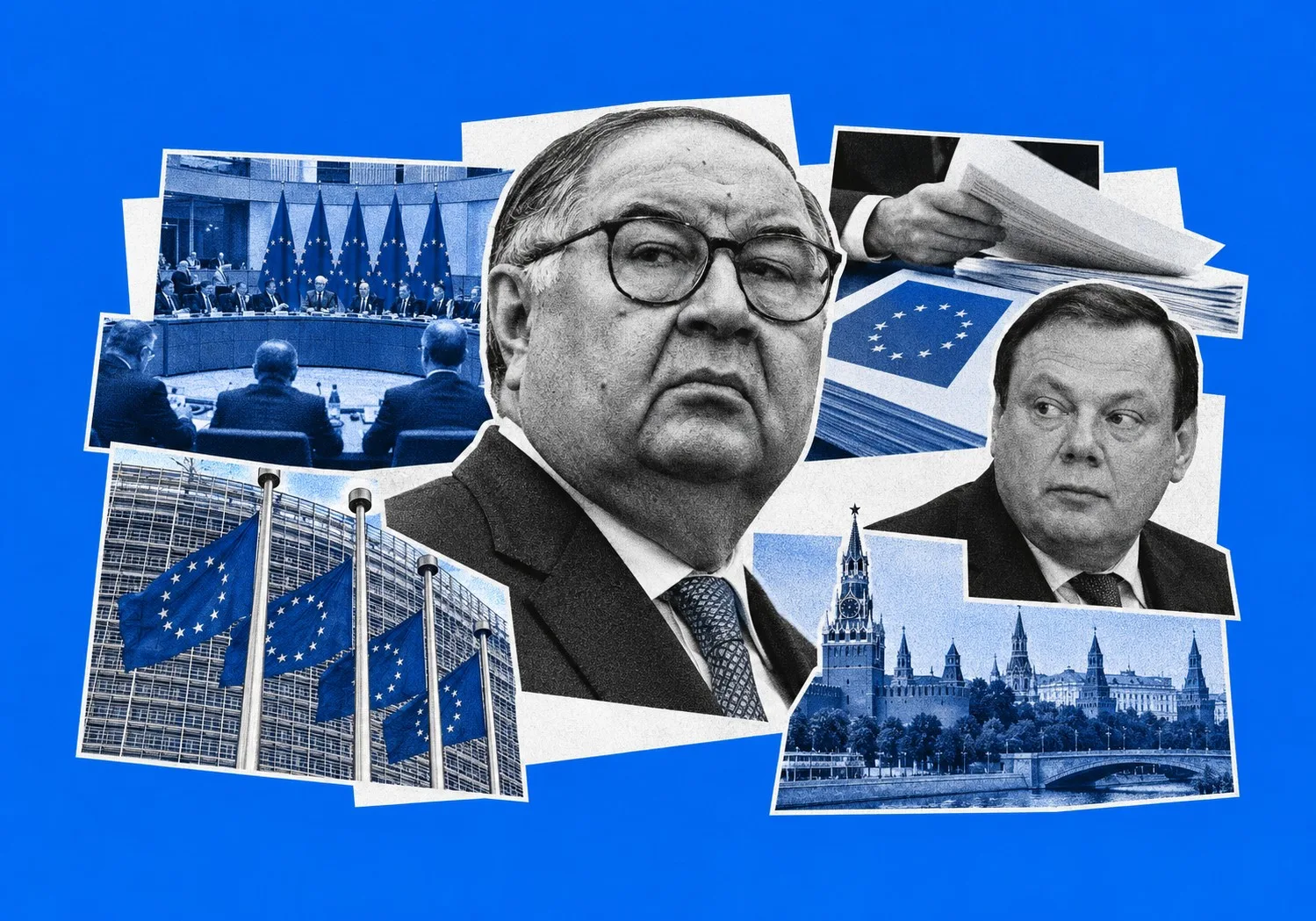
The European Union has agreed to renew its restrictive measures targeting roughly 3,000 Russian individuals and entities for a three-year term, breaking away from the fragile, semi-annual renewal cycle that has governed the bloc's economic policy since 2022. Finalized in Brussels after a grueling negotiation process, the compromise preserves the core architecture of Western deterrence against Moscow. Yet this long-term stability was secured through a high-stakes political trade-off. To clear the absolute unanimity threshold required for the package's survival, member states yielded to intense bilateral pressure, dropping prominent Russian billionaires Alisher Usmanov and Mikhail Fridman from the blacklist. Usmanov's net worth is estimated at $16.6 billion and Fridman's at $10 billion, according to the Bloomberg Billionaires Index. The agreement establishes a contentious precedent, trading immediate procedural unity and administrative relief for a partial erosion of the regime's moral and political authority.
For months, the impending expiration of the sanctions framework had triggered severe anxiety within European capitals, exposing deep structural vulnerabilities in how the union manages its foreign policy tools. Under the historical semi-annual review schedule established in the wake of the 2014 annexation of Crimea and massively expanded after the full-scale invasion, the restrictive measures functioned as a recurring institutional hazard. Every six months, the European Commission and member states were forced to navigate a diplomatic gauntlet where a single holdout could threaten to unravel the entire apparatus.

The requirement for absolute unanimity meant that populist skeptics, politically isolated governments, or capitals seeking leverage could routinely weaponize these review windows to extract domestic concessions, create internal political theater, or stall the bloc's collective agenda. Previous negotiation cycles, including tense debates earlier in the spring, had already laid bare the exhaustion infecting Western capitals. Slovakia and other skeptical factions had repeatedly signaled discontent, proving that the semi-annual clock was no longer a reliable mechanism for demonstrating strength.
By extending the duration to three years, institutional architects in Brussels have effectively insulated the economic containment strategy from calendar-driven paralysis. Bureaucrats and pro-sanctions member states have finally gained a stable planning horizon for roughly 3,000 listed targets, permanently removing the existential dread of a sudden sanctions collapse every spring and autumn. This administrative pivot reflects a profound adaptation in European governance: recognizing that the union can no longer sustain the immense political capital required for semi-annual unanimity battles, policymakers have chosen institutional entrenchment over agile, high-frequency political signaling.
Paris, Baku, and a Billionaire
Yet the anatomy of the September compromise reveals deep internal friction over how that administrative longevity was actually achieved. The negotiations stalled under a last-minute veto threat from Latvia, which pushed back aggressively against the growing erosion of punitive integrity before reluctantly stepping down to a bitter abstention. Behind closed doors, major Western capitals were advancing competing national agendas that ultimately punctured the bloc's collective resolve and subordinated pan-European objectives to domestic exigencies.
France spearheaded the push to delist metals tycoon Alisher Usmanov, linking the concession to vital national security objectives and bilateral leverage aimed at securing the release of French citizens imprisoned in Azerbaijan. For Paris, the geopolitical imperative of freeing its detained nationals superseded the abstract unity of the EU sanctions regime, turning pan-European foreign policy into an instrument of bilateral prisoner diplomacy.
The transaction was blunt. French diplomats utilized the unanimity requirement as direct leverage, making it clear that without Usmanov's removal, the broader package would face a Parisian roadblock. Other member states, exhausted by the endless cycle of renewals, acquiesced to the carve-out. It was a stark reminder that when national interests collide with supranational solidarity in European Council corridors, national sovereignty invariably wins the argument.
Luxembourg and the Sixteen-Billion-Dollar Claim
Simultaneously, Luxembourg demanded the removal of Mikhail Fridman, exposing another vulnerable flank in островах of the bloc's defenses. The grand duchy faced acute exposure to a sprawling sixteen-billion-dollar international arbitration claim launched by the billionaire against the state. For Luxembourgish authorities, defending the national budget from a catastrophic multi-billion-dollar legal liability made Fridman's delisting an urgent fiscal and legal necessity, overriding the broader moral imperatives of Western containment against the Russian elite.

The financial exposure was simply too large for a small state to absorb lightly. Rather than risk an international arbitration defeat that could drain public coffers, Luxembourg leveraged its vote during the final hours of the Brussels talks. The demand was clear: insulate the national treasury or face a veto.
For an institution built on the rule of law, the spectacle of a member state using its veto power to dodge a commercial lawsuit involving a blacklisted Russian oligarch was jarring. It laid bare the transactional nature of contemporary European integration. When economic survival or domestic legal liabilities intersect with geopolitical principles, principles are quietly shelved in the annexes of the council building.
The Latvian Abstention
The final hours of the negotiation hinged almost entirely on Riga. Latvia had positioned itself as the moral anchor of the eastern flank, arguing that carving out oligarchs would signal weakness to the Kremlin at the worst possible moment. Latvian diplomats fought a stubborn rearguard action against the proposed exemptions, demanding stricter enforcement and refusing to endorse what they viewed as a backroom dilution of the sanctions regime.
Yet the structural pressure from the Franco-Luxembourg axis, combined with quiet urgings from Brussels to avoid a total institutional collapse, proved insurmountable. Rather than execute a fatal veto that would have terminated the entire sanctions architecture overnight, Latvia stepped down to a reluctant abstention.
The compromise allowed the package to clear the absolute unanimity threshold, but it left a bitter taste across the Baltic states. The episode demonstrated that even frontline nations most exposed to Russian aggression can be out-negotiated and out-maneuvered when core Western member states decide that their own bilateral priorities override collective solidarity.
Kyiv's Uncompromising Warning
These targeted exemptions transformed the EU’s restrictive measures from an uncompromising moral instrument into a malleable currency for domestic legal protection and geostrategic horse-trading. The concessions triggered immediate political friction and profound alarm across the bloc's eastern flank. Ukrainian President Volodymyr Zelenskyy launched public appeals urging European capitals to keep both Usmanov and Fridman on the sanctions list, arguing that softening the line against elite figures closely tied to the Russian state undercuts the entire rationale of Western deterrence.
Zelenskyy’s intervention was direct and unsparing. In public statements directed at European capitals, Kyiv argued that every exception granted to a major oligarch sends a damaging signal of fatigue to Moscow. The argument resonated deeply in capitals like Tallinn, Vilnius, and Warsaw, where policymakers view the sanctions regime not merely as an economic tool, but as an existential line of defense.
Yet these appeals fell flat in the rooms where the actual deals were struck. For French and Luxembourgish negotiators, the immediate domestic dividends of securing released citizens and dodging arbitration claims outweighed Kyiv's long-term strategic warnings. The friction highlights an uncomfortable truth about contemporary European foreign policy: as coalition fatigue deepens, the price of collective continuity is increasingly paid in targeted exceptions that benefit well-resourced targets at the expense of unified enforcement.
A Two-Tier Reality
Financial Times and Politico observers have long charted the quiet exhaustion infecting Western coalition-building, and this agreement confirms that operational weariness has begun to outweigh ideological purity. The EU has successfully shielded its sanctions regime from the clock, but in doing so, it has codified a two-tier reality. Thousands of smaller entities remain trapped in prolonged legal purgatory, while systemic players equipped with high-level state backing or multi-billion-dollar legal threats can negotiate their way out of the net.
The consequences of this shift will extend far beyond the immediate fallout of the September negotiations. When enforcement is proven negotiable, the boundary between collective security and transactional diplomacy blurs. Law firms across Europe are already studying the mechanics of the Usmanov and Fridman carve-outs, looking for parallels that might apply to their own blacklisted clients.
Brussels has bought itself three years of administrative quiet, avoiding the messy semi-annual showdowns that previously rattled the commission. Yet the foundational principles of European sanctions have been quietly compromised, leaving the bloc's economic warfare architecture exposed to whoever wields enough leverage to force a carve-out.
Previously we wrote: EU Russia Sanctions in Crisis as France and Slovakia Block Oligarch Blacklist
Sources: Reuters, Euronews, Ukrainian Pravda