
Estonia Brings Drone Training Into Schools as Defence Skills Move Into Education

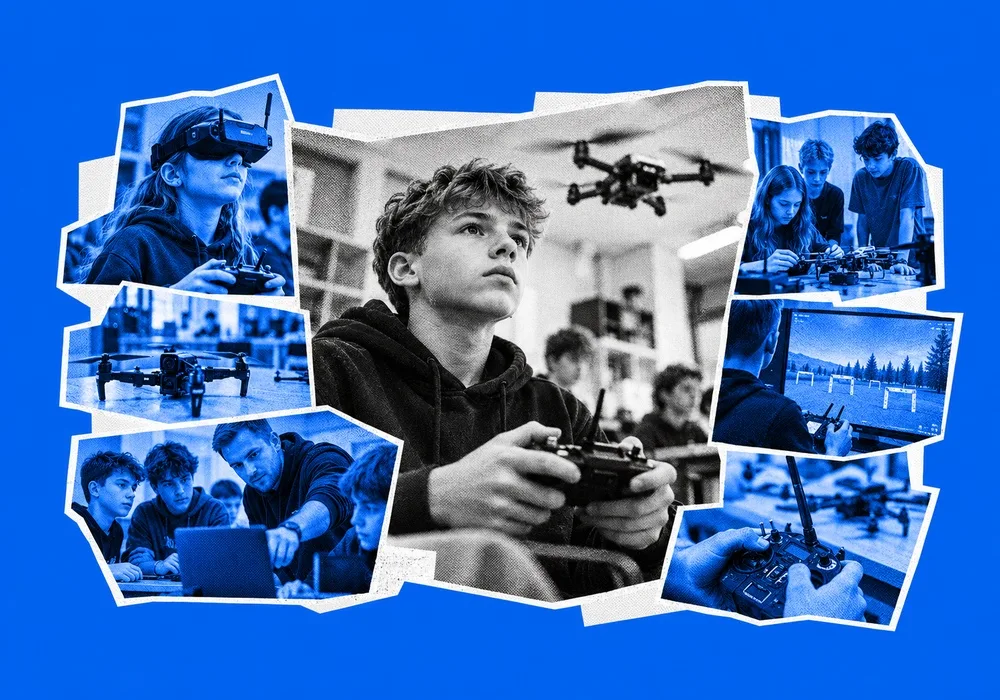
Estonia is introducing practical drone training into schools as part of a wider effort to combine technology education with national defence preparedness, with a pilot programme already operating in around 12 schools.
Estonia is bringing practical drone training into its schools as Tallinn increasingly treats unmanned systems as both a technological skill and a component of national defence preparedness. A pilot programme launched with the Estonian Defence Resources Agency and the Estonian Aviation Academy is already being implemented in around 12 schools across the country, linking drone education with the wider national defence curriculum.
From technology classes to defence education
The programme is built around an elective course called “Operation of Unmanned Aircraft”, developed jointly by the Estonian Defence Resources Agency and the Estonian Aviation Academy. The course combines 25 hours of online theoretical training with a 10-hour practical session, where students learn the fundamentals of operating unmanned aircraft, flight planning and safety procedures.
The Aviation Academy is now training more than 30 instructors who will subsequently deliver the practical component in schools. Their training includes work with drones and flight simulators, pre-flight briefings and the preparation of practical exercises suitable for beginners. The equipment used during the instructor training includes DJI Mini 4 Pro observation drones and DJI Neo FPV drones.
The programme is deliberately positioned beyond conventional technology education. Estonia's Defence Resources Agency describes drone training as an addition to national defence education, arguing that practical experience can help young people develop a broader understanding of defence, critical thinking and responsible use of drone technology. The skills are also seen as relevant both to the labour market and to future military service.
A response to the changing role of drones
The shift reflects how quickly unmanned systems have moved from a specialised military capability into a mainstream part of modern security and civilian technology. Estonia has been expanding drone-related training not only in secondary education but also in higher and vocational education, while the armed forces are incorporating unmanned systems into military training.
The experience of Russia's full-scale war against Ukraine has accelerated this transition across Europe. Drones have become central to reconnaissance, surveillance, logistics and battlefield operations, creating demand for personnel who understand not only how to operate them but also how to integrate them into wider systems.
Estonia's approach is therefore less about creating a generation of drone pilots in isolation and more about expanding the country's technological base. The Aviation Academy says the school programme is intended to develop engineering thinking, analytical skills and cooperation alongside practical drone competence.
Building a broader drone ecosystem
The school programme is emerging alongside a wider expansion of drone education in Estonia. In April, technology teachers were trained at the Estonian Aviation Academy to build, programme and fly drones, as schools faced growing student interest but limited access to equipment and qualified instructors. At the time, the Estonian Association of Engineers estimated that only around 10% of basic schools had the capacity to teach drone skills.
Tallinn has also moved to make drone education accessible to younger students. In September, the capital opened its first city-funded drone training classroom, with clubs for children aged 8–11 and 12–16. From October, schools can book drone education sessions there, including practical work with FPV drones and drone football, while students can also gain experience in programming, 3D modelling, physics and mathematics.
At the other end of the education system, Tallinn University of Applied Sciences is establishing a dedicated drone academy with laboratories for robotics, simulation and unmanned systems. Its leadership has argued that basic drone training should eventually be available to all students, reflecting the expanding use of drones in construction, agriculture, logistics and media as well as defence.
Defence preparedness starts before military service
The Estonian model points towards a broader change in how European states can approach defence preparedness. Instead of treating military skills as something acquired only after entering the armed forces, countries facing a more demanding security environment are increasingly developing relevant technical competencies within civilian education.
For Estonia, the logic is particularly direct. The country has expanded national defence education in schools while increasing defence spending and strengthening the role of the Defence League and youth organisations. Drone education adds a technological layer to that system, allowing students to acquire skills that have both civilian applications and potential relevance to national defence.
The programme also reflects a distinction that is becoming increasingly important across Europe: preparedness does not necessarily mean militarising everyday education. Estonia is presenting drone training simultaneously as technology education, safety training and part of national defence awareness. Its stated objective is to produce informed and responsible drone users while giving young people skills that can later be applied in engineering, industry, civilian services or military roles.
Estonia's experiment could therefore become a useful model for other European countries where drones are becoming a permanent feature of both economic activity and security planning. The key development is not simply that schoolchildren are learning to fly drones, but that unmanned systems are increasingly being treated as a basic technological competence that belongs across the education system.
Sources: Estonian Aviation Academy