
Elon Musk’s X Platform Re-Engineers the UK’s Political Right

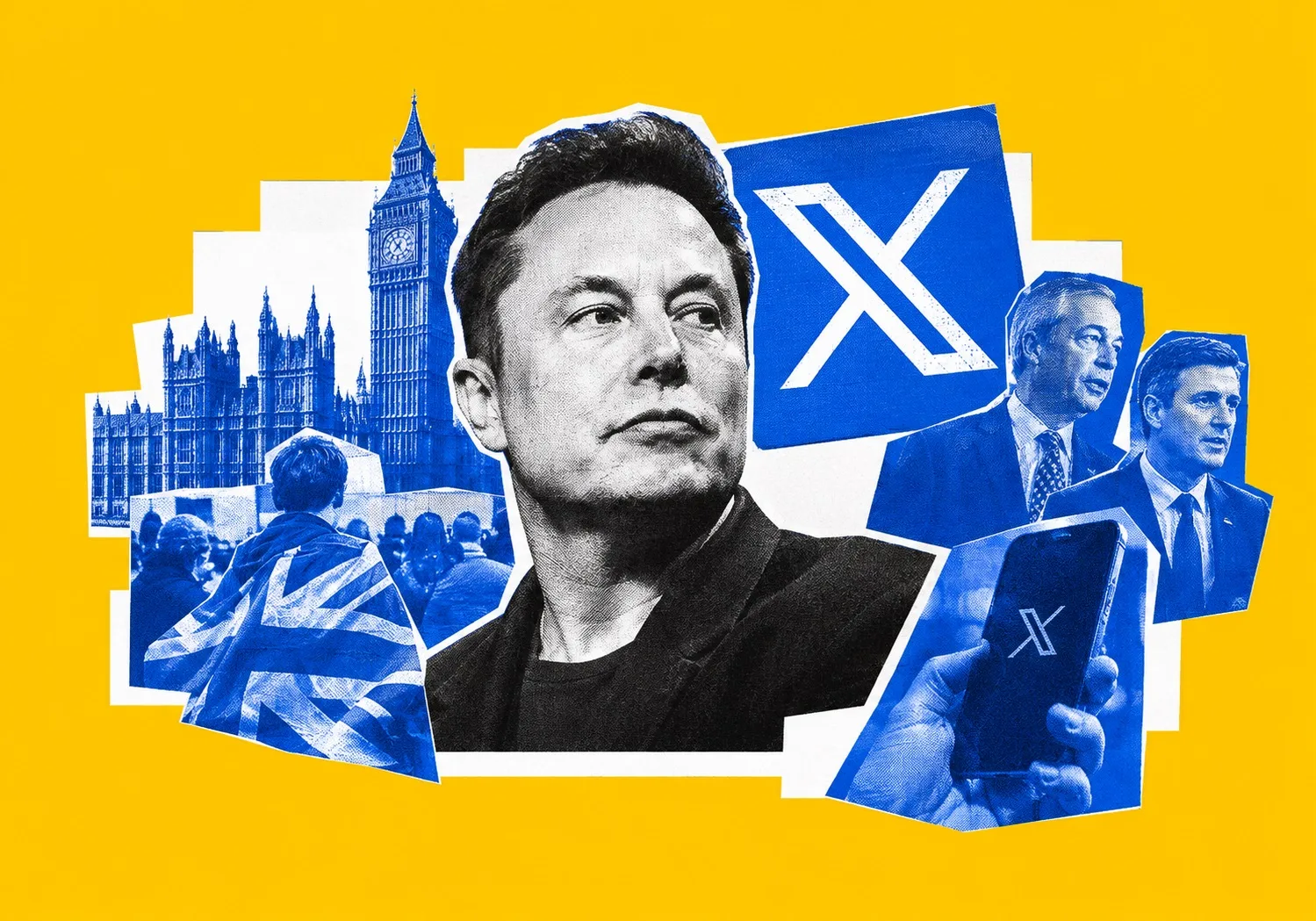
By shifting his support from Nigel Farage to Rupert Lowe’s Restore Britain, Elon Musk has demonstrated how private social media infrastructure can reshape a sovereign nation's political spectrum without transferring a single dollar in direct party donations. According to a Wall Street Journal analysis of 87,065 posts on X between January 2022 and August 2026, the UK attracted more sustained political attention from Musk than any other foreign country. Through algorithmic amplification and platform monetization, Musk is delivering fringe populist movements unprecedented national reach, bypassing traditional campaign finance laws and challenging the boundaries of foreign electoral interference.
In June 2026 alone, Musk posted more than 160 times about British politics and culture-war issues, accounting for more than a tenth of his posts that month. On two other occasions during the period studied, the number of posts about UK political topics passed 200 in a single month.
For British politics, the more interesting question is not why Musk dislikes Farage. It is what happens when the person choosing which politician to promote also owns the platform on which that promotion takes place.
A new political vehicle
Musk's break with Farage developed quickly.
After Donald Trump's re-election, Farage travelled to Florida to meet Musk and discuss a possible donation to Reform UK. Farage described the sum under discussion as potentially the largest foreign political donation in British history. No money was transferred.
The relationship deteriorated over Tommy Robinson, the far-right activist. Farage declined to endorse Robinson. In January 2025, Musk responded by saying Farage was not fit to lead Reform UK.
Within months, Rupert Lowe had left the party.
Lowe's departure followed an internal Reform dispute over allegations concerning the treatment of staff, bullying and threats against then-party chairman Zia Yusuf. Lowe denied the allegations and said the investigation was part of a politically motivated purge. In May 2025, prosecutors decided not to bring charges over the alleged threats, saying there was insufficient evidence for a conviction.
Lowe subsequently registered Restore Britain with the Electoral Commission.
Musk was already moving towards him. In a private message to former Lowe ally Ben Habib, he said he was ready to support a new party. He then publicly urged X users to join Restore Britain, describing Lowe as the politician who would "actually do it".
It was a striking intervention because Musk did not need to build Lowe's audience from scratch. He already controlled one of the world's largest political distribution networks.
What a retweet is worth
The effect can be seen in Lowe's X account.
Musk interacted with more than 100 of Lowe's posts during the period covered by the Wall Street Journal analysis. Posts that received a retweet or comment from Musk attracted, on average, more than twice as many likes as Lowe's posts that Musk did not boost.
There was another effect that is easier to overlook. Even Lowe's posts without direct Musk interaction subsequently performed much better than they had before Musk began promoting him. Their views and likes more than doubled compared with Lowe's earlier engagement levels.
That matters because political influence on social media does not end with the original post. Once an account becomes larger, each subsequent message starts from a different audience base.
The financial side of the system adds another layer. Lowe earned more than £105,000 through X's creator monetisation scheme after the 2024 general election. His 2026 activity generated an average of roughly £931 for each hour he spent posting.
This was not a political donation from Musk. It was platform revenue.
That distinction is central to the problem facing British regulators. Electoral law can identify a payment made to a political party much more easily than it can measure the value of millions of additional impressions, recommendations, reposts and interactions generated by the owner of a social network.
The political resource is no longer necessarily cash.
It can be attention.
Restore Britain does not need to be large
Restore Britain has positioned itself further to the right of Reform UK on immigration and several cultural issues.
Its "Reverse Mass Immigration" programme calls for the deportation of undocumented migrants, substantial cuts to legal migration and a policy described as "demographic security". Its programme also includes bans on burqas and Sharia courts, restrictions on halal and kosher slaughter, limits on foreign nationals' access to welfare and social housing, and a referendum on restoring the death penalty.
In August 2026, Lowe laid down five conditions for a possible electoral pact with Farage. They included mass deportations of illegal migrants, major reductions in legal migration, restrictions on religious practices, a referendum on capital punishment and a pledge to exclude former Conservative ministers from a future right-wing government.
The party does not need anything close to a national majority for such demands to matter.
Restore Britain was on 3 per cent in a YouGov poll conducted on September 13–14. Other polling cited in the briefing put it at 4–5 per cent. Yet the British electoral system gives small parties another way to acquire influence: they can take votes from a larger rival in constituencies where only a few points separate the main candidates.
The Makerfield by-election provided an example. Restore Britain won almost 7 per cent of the vote. Reform UK came second and Labour won the seat.
That does not establish a universal electoral pattern. It does show how even a relatively small party can affect the arithmetic of a constituency without coming close to winning it.
For Farage, the problem is particularly direct. Reform UK no longer has an uncontested claim on voters attracted to anti-establishment and anti-immigration politics. Musk has helped create another pole on that side of the political spectrum.
Asked to explain the difference between Reform UK and Restore Britain, Farage gave a remarkably concise answer: "Elon Musk."
When online politics spills into the street
Musk's British activity has also moved beyond electoral competition.
Through late 2025 and 2026, he repeatedly posted about immigration, crime and cultural conflicts. He said civil war in Britain was "inevitable", called for Parliament to be dissolved and addressed a Tommy Robinson rally in September 2025 with the words: "You either fight back or you die."
A later violent assault became the subject of false claims about the attacker's background. The misinformation fed far-right mobilisation, while calls to action from Musk and Robinson coincided with anti-immigration riots in Belfast. Migrant housing, vehicles and accommodation for asylum seekers were targeted.
British national security officials monitored Musk's posts alongside possible amplification by foreign state actors, including potential Russian alignment. British diplomats raised concerns with the US State Department after his rally speech. Advisers to Prime Minister Keir Starmer prepared briefing material on Musk's political intervention before meetings with Trump, although Starmer ultimately did not raise the subject.
The British government did not take formal enforcement action against Musk. Its counter-disinformation work has focused primarily on coordinated foreign networks rather than individual users.
That leaves a difficult distinction.
A single person may not constitute a foreign influence operation in the conventional sense. But when that person owns a major communications platform, has the ability to amplify political material at enormous scale and can generate revenue for the accounts he promotes, the boundary between individual speech and institutional power becomes much less clear.
Britain’s rules were written for a different kind of influence
British electoral law is built around identifiable political spending and donations. Musk's intervention exposes a category that does not fit comfortably into either.
There is no need for a cheque to arrive at Restore Britain's headquarters. Musk can promote Lowe directly to his audience. The platform can then distribute Lowe's material to people beyond Musk's own followers. Higher engagement can increase Lowe's visibility and, under X's monetisation system, his income.
Each part of that chain is different from a conventional campaign donation.
Together, they can have political consequences.
This is where the British case becomes relevant outside Britain. Governments can regulate political parties, donations and election spending within national borders. They have considerably less control over the global platforms through which voters increasingly encounter political information.
The problem is not unique to Musk or to Restore Britain. The same model could be used by another wealthy platform owner, in another country, to promote another political faction. The important asset would not necessarily be money transferred across a border. It would be control over the flow of attention.
For established political parties, that changes the nature of competition. For regulators, it creates a question that is considerably harder than tracking foreign donations: how do you put a value on political reach supplied by the owner of the infrastructure itself?
And for governments, there is a more uncomfortable problem. A national election can still be governed by national law while much of the political conversation surrounding it is shaped by a platform whose most influential decision-maker lives outside the country.
That is the gap Musk's role in Britain has brought into view.
Sources: WSJ, The Guardian, Restore Britain, Independent BMG