
Crisis at the Gates of Bordeaux: France Responds to Unprecedented Wildfires

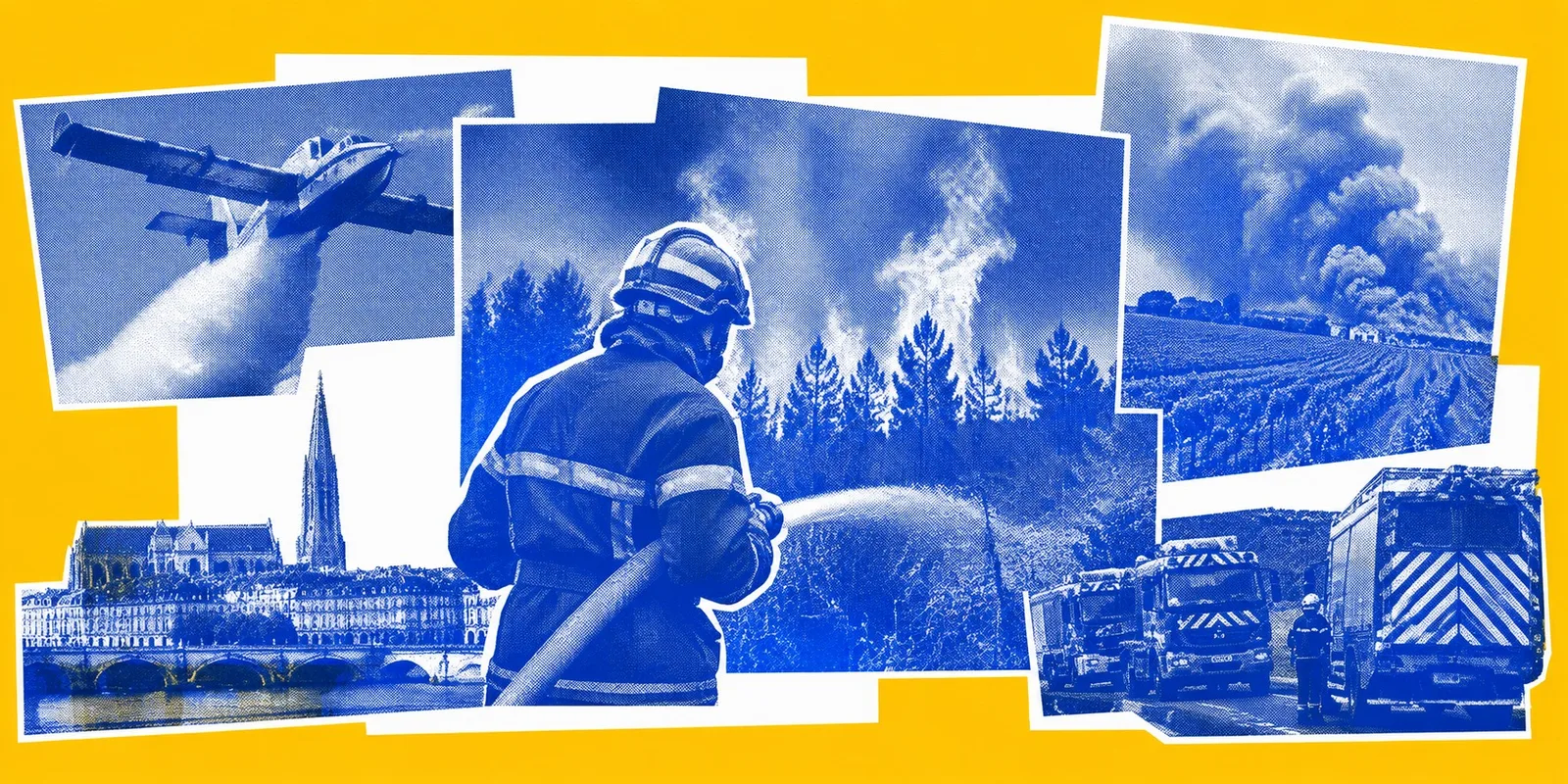
In the early morning hours of Monday, July 27, 2026, French President Emmanuel Macron convened an emergency inter-ministerial crisis meeting at the Ministry of the Interior in Paris. The urgent session was called to address the catastrophic series of wildfires raging across southwestern France, particularly within the Gironde department. With the situation labeled a national priority, the president canceled scheduled high-level luncheons and political engagements to lead a government-wide response alongside Interior Minister Laurent Nuñez and regional emergency coordinators.
Simultaneously, the Ministry of Economy summoned key representatives from the tourism, energy, telecommunications, and insurance sectors to formulate immediate economic relief and infrastructure support for the devastated regions.
Fragile Overnight Stability Amid Escalating Heat Warnings
The crisis meeting comes at a crucial turning point. Following several days of relentless fire spread that pushed containment capacities to their breaking point, authorities reported on Monday morning that the frontline situation in Gironde remained globally stable over the course of the preceding night.

The brief nocturnal reprieve, brought on by a slight drop in wind speeds and modest drops in overnight temperatures, allowed exhausted firefighting crews to consolidate defensive positions. However, government ministers and emergency chiefs emphasized during the crisis meeting that this relative calm offers no room for operational relaxation. Weather services have warned of an incoming heatwave from the southwest, with temperatures projected to climb back toward 40C accompanied by bone-dry winds, creating conditions that could instantly reignite dormant embers.
The Epicenter of Destruction in Gironde
The epicenter of the disaster lies in the vast maritime pine forests of the Gironde department, extending across municipalities such as Saumos, Le Porge, Lège-Cap-Ferret, and areas surrounding the Arcachon Basin. Over the past week, flames have consumed an extraordinary 42,000 hectares of forest—an area four times the size of Paris. What began as localized blazes rapidly escalated into a compound environmental crisis driven by an exceptional summer drought and a 50 percent rainfall deficit recorded in June. The sheer volume of dried timber provided unlimited fuel for the flames, allowing the fire front to advance rapidly toward the outer suburbs of Bordeaux.On Sunday, July 26, the mayor of Bordeaux, Thomas Cazenave, reaffirmed that the evacuation of his city was "not on the agenda", placing the flames between "25 and 30 km" from Bordeaux and "15 km from the metropolis" at the level of Martignas-sur-Jalle.

Mass Evacuations and Public Health Emergency
The human scale of the disaster has forced French authorities to carry out the largest peacetime evacuation operation in modern national history. Across Gironde and neighboring areas, more than 220,000 residents and summer tourists have been ordered to leave their homes, vacation rentals, and campsites, bringing the total number of displaced persons nationwide to over 260,000.
France's Interior Minister Laurent Nuñez said the situation in the region remained "very unfavourable" and the fire was "moving erratically towards" Bordeaux, though officials downplayed the possibility of evacuation.
Overnight into Sunday, about 55,000 people were evacuated from villages to the south of the city in the Gironde region, famed for its vineyards.
In Le Porge, one of the coastal towns of 3,500 inhabitants, more than 150 houses have been destroyed .
In coastal areas like Cap-Ferret, single escape routes were overwhelmed as police and gendarmes executed door-to-door notifications under skies darkened by dense smoke plumes. Prefectural authorities issued strict directives instructing holidaymakers to avoid the Atlantic coast entirely, while emergency broadcasts via the national FR-Alert system redirected traffic toward designated safe corridors.

To manage the massive surge of evacuees, local municipalities converted major public facilities into emergency shelter hubs. The Bordeaux-Lac Exhibition Centre was turned into a primary reception site housing thousands of displaced individuals, medical triage stations, and psychological support units. Similar temporary shelters were set up across neighboring departments, including near Toulouse, to assist elderly residents evacuated from regional medical facilities and nursing homes. In response to the toxic smoke plumes drifting over major population centers, the French Ministry of Health dispatched over 1.5 million protective masks to the area to mitigate respiratory risks for vulnerable populations.
Unprecedented National and European Mobilization
On the ground, the operational response represents an unprecedented mobilization of national and international resources. Over 2,500 firefighters, 1,500 French Army troops, and 1,700 internal security personnel are actively engaged along the fire perimeter. The nation's armed forces deployed a heavy military Airbus A400M transport aircraft adapted for firefighting duties, conducting low-altitude drops of up to 20,000 liters of water and chemical retardant over threatened forest canopies. Local agricultural communities also mobilized in an act of civic solidarity, using farm tractors towing massive liquid slurry tanks to keep ground engines continuously supplied with water without forcing crews to abandon the frontline.
Recognizing the extreme severity of the situation, France activated the European Union Civil Protection Mechanism (rescEU). Specialized aerial bombers, heavy-lift helicopters, and ground columns arrived from EU member states including Greece, Italy, Portugal, Croatia, the Czech Republic, and Slovakia, alongside specialized support from Switzerland. Despite these massive containment efforts, the destruction remains extensive, with over 100 homes and structures destroyed and dozens of emergency responders sustaining injuries during frontline operations.
Simultaneous Disaster across the Pyrenees: Spain’s Monday Morning Outlook
While French crews battle to hold the line around Bordeaux, a parallel environmental tragedy is unfolding across the border in Spain. As of Monday morning, July 27, Spanish emergency coordination centers reported that wildfires have scorched over 77,000 hectares in central and eastern regions, marking one of the most severe forest catastrophes in the nation's modern history. The most critical situation remains centered in the province of Ávila (Castilla y León), where the massive Burgohondo fire has burned over 50,000 hectares alone along an extraordinary 160-kilometer perimeter. The blaze, which merged with secondary fires in neighboring Madrid and Toledo provinces, continues to threaten ecologically sensitive areas in the Tiétar Valley and Valle de Iruelas.
Across Spain, the combined infernos have forced the evacuation or confinement of over 106,000 people, with more than 40 regional highways closed and mandatory lockdown orders active in several mountain municipalities to keep roads clear for emergency columns. Meanwhile, in eastern Spain, a separate major outbreak in Castellón's Vall de Uixó has burned over 4,300 hectares and forced 15,000 evacuations near the Sierra de Espadán natural park. The Spanish Interior Ministry maintains a state of national emergency, deploying thousands of troops from the Military Emergencies Unit (UME) alongside international reinforcements.

Outlook for the Coming Days
As the French government crisis committee concluded its morning briefing, ministers stressed that the coming days will test the resilience of France's emergency infrastructure. While the overnight stability provided a temporary breather, the combination of returning high temperatures, dry soil conditions, and volatile wind forecasts means the threat to Bordeaux and the surrounding region remains acute. National leadership reaffirmed that full state resources will remain deployed until the fire perimeters are entirely secured and the long process of regional recovery and environmental restoration can begin.