
Bulgaria’s Battery Storage Boom: How the World’s Most Storage-Intensive Grid Rescued the Balkans

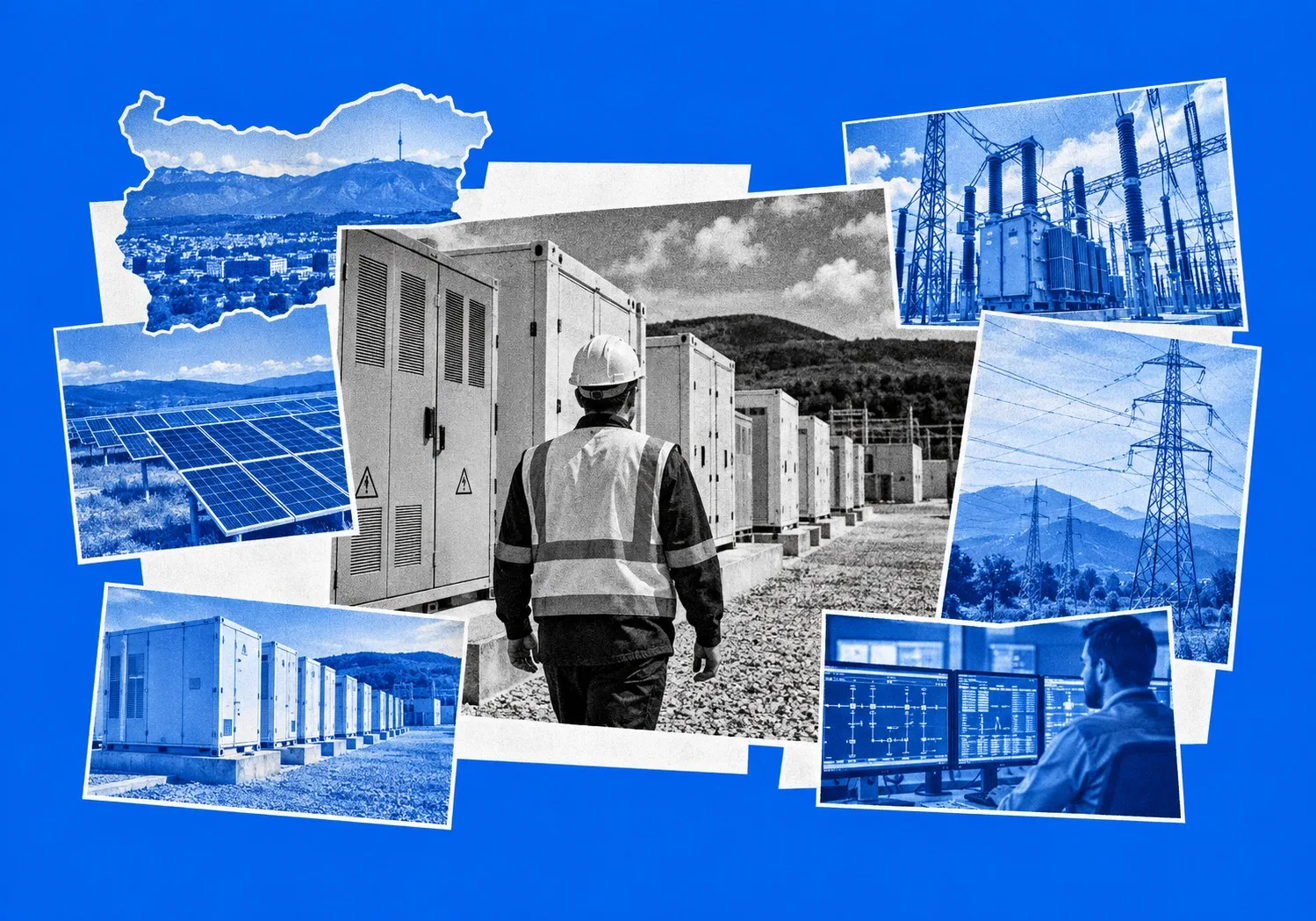
When severe drought and record heatwaves hit Central and Eastern Europe in the summer of 2026, dropping the Danube River to historic lows, Bulgaria’s newly built battery storage grid prevented a catastrophic regional energy failure. As rising water temperatures forced river-dependent thermal and nuclear power plants in Romania and Hungary to curtail operations, losing over 2.5 gigawatts of baseload power, Bulgaria’s massive battery energy storage system (BESS) stepped in to absorb daytime solar generation and stabilize cross-border electricity flows.
In previous decades, a regional supply shock of this magnitude across South-Eastern Europe would have triggered emergency power rationing, rolling brownouts, and punitive spot-market price surges.
Instead, as darkness fell across the Balkan peninsula between 7:00 p.m. and 9:00 p.m.—the window when solar generation drops to zero and evening household demand reaches its peak—Bulgaria’s utility-scale battery fleet began discharging stored power into the transmission network at scale.

The energy storage assets absorbed low-cost daytime solar power generated domestically and imported from neighbouring Greece, feeding it back into the high-voltage grid during peak hours.
Operational data compiled by the energy think tank Ember and Bulgaria's Electricity System Operator shows that solar-plus-battery assets supplied 24 per cent of total domestic electricity demand during those peak evening hours.
Between 7:00 p.m. and 7:00 a.m., the battery fleet maintained an average of 10 per cent of national power demand overnight.
Sofia did not keep those electrons to itself. On peak nights, four out of every ten megawatt-hours discharged from Bulgarian batteries headed straight across the border into Romania and Greece.
Paired with Kozloduy—whose nuclear reactors kept running simply because their cooling intakes sit deeper in the Danube—the battery surge turned a regional deficit into a managed balancing act.
A system collapse was avoided not by diplomatic coordination, but by automated market dispatch.
Scale Out of Proportion
The operational resilience demonstrated during the summer crisis was the result of an extraordinarily rapid capital buildout.
Between 2024 and mid-2026, Bulgaria expanded its grid-scale battery capacity from under 190 megawatt-hours to 5.4 gigawatts, representing between 12,000 and 14,000 megawatt-hours of total energy storage.
With total national generation capacity sitting at 23.8 gigawatts, operational batteries now account for 22.8 per cent of the country’s entire power system.
Relative to overall grid size, this ratio puts Bulgaria well ahead of established clean-energy markets.
In California, 16 gigawatts of utility-scale batteries represent 14.9 per cent of a 107.3-gigawatt power system. In China, despite an absolute utility fleet of 150 gigawatts, storage accounts for just 3.7 per cent of the national grid.
Within twenty-four months, Bulgaria moved from an obscure energy market to holding the highest density of battery assets relative to system scale anywhere on Earth. The underlying commercial driver of this deployment was a structural solar imbalance that emerged between 2022 and 2024.
Rapid, unbuffered solar PV expansion across Bulgaria and northern Greece flooded the regional transmission grid with daytime electricity.
Midday power prices frequently collapsed to zero or dipped into negative territory, only to spike sharply as the sun went down.For battery storage investors, that wide intraday price spread represented an obvious and lucrative arbitrage opportunity.
Follow the EU Money
That commercial opportunity was dramatically accelerated by targeted public intervention.
Under the European Union’s post-pandemic Recovery and Resilience Facility, Sofia created the RESTORE scheme alongside complementary support programmes for co-located renewables.
The RESTORE framework poured approximately €590 million (£510 million) in capital grants directly into energy storage infrastructure.
The injection of public funds fundamentally altered the economics for private capital. The €590 million grant budget leveraged roughly €1.5 billion in private co-investment.
Competition for public grants was fierce: developers competed by bidding for lower grant intensity ratios, maximizing capital efficiency to secure allocations while committing to strict EU construction deadlines.
This infrastructure expansion occurred during a period of chronic domestic political instability in Sofia. Between 2024 and 2026, Bulgaria cycled through short-lived coalition governments and repeated parliamentary elections.
Yet, because the RESTORE scheme offered clear administrative guidelines, de-risked capital structures, and firm completion dates, private developers and commercial lenders pushed projects through the regulatory pipeline regardless of ministerial turnover.
Project-level tracking by the Bulgarian business publisher Capital covers an operational sample of 100 front-of-the-meter projects totaling 4.84 gigawatts.
The spatial and structural distribution reveals a clear focus on rapid grid access: approximately two-thirds of total operational capacity consists of standalone battery systems built directly next to high-voltage substations and major transmission nodes.
The remaining third is co-located directly with solar farms.
The capital behind this expansion came from a blend of domestic industrial groups, international clean-energy developers, development finance institutions, and commercial banking syndicates.
Domestic developers such as Solarpro, Sunotec, Electrohold, and Suntera established early market positions alongside international operators including Renalfa, Enery, Rezolv Energy, and ContourGlobal, drawing heavily on Chinese equipment suppliers like CATL.
Senior debt was structured through international institutions such as the European Bank for Reconstruction and Development and the International Finance Corporation, working alongside commercial lenders including UniCredit, DSK/OTP, KBC/UBB, Raiffeisen International, Citi, and Eurobank.
The Drying Baseload
The 2026 Danube hydrological crisis exposed a fundamental structural shift in the security architecture of European power systems.
For decades, national grid stability relied on centralized, water-dependent thermal and nuclear stations supplying continuous baseload power.
As climate change increases the frequency and severity of summer heatwaves across Southern and Central Europe, river cooling availability has turned into a primary point of operational failure for traditional thermal generation.
When rising water temperatures forced capacity cutbacks in Romania and Hungary, the inherent vulnerability of legacy baseload architecture became undeniable.
The regional transmission network survived not because conventional thermal power plants performed as designed, but because a decentralized, highly digitalized network of solar PV and battery storage absorbed the thermal shock.
This transformation marks a broader economic shift across European energy markets: value is migrating rapidly away from Levelized Cost of Energy—the metric that governed the initial expansion of unbuffered renewables—toward time-value flexibility.
System operators no longer lack raw megawatt-hours during peak daylight hours. Their primary operational challenge is securing fast-acting frequency response and flexible capacity capable of ramping up within seconds when thermal baseload fails.
Under coupled European energy market rules, this flexibility trades across borders in real time.
Bulgaria’s 5.4-gigawatt storage fleet functioned as an automated regional balancing asset. By absorbing cheap Greek solar power at midday and discharging it into Romanian networks at night, Bulgarian storage assets demonstrated how battery density can turn a mid-sized power grid into a cross-border energy trading hub.
Eating Their Own Margins
Yet the extraordinary speed of Bulgaria’s battery expansion has created a complex economic paradox for project owners.
The concentration of storage capacity that saved the regional grid during the summer drought is now actively eroding the commercial revenues that attracted private capital in the first place.
When early investors committed capital in 2024, financial models relied on wide intraday price spreads. Developers planned to buy cheap midday power and sell it into a lucrative evening peak market.
However, bringing 5.4 gigawatts of battery storage online within twenty-four months fundamentally altered wholesale market pricing dynamics.
When thousands of megawatt-hours of stored energy discharge into the transmission grid between 7:00 p.m. and 9:00 p.m., the evening price spike flattens.
By absorbing excess power at midday and discharging it en masse during the evening peak, the battery fleet compresses the intraday price spread, narrowing day-ahead arbitrage margins.
This market cannibalisation effect has established a clear hierarchy of financial outcomes across the energy market.
Early-mover developers such as Solarpro, Renalfa, and Sunotec, who secured substantial EU RESTORE capital grants and captured early price spreads, have largely de-risked their initial capital outlay.
Transmission system operators across Bulgaria, Romania, and Greece gained vital grid-stabilization tools, while global hardware manufacturers like CATL secured massive order volumes.
In contrast, late-stage investors entering the Bulgarian market after the 5.4-gigawatt buildout face compressed price spreads and diminishing returns, making unsubsidised standalone arbitrage difficult to justify.
At the same time, standalone solar developers without attached battery storage face severe financial exposure as midday solar surpluses continue to drive spot market prices toward zero.
Meanwhile, river-cooled thermal power plants face falling capacity factors and lost peak-hour revenues.
As pure price arbitrage margins continue to shrink, the Bulgarian storage market is entering a more complex operational phase. Owning a battery asset is no longer a guaranteed source of profit.
Future returns will depend on software optimization, algorithmic trading, and multi-market revenue stacking—combining day-ahead arbitrage with frequency restoration reserves and ancillary grid services.
Bulgaria’s rapid buildout offers a clear preview of the wider European energy transition. Targeted public grants can mobilize billions in private capital to construct climate-resilient power infrastructure in record time.
Yet as battery storage scales to protect national networks from climate shocks, it alters the wholesale market dynamics that enabled its creation, forcing investors and grid operators to adapt to the competitive reality of their own success.
Sources: Euronews, BNR, Energy-Storage News