
Bulgaria Moves Towards Near-Total Ban on Gambling Advertising

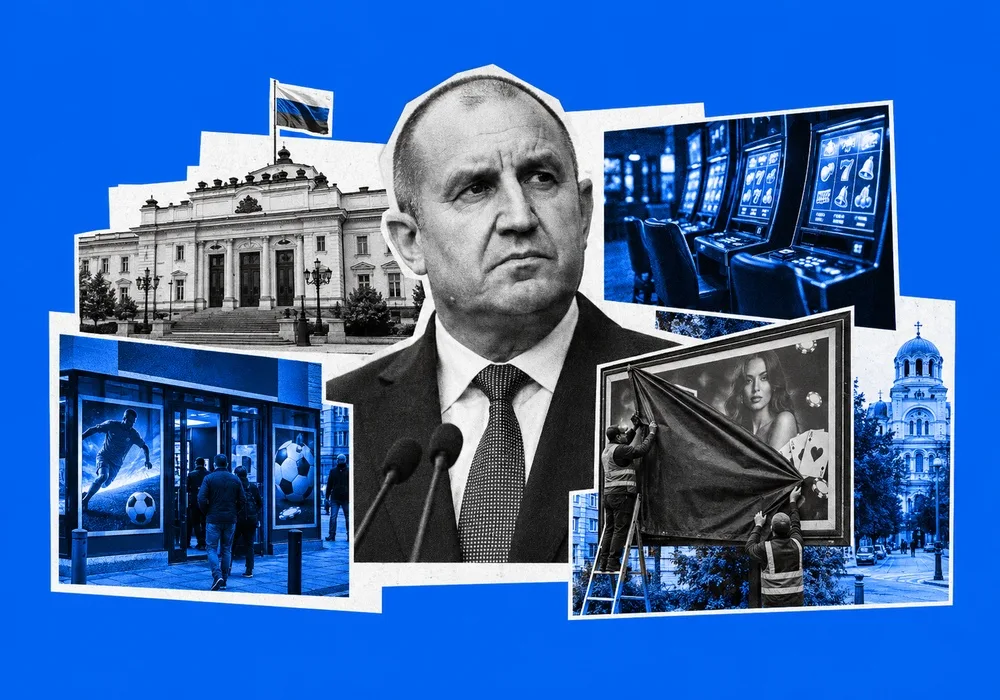
Bulgaria is preparing a near-total ban on gambling advertising alongside tighter taxation, financial reporting and state oversight of the sector. The reforms build on restrictions introduced in 2024 and reflect growing political pressure to close regulatory loopholes.
Bulgaria is preparing a new package of gambling-sector reforms that would sharply restrict advertising, strengthen state oversight and change the way gambling operators are taxed. Prime Minister Rumen Radev said on September 23 that amendments to the Gambling Act would introduce a “practically complete” ban on gambling advertising, with the government arguing that existing restrictions have not sufficiently limited the visibility of betting and gambling in public life.
The draft amendments are being released for public consultation and are intended to establish a stricter regulatory framework for the sector. The government says the objectives are greater transparency, fairer taxation and measures to limit gambling addiction, with particular attention to advertising reaching young people and children.
From advertising restrictions to a broader regulatory overhaul
The proposed changes go beyond conventional advertising bans. The government plans to prohibit billboards and posters promoting gambling, as well as illuminated and flashing signs associated with casinos and gambling halls. Advertising displays in the windows of gambling venues would also be restricted.
The government has indicated that sports sponsorship would remain an exception, allowing gambling companies to retain some visibility through branding on sportswear and sporting facilities. The exact scope of the exception is expected to be defined during the legislative process.
The proposals would also introduce tighter technical monitoring of land-based gambling. Gambling venues are expected to connect their operating equipment to the National Revenue Agency's systems so that relevant activity can be reported in real time. The government has presented this as part of a wider effort to strengthen supervision and reduce opportunities for tax evasion and other regulatory violations.
A sector already subject to strict rules
The planned reforms build on major changes adopted in 2024. Those amendments already prohibited gambling advertising on television and radio, in public places, print and electronic media, while retaining a number of specific exceptions, including certain outdoor advertising and sports-related promotion.
The new initiative reflects the government's view that the existing framework contains loopholes that have allowed gambling promotion to remain visible despite the 2024 restrictions. Opposition parties have made a similar argument, calling for a more comprehensive ban and stronger enforcement of the existing rules.
The National Revenue Agency has previously acknowledged receiving reports of violations linked to prohibited gambling advertising. Its guidance also distinguishes between gambling advertising and other forms of information published online, meaning that the practical application of the restrictions depends on how particular commercial messages are classified under the law.
New taxation model and tighter control of operators
Advertising is only one part of the proposed overhaul. The government also intends to revise the taxation model for gambling and increase oversight of operators' financial activity.
Foreign gambling companies licensed to operate in Bulgaria would be required to register their financial activity in the country. Radev said operators generating revenue from the Bulgarian market should report their activities locally, pay taxes in Bulgaria and fall under the full supervision of Bulgarian authorities.
The government is also considering higher taxation of online gambling, with additional revenues potentially directed towards sport and education. The proposed framework is expected to include stronger anti-money-laundering measures and mechanisms aimed at limiting tax avoidance.
The scale of the sector has become an important part of the government's argument for reform. Data cited by the government and Bulgarian media indicate that gambling turnover has increased substantially in recent years, while tens of thousands of people have registered with the National Revenue Agency as vulnerable gamblers seeking restrictions on their access to gambling services.
Political pressure for tougher restrictions
The government's initiative comes after sustained pressure from opposition parties for tighter controls. Continue the Change and Democratic Bulgaria have argued that the 2024 advertising restrictions have been circumvented and that enforcement has not matched the scope of the legislation.
Democratic Bulgaria has separately proposed restrictions on cash terminals used to fund online gambling accounts before customer identities are verified, as well as limits on gambling transactions involving cryptocurrencies. The proposals indicate that the debate is moving beyond advertising towards the broader regulation of online gambling and financial flows.
The final scope of the government's measures will depend on the public consultation and subsequent parliamentary process. In particular, the treatment of sports sponsorship, online promotion and the financial obligations of foreign operators will determine how far the new framework goes beyond the restrictions already introduced in 2024.
A broader European regulatory trend
Bulgaria's initiative comes as gambling advertising is facing increased scrutiny elsewhere in Europe. In September, a UK House of Lords committee called for comprehensive restrictions on gambling advertising, arguing that the expansion of digital marketing had made existing regulatory approaches increasingly difficult to apply. Industry representatives disputed the proposal, warning that restrictions on licensed operators could alter the competitive balance with illegal gambling services.
Bulgaria's proposed framework therefore places the country within a wider European debate over how governments should regulate an increasingly digital gambling market while maintaining licensed operators under state supervision. The Bulgarian approach combines advertising restrictions with taxation, financial reporting and real-time monitoring, making the initiative broader than a standalone ban on promotional campaigns.
The immediate next step is the public consultation on amendments to the Gambling Act. Its outcome will clarify the precise limits on advertising and the regulatory obligations that will apply to operators in Bulgaria.
Sources: Bulgarian Council of Ministers, Radio Bulgaria